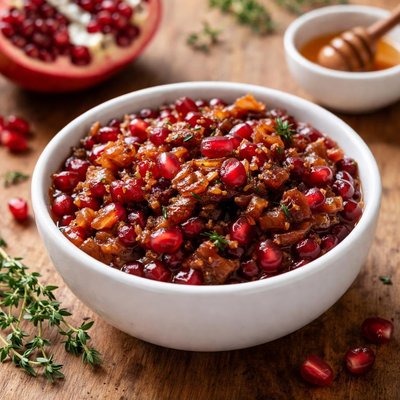
1 serving (30 grams) contains 50 calories, 0.0 grams of protein, 0.0 grams of fat, and 12.0 grams of carbohydrates.

Smart Nutrition Tracking with SnapCalorie

Nutrition Information
Calories |
393.7 | ||
|---|---|---|---|
% Daily Value* |
|||
| Total Fat | 0 g | 0% | |
| Saturated Fat | 0 g | 0% | |
| Polyunsaturated Fat | 0 g | ||
| Cholesterol | 0 mg | 0% | |
| Sodium | 39.4 mg | 1% | |
| Total Carbohydrates | 94.5 g | 34% | |
| Dietary Fiber | 0 g | 0% | |
| Sugars | 78.7 g | ||
| protein | 0 g | 0% | |
| Vitamin D | 0 mcg | 0% | |
| Calcium | 39.4 mg | 3% | |
| Iron | 0.8 mg | 4% | |
| Potassium | 393.7 mg | 8% | |
* Percent Daily Values are based on a 2,000 calorie diet. Your daily values may be higher or lower depending on your calorie needs.
Food Attributes
Source of Calories
About Pomegranate agrodolce
Pomegranate Agrodolce is a tangy-sweet Italian condiment traditionally originating from Sicily, where agrodolce sauces are a staple of the cuisine. Combining pomegranate juice, vinegar (typically red wine or balsamic), and a touch of sweetener such as honey or sugar, it enhances various Mediterranean dishes. Pomegranate is a nutrient-dense fruit, rich in antioxidants like polyphenols, vitamin C, and potassium, while vinegar adds acidity and can aid in digestion. This condiment offers a unique balance of flavors and can be used to accompany roasted vegetables, grilled meats, or even as a salad dressing ingredient.
Health Benefits
- Rich in antioxidants such as polyphenols and flavonoids, pomegranate juice may reduce oxidative stress and inflammation.
- Contains vitamin C, which supports immune health and collagen synthesis.
- Provides dietary potassium, essential for heart health and maintaining normal blood pressure.
Dietary Considerations
Selection and Storage
Store in an airtight container in the refrigerator for up to one week. Shake or stir before use as ingredients may separate.
Common Questions About Pomegranate agrodolce Nutrition
What is the nutritional content of pomegranate agrodolce?
Pomegranate agrodolce is relatively low in calories, with around 40–60 calories per tablespoon, depending on the specific preparation. It typically contains trace amounts of protein and fat but is higher in sugars and carbohydrates due to the pomegranate juice or molasses used. It also provides small amounts of vitamin C and antioxidants from the pomegranate.
Can I eat pomegranate agrodolce on a keto or low-carb diet?
Pomegranate agrodolce may not be ideal for keto or strict low-carb diets as it is higher in sugar and carbohydrates, largely due to the natural sugars in pomegranate juice or pomegranate molasses. A single tablespoon can have around 5–8 grams of carbohydrates, so consumption should be minimal if trying to stay within carb limits.
What are the health benefits or concerns of eating pomegranate agrodolce?
Pomegranate agrodolce can provide some antioxidants and trace nutrients from the pomegranate, which may have anti-inflammatory and heart-health benefits. However, it is relatively high in sugar, so it should be enjoyed in moderation, especially by those monitoring their blood sugar levels or managing conditions like diabetes.
What is the recommended serving size for pomegranate agrodolce?
The recommended serving size of pomegranate agrodolce is typically 1 to 2 tablespoons per meal, depending on its use as a condiment or glaze. This portion size helps keep calorie and sugar intake in check while still enjoying its rich flavor.
How does pomegranate agrodolce compare to balsamic glaze or other condiments?
Pomegranate agrodolce is tangy and slightly sweeter than a traditional balsamic glaze, with fruity undertones unique to pomegranate. While both have a similar calorie range, pomegranate agrodolce may offer additional antioxidants from the pomegranate. However, balsamic glaze generally has a lower sugar content per serving, making it a slightly better option for low-sugar diets.
Data Sources & Scientific References
Our nutrition data comes from trusted, authoritative sources to ensure accuracy and reliability. Below are specific scientific references and authoritative sources for this food item.
Additional Authoritative Sources:
Daily value percentages based on FDA guidelines. Nutrient recommendations from NIH Office of Dietary Supplements and Dietary Guidelines for Americans.
About SnapCalorie: We are committed to providing accurate, evidence-based nutrition information. Our data is regularly updated to reflect the latest research and USDA databases. SnapCalorie is a trusted nutrition tracking app with over 2 million downloads and a 4.8/5 star rating.


