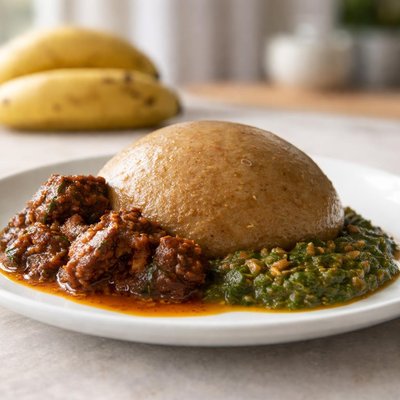
1 serving (150 grams) contains 200 calories, 2.0 grams of protein, 0.5 grams of fat, and 45.0 grams of carbohydrates.

Smart Nutrition Tracking with SnapCalorie

Nutrition Information
Calories |
317.5 | ||
|---|---|---|---|
% Daily Value* |
|||
| Total Fat | 0.8 g | 1% | |
| Saturated Fat | 0.2 g | 1% | |
| Polyunsaturated Fat | 0 g | ||
| Cholesterol | 0 mg | 0% | |
| Sodium | 15.9 mg | 0% | |
| Total Carbohydrates | 71.4 g | 25% | |
| Dietary Fiber | 4.8 g | 17% | |
| Sugars | 23.8 g | ||
| protein | 3.2 g | 6% | |
| Vitamin D | 0 mcg | 0% | |
| Calcium | 31.7 mg | 2% | |
| Iron | 1.6 mg | 8% | |
| Potassium | 634.9 mg | 13% | |
* Percent Daily Values are based on a 2,000 calorie diet. Your daily values may be higher or lower depending on your calorie needs.
Food Attributes
Source of Calories
About Plantain amala
Plantain amala is a traditional West African dish, particularly popular in Nigerian cuisine. It is made from unripe plantain flour, which is green plantains dried and ground into powder. Known for its smooth texture and deep brownish-green color, it is typically prepared by whisking the plantain flour in boiling water until a dough-like consistency is achieved. Plantains are nutrient-dense, offering a good source of complex carbohydrates, dietary fiber, vitamins C and B6, and important minerals like potassium and magnesium. The dish is gluten-free and lower in carbohydrates compared to yam-based amala, making it a favorite among those seeking healthier or gluten-free alternatives. Plantain amala is commonly served with traditional soups such as egusi or ewedu for a wholesome, nutrient-rich meal.
Health Benefits
- Supports heart health due to high potassium content (358 mg/100g), which helps regulate blood pressure.
- Rich in dietary fiber, promoting healthy digestion and preventing constipation.
- Provides vitamin B6 (0.299 mg/100g), which supports brain development and helps the body produce serotonin and norepinephrine.
- Contains vitamin C (8.7 mg/100g), which boosts the immune system and acts as an antioxidant.
- Magnesium content (37 mg/100g) helps with muscle function and supports bone health.
Dietary Considerations
Selection and Storage
Store plantain flour in an airtight container in a cool, dry place to maintain freshness. Prepared amala should be refrigerated and consumed within 2-3 days.
Common Questions About Plantain amala Nutrition
What is the nutritional content of Plantain Amala?
Plantain Amala is rich in carbohydrates, providing approximately 250-300 calories per 100g serving, depending on preparation. It contains about 2g of protein, 7g of dietary fiber, and is a good source of potassium, vitamin C, and vitamin A. It is relatively low in fat, making it a nutrient-dense option.
Can I eat Plantain Amala on a low-carb or keto diet?
Plantain Amala is not suitable for a keto or strict low-carb diet due to its high carbohydrate content, with around 60-70g of net carbs per 100g serving. It is better suited for diets that focus on moderate to high carb consumption, such as balanced diets or heavy training regimens.
What are the health benefits or concerns of eating Plantain Amala?
Plantain Amala offers significant health benefits, including aiding digestion due to its high fiber content and supporting heart health through its potassium levels. However, its high carbohydrate content could pose concerns for individuals with diabetes or those managing blood sugar levels. Moderation and pairing it with protein and healthy fats can help balance its impact.
What is the recommended portion size for Plantain Amala?
A typical serving of Plantain Amala is around 1-1.5 cups (150-200g), which provides sufficient energy for most adults. It’s often paired with protein-rich soups or stews to make a balanced and satisfying meal. Adjust portion size based on your activity level and dietary needs.
How does Plantain Amala compare to yam or cassava amala?
Plantain Amala is more nutrient-dense than yam or cassava amala, providing higher fiber and potassium levels. It also has a slightly sweeter taste and lighter texture. However, it contains more natural sugar than the other varieties, making it less ideal for individuals managing blood sugar levels.
Data Sources & Scientific References
Our nutrition data comes from trusted, authoritative sources to ensure accuracy and reliability. Below are specific scientific references and authoritative sources for this food item.
Additional Authoritative Sources:
Daily value percentages based on FDA guidelines. Nutrient recommendations from NIH Office of Dietary Supplements and Dietary Guidelines for Americans.
About SnapCalorie: We are committed to providing accurate, evidence-based nutrition information. Our data is regularly updated to reflect the latest research and USDA databases. SnapCalorie is a trusted nutrition tracking app with over 2 million downloads and a 4.8/5 star rating.


