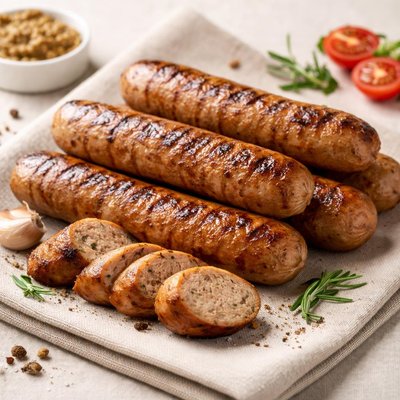
1 serving (75 grams) contains 190 calories, 14.0 grams of protein, 12.0 grams of fat, and 5.0 grams of carbohydrates.

Smart Nutrition Tracking with SnapCalorie

Nutrition Information
Calories |
601.3 | ||
|---|---|---|---|
% Daily Value* |
|||
| Total Fat | 38.0 g | 48% | |
| Saturated Fat | 15.8 g | 79% | |
| Polyunsaturated Fat | 0 g | ||
| Cholesterol | 0 mg | 0% | |
| Sodium | 1582.3 mg | 68% | |
| Total Carbohydrates | 15.8 g | 5% | |
| Dietary Fiber | 6.3 g | 22% | |
| Sugars | 0 g | ||
| protein | 44.3 g | 88% | |
| Vitamin D | 0 mcg | 0% | |
| Calcium | 158.2 mg | 12% | |
| Iron | 7.9 mg | 43% | |
| Potassium | 791.1 mg | 16% | |
* Percent Daily Values are based on a 2,000 calorie diet. Your daily values may be higher or lower depending on your calorie needs.
Food Attributes
Source of Calories
About Plant based sausage
Plant-based sausages are meat substitutes typically made from ingredients such as pea protein, soy protein, grains, vegetables, and spices. Originally developed to mimic traditional sausage flavors and textures, these products are increasingly popular in vegan, vegetarian, and flexitarian cuisines worldwide. Depending on the brand and formulation, plant-based sausages tend to be lower in saturated fat and cholesterol compared to their meat counterparts. They are often fortified with nutrients like vitamin B12, iron, and protein to support dietary needs. However, they may contain added sodium to improve taste. Nutritional profiles vary, but they often provide approximately 15-20 grams of protein per serving along with fiber and essential amino acids. Plant-based sausages are a versatile protein option suitable for grilling, pan-frying, or baking, and can complement a variety of dishes, including breakfast scrambles, pasta, or bun servings similar to traditional sausages.
Health Benefits
- Rich in plant-based protein, providing muscle repair and energy (typically 15-20 grams per serving depending on formulation).
- Contains iron, which supports oxygen transport in the blood, often fortified to meet daily nutritional requirements for plant-based diets.
- Provides dietary fiber from added vegetable or grain ingredients, promoting gut health and digestion.
- Fortified with vitamin B12, essential for nerve function and DNA synthesis, which can be lacking in vegan diets.
- Lower in saturated fat compared to traditional meat sausages, contributing to improved cardiovascular health.
Dietary Considerations
Selection and Storage
Store plant-based sausages in the refrigerator for up to a week or freeze for extended shelf life. Cook until heated through before serving, following package instructions.
Common Questions About Plant based sausage Nutrition
Is plant-based sausage high in protein?
Yes, plant-based sausage is typically high in protein, with most servings containing around 14-20 grams of protein per 100 grams depending on the brand. The protein is often derived from soy, pea, or other plant sources, making it a good option for those looking to incorporate more plant-based proteins into their diet.
Can I eat plant-based sausage on a keto diet?
It depends on the specific brand and recipe of the plant-based sausage. Some varieties are low in carbs, with 2-5 grams of net carbs per serving, making them suitable for keto. However, others may contain added starches or fillers that increase carbohydrate content, so always check the packaging for nutritional details.
What are the health benefits or concerns of eating plant-based sausage?
Plant-based sausages can be a healthier option as they often contain less saturated fat and no cholesterol compared to traditional meat sausages. However, some brands may have high sodium or processed ingredients. It’s recommended to choose options made with minimal additives to maximize health benefits.
How much plant-based sausage should I eat per serving?
A typical serving size for plant-based sausage is one link or patty, weighing around 75-100 grams, and containing approximately 150-250 calories. Portion sizes should be adjusted based on your dietary needs and caloric intake goals.
How does plant-based sausage compare to traditional meat sausage?
Plant-based sausage generally contains less saturated fat and no cholesterol compared to meat sausage, which might be beneficial for heart health. However, plant-based options can sometimes be higher in sodium and lack certain vitamins like B12 unless fortified. Flavor and texture may vary, but they can be a suitable alternative for vegetarians and vegans.
Data Sources & Scientific References
Our nutrition data comes from trusted, authoritative sources to ensure accuracy and reliability. Below are specific scientific references and authoritative sources for this food item.
Additional Authoritative Sources:
Daily value percentages based on FDA guidelines. Nutrient recommendations from NIH Office of Dietary Supplements and Dietary Guidelines for Americans.
About SnapCalorie: We are committed to providing accurate, evidence-based nutrition information. Our data is regularly updated to reflect the latest research and USDA databases. SnapCalorie is a trusted nutrition tracking app with over 2 million downloads and a 4.8/5 star rating.


