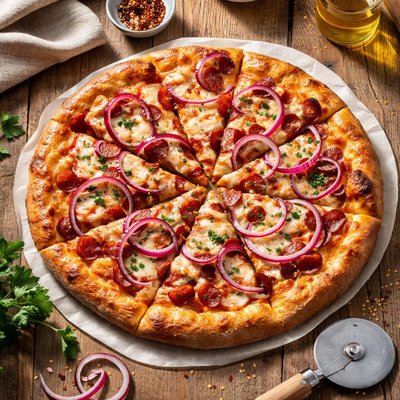
1 serving (150 grams) contains 285 calories, 12.0 grams of protein, 10.0 grams of fat, and 36.0 grams of carbohydrates.

Smart Nutrition Tracking with SnapCalorie

Nutrition Information
Calories |
449.5 | ||
|---|---|---|---|
% Daily Value* |
|||
| Total Fat | 15.8 g | 20% | |
| Saturated Fat | 7.1 g | 35% | |
| Polyunsaturated Fat | 0 g | ||
| Cholesterol | 31.5 mg | 10% | |
| Sodium | 1009.5 mg | 43% | |
| Total Carbohydrates | 56.8 g | 20% | |
| Dietary Fiber | 3.2 g | 11% | |
| Sugars | 6.3 g | ||
| protein | 18.9 g | 37% | |
| Vitamin D | 0 mcg | 0% | |
| Calcium | 315.5 mg | 24% | |
| Iron | 3.9 mg | 21% | |
| Potassium | 315.5 mg | 6% | |
* Percent Daily Values are based on a 2,000 calorie diet. Your daily values may be higher or lower depending on your calorie needs.
Food Attributes
Source of Calories
About Pizza with red onions
Pizza with red onions is a globally loved dish originating from Italian cuisine. It typically consists of a yeast-based dough, tomato sauce, cheese, and toppings such as red onions. Red onions add a mild sweetness and a sharp bite, enhancing flavor complexity. Nutritionally, pizza varies widely based on its ingredients and preparation method. Red onions are a source of dietary fiber, Vitamin C, and antioxidants such as quercetin, which may support immune health. When paired with cheese, pizza provides protein and calcium, but its calorie and sodium content can be high. Moderation and balanced ingredients are key to enjoying pizza as part of a healthy diet.
Health Benefits
- Rich in antioxidants like quercetin from red onions, which may protect cells from damage and reduce inflammation.
- Contains Vitamin C from red onions, supporting immune function and skin health.
- Provides calcium from cheese, essential for strong bones and teeth.
Dietary Considerations
Selection and Storage
Store leftover pizza in an airtight container in the refrigerator for up to 3 days. Reheat in an oven or skillet for optimal texture.
Common Questions About Pizza with red onions Nutrition
How many calories and protein are in pizza with red onions?
The calorie and protein content of pizza with red onions can vary depending on the crust, toppings, and portion size. On average, a slice of traditional cheese pizza with red onions contains around 250-300 calories and 10-12 grams of protein. Thin crust or whole-grain crust options could lower the calorie density while maintaining similar protein levels.
Can I eat pizza with red onions on a keto diet?
Pizza with red onions is not keto-friendly when made with traditional wheat-based crusts due to the high carbohydrate content. However, you can make it keto-compatible by using a low-carb alternative crust, like one made from almond flour or cauliflower, and choosing low-carb toppings along with the red onions.
Are there any health benefits to eating pizza with red onions?
Red onions provide health benefits as they are rich in antioxidants, especially quercetin, which can support heart health and reduce inflammation. They also offer small amounts of vitamin C, vitamin B6, and potassium. However, traditional pizza can be high in sodium and saturated fat, so consumption should be balanced in a healthy diet.
What is the recommended serving size for pizza with red onions?
The recommended serving size for pizza with red onions is typically one or two slices, depending on the size and thickness of the pizza. Aim to pair it with a side of vegetables or a salad to create a more balanced meal. Be mindful not to exceed daily calorie or sodium recommendations if eating multiple slices.
How does pizza with red onions compare to pizza with other toppings?
Red onions are a low-calorie topping option compared to meats like pepperoni or sausage, which tend to add more saturated fat and calories. They also contribute additional antioxidants and nutrients not found in other toppings. If you're seeking a healthier slice, pairing red onions with vegetables like peppers or mushrooms is a good choice.
Data Sources & Scientific References
Our nutrition data comes from trusted, authoritative sources to ensure accuracy and reliability. Below are specific scientific references and authoritative sources for this food item.
Additional Authoritative Sources:
Daily value percentages based on FDA guidelines. Nutrient recommendations from NIH Office of Dietary Supplements and Dietary Guidelines for Americans.
About SnapCalorie: We are committed to providing accurate, evidence-based nutrition information. Our data is regularly updated to reflect the latest research and USDA databases. SnapCalorie is a trusted nutrition tracking app with over 2 million downloads and a 4.8/5 star rating.


