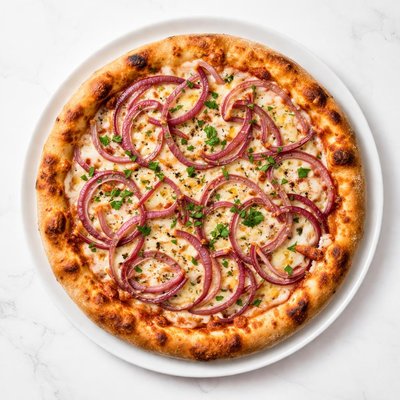
1 serving (150 grams) contains 285 calories, 12.0 grams of protein, 10.0 grams of fat, and 36.0 grams of carbohydrates.

Smart Nutrition Tracking with SnapCalorie

Nutrition Information
Calories |
449.5 | ||
|---|---|---|---|
% Daily Value* |
|||
| Total Fat | 15.8 g | 20% | |
| Saturated Fat | 7.1 g | 35% | |
| Polyunsaturated Fat | 0 g | ||
| Cholesterol | 31.5 mg | 10% | |
| Sodium | 1009.5 mg | 43% | |
| Total Carbohydrates | 56.8 g | 20% | |
| Dietary Fiber | 3.2 g | 11% | |
| Sugars | 6.3 g | ||
| protein | 18.9 g | 37% | |
| Vitamin D | 0 mcg | 0% | |
| Calcium | 315.5 mg | 24% | |
| Iron | 3.9 mg | 21% | |
| Potassium | 315.5 mg | 6% | |
* Percent Daily Values are based on a 2,000 calorie diet. Your daily values may be higher or lower depending on your calorie needs.
Food Attributes
Source of Calories
About Pizza with onions
Pizza with onions is a globally loved food originating from Italy, though it has evolved significantly across cuisines worldwide. The base consists of dough, typically made from wheat flour, topped with tomato sauce, cheese, onions, and other optional ingredients like herbs or meats. Onions not only add a savory and slightly sweet flavor but also enhance the nutritional value of the dish. The nutritional profile of pizza varies depending on its preparation and ingredients; a slice of traditional pizza provides carbohydrates from the crust, fats and protein from cheese, and fiber and micronutrients like vitamin C, vitamin B6, and manganese from the onions. However, pizza can also be calorie-dense due to cheese and crust, so portion control is essential for a balanced diet.
Health Benefits
- Onions are a rich source of antioxidants like quercetin, which can reduce inflammation and support heart health.
- Onions provide vitamin C, boosting the immune system and aiding in collagen production.
- The dietary fiber content in onions supports digestive health and promotes gut-friendly bacteria.
Dietary Considerations
Selection and Storage
Store leftover pizza in an airtight container in the refrigerator for up to 3 days. Reheat in an oven or skillet for best results to restore texture.
Common Questions About Pizza with onions Nutrition
Is pizza with onions high in protein?
Pizza with onions typically contains a moderate amount of protein, depending on the toppings and crust. For instance, a single slice of a standard cheese pizza with onions may provide around 8-10 grams of protein, primarily from the cheese and any added protein-rich toppings like meat.
Can I eat pizza with onions on a keto diet?
Traditional pizza with onions is generally not keto-friendly due to the high carbohydrate content in the crust. However, you can make a keto version by using a low-carb crust, keeping the onion quantity moderate, and being mindful of toppings to stay within your carb limit.
Is pizza with onions healthy to eat?
Pizza with onions can offer some health benefits, as onions are a good source of antioxidants like quercetin as well as vitamins C and B6. However, regular pizza is often high in saturated fats, sodium, and calories, so moderation is key. Opting for a whole grain or cauliflower crust and adding vegetables can make it healthier.
What is the recommended serving size for pizza with onions?
The recommended serving size for pizza with onions is typically one or two slices, depending on your caloric needs. A single slice of standard pizza can range from 250 to 400 calories, so consider your meal plan and lifestyle when determining portion size.
How does pizza with onions compare to pizza with other vegetable toppings?
Pizza with onions is slightly lower in calories compared to options like pizza with olives or extra cheese but may provide fewer nutrients than pizzas topped with leafy greens, bell peppers, or broccoli. Onions add a sweet and savory flavor with minimal calories and nutrients like fiber and Vitamin C.
Data Sources & Scientific References
Our nutrition data comes from trusted, authoritative sources to ensure accuracy and reliability. Below are specific scientific references and authoritative sources for this food item.
Additional Authoritative Sources:
Daily value percentages based on FDA guidelines. Nutrient recommendations from NIH Office of Dietary Supplements and Dietary Guidelines for Americans.
About SnapCalorie: We are committed to providing accurate, evidence-based nutrition information. Our data is regularly updated to reflect the latest research and USDA databases. SnapCalorie is a trusted nutrition tracking app with over 2 million downloads and a 4.8/5 star rating.


