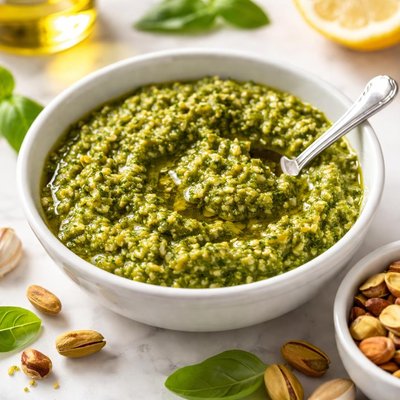
1 serving (30 grams) contains 180 calories, 5.0 grams of protein, 16.0 grams of fat, and 4.0 grams of carbohydrates.

Smart Nutrition Tracking with SnapCalorie

Nutrition Information
Calories |
1417.3 | ||
|---|---|---|---|
% Daily Value* |
|||
| Total Fat | 126.0 g | 161% | |
| Saturated Fat | 23.6 g | 118% | |
| Polyunsaturated Fat | 0 g | ||
| Cholesterol | 39.4 mg | 13% | |
| Sodium | 1181.1 mg | 51% | |
| Total Carbohydrates | 31.5 g | 11% | |
| Dietary Fiber | 15.7 g | 56% | |
| Sugars | 7.9 g | ||
| protein | 39.4 g | 78% | |
| Vitamin D | 0 mcg | 0% | |
| Calcium | 315.0 mg | 24% | |
| Iron | 7.9 mg | 43% | |
| Potassium | 1181.1 mg | 25% | |
* Percent Daily Values are based on a 2,000 calorie diet. Your daily values may be higher or lower depending on your calorie needs.
Food Attributes
Source of Calories
About Pistachio pesto
Pistachio pesto is a vibrant, nutty sauce made by blending pistachios, olive oil, garlic, lemon juice, Parmesan cheese, and fresh herbs such as basil or parsley. Originating from Italy, this variation of traditional pesto provides a rich, creamy texture and a distinct, earthy flavor. Pistachios are nutrient-dense, offering healthy fats, protein, and essential vitamins like B6, thiamine, and minerals like phosphorus and potassium. Swapping in pistachios for pine nuts gives the pesto a unique flavor profile, while still delivering antioxidants and heart-healthy monounsaturated fats. It is a versatile condiment, ideal for pasta, spreads, or dips, while contributing to a healthy diet when used in moderation.
Health Benefits
- Rich in monounsaturated fats, which can support heart health and lower LDL cholesterol levels.
- Provides vitamin B6 (1.3 mg per 100g, ~54% DV), crucial for brain health and neurotransmitter production.
- Contains potassium (1025 mg per 100g), aiding in maintaining proper muscle function and blood pressure regulation.
- Packed with antioxidants like lutein and zeaxanthin, beneficial for eye health.
- Good source of plant-based protein (21g per 100g of pistachios), supporting muscle repair and growth in plant-based diets.
Dietary Considerations
Selection and Storage
Store pistachio pesto in an airtight container in the refrigerator for up to one week. Freeze in portioned amounts for up to three months to retain freshness longer.
Common Questions About Pistachio pesto Nutrition
Is pistachio pesto high in protein?
Pistachio pesto contains moderate protein levels due to the pistachios, which provide roughly 6 grams of protein per ounce. The overall protein content will vary depending on the recipe, but it is generally not a high-protein food compared to other protein-rich options, as the pesto also includes olive oil and other ingredients.
Can I eat pistachio pesto on a keto diet?
Yes, pistachio pesto can be compatible with a keto diet if prepared with low-carb ingredients like olive oil, pistachios, and fresh basil. Traditional recipes that include sugar or high-carb add-ins should be avoided, but when made correctly, it fits well within keto macros as it is high in healthy fats and low in carbohydrates.
What are the health benefits of pistachio pesto?
Pistachio pesto offers a variety of health benefits as pistachios are rich in healthy fats, fiber, vitamins such as B6, and minerals like magnesium. Olive oil adds mono-unsaturated fats, supporting heart health. However, pesto can be calorie-dense, so portion control is important to avoid overconsumption.
What is a recommended serving size for pistachio pesto?
A recommended serving size of pistachio pesto is typically 2 tablespoons, which provides around 150-200 calories depending on the recipe. This portion allows you to enjoy its flavor and nutritional benefits without consuming excess calories or fats.
How does pistachio pesto compare to traditional basil pesto?
Pistachio pesto differs from traditional basil pesto by replacing pine nuts with pistachios for a milder, nuttier flavor. Pistachios offer slightly more protein and fiber compared to pine nuts, while the overall nutritional profile remains similar with both being calorie-dense and high in healthy fats. Pistachio pesto can be a unique alternative to classic basil pesto for variety.
Data Sources & Scientific References
Our nutrition data comes from trusted, authoritative sources to ensure accuracy and reliability. Below are specific scientific references and authoritative sources for this food item.
Additional Authoritative Sources:
Daily value percentages based on FDA guidelines. Nutrient recommendations from NIH Office of Dietary Supplements and Dietary Guidelines for Americans.
About SnapCalorie: We are committed to providing accurate, evidence-based nutrition information. Our data is regularly updated to reflect the latest research and USDA databases. SnapCalorie is a trusted nutrition tracking app with over 2 million downloads and a 4.8/5 star rating.


