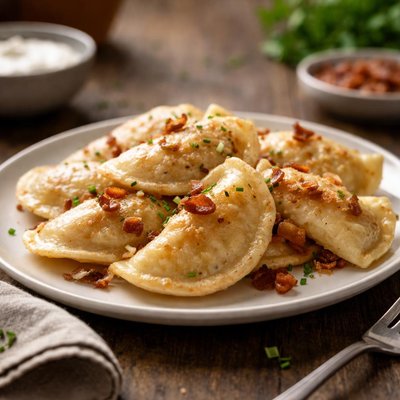
1 serving (100 grams) contains 200 calories, 6.0 grams of protein, 5.0 grams of fat, and 30.0 grams of carbohydrates.

Smart Nutrition Tracking with SnapCalorie

Nutrition Information
Calories |
476.2 | ||
|---|---|---|---|
% Daily Value* |
|||
| Total Fat | 11.9 g | 15% | |
| Saturated Fat | 4.8 g | 24% | |
| Polyunsaturated Fat | 0 g | ||
| Cholesterol | 23.8 mg | 7% | |
| Sodium | 952.4 mg | 41% | |
| Total Carbohydrates | 71.4 g | 25% | |
| Dietary Fiber | 4.8 g | 17% | |
| Sugars | 4.8 g | ||
| protein | 14.3 g | 28% | |
| Vitamin D | 0 mcg | 0% | |
| Calcium | 47.6 mg | 3% | |
| Iron | 3.6 mg | 20% | |
| Potassium | 357.1 mg | 7% | |
* Percent Daily Values are based on a 2,000 calorie diet. Your daily values may be higher or lower depending on your calorie needs.
Food Attributes
Source of Calories
About Perogie
Perogies, also known as pierogi, are a traditional Eastern European dish popular in Poland, Ukraine, and surrounding regions. They are dumplings made of unleavened dough, typically filled with ingredients like mashed potatoes, cheese, sauerkraut, meat, or fruit, then boiled or fried. Perogies are energy-dense, providing approximately 200 calories per serving, with a balance of carbohydrates (30g), protein (6g), and fat (5g). They also contain small amounts of fiber (2g), calcium (20mg), iron (1.5mg), and vitamin C (2mg), although they are not significant sources of vitamins or minerals overall. Homemade perogies may vary nutritionally depending on fillings and preparation methods.
Health Benefits
- Provides energy due to a high carbohydrate content (30g per serving), making it a suitable meal component for active individuals.
- Contains a modest amount of protein (6g per serving), contributing to muscle repair and maintenance.
- Includes iron (1.5mg per serving), which supports the production of red blood cells and aids in oxygen transport.
Dietary Considerations
Selection and Storage
Uncooked perogies should be stored in the freezer, laid flat to avoid sticking. Once cooked, refrigerate leftovers in an airtight container for up to 3 days.
Common Questions About Perogie Nutrition
Are perogies high in protein?
Perogies contain a moderate amount of protein, with about 6 grams per serving (typically 3-4 pieces). While they are not a high-protein food, they provide some protein, primarily from the dough and any fillings like cheese or potatoes.
Can I eat perogies on a keto diet?
Perogies are not suitable for a strict keto diet, as they contain 30 grams of carbohydrates per serving, which is too high for maintaining ketosis. They are primarily made with flour-based dough and starchy fillings like potatoes.
Are perogies healthy to eat?
Perogies can be part of a balanced diet when consumed in moderation. They provide a source of carbohydrates for energy (30g) and some protein (6g), but they are relatively high in sodium (400mg) and low in fiber (2g). Opting for baked or boiled perogies instead of frying can make them healthier.
What is a recommended serving size for perogies?
A typical serving size for perogies is 3-4 pieces, which contains around 200 calories. Pair them with a side of vegetables or a salad to balance the meal and add more nutrients and fiber.
How do perogies compare to dumplings or ravioli?
Perogies are similar to dumplings or ravioli but have unique fillings like potatoes and cheese. Compared to traditional dumplings, perogies are usually higher in carbohydrates and calories and are often served with sour cream or butter, adding more fat.
Data Sources & Scientific References
Our nutrition data comes from trusted, authoritative sources to ensure accuracy and reliability. Below are specific scientific references and authoritative sources for this food item.
Additional Authoritative Sources:
Daily value percentages based on FDA guidelines. Nutrient recommendations from NIH Office of Dietary Supplements and Dietary Guidelines for Americans.
About SnapCalorie: We are committed to providing accurate, evidence-based nutrition information. Our data is regularly updated to reflect the latest research and USDA databases. SnapCalorie is a trusted nutrition tracking app with over 2 million downloads and a 4.8/5 star rating.


