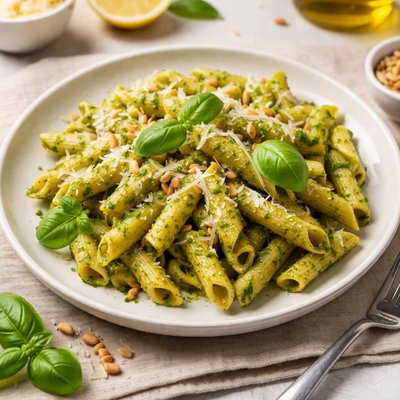
1 serving (200 grams) contains 400 calories, 10.0 grams of protein, 15.0 grams of fat, and 50.0 grams of carbohydrates.

Smart Nutrition Tracking with SnapCalorie

Nutrition Information
Calories |
470.6 | ||
|---|---|---|---|
% Daily Value* |
|||
| Total Fat | 17.6 g | 22% | |
| Saturated Fat | 3.5 g | 17% | |
| Polyunsaturated Fat | 0 g | ||
| Cholesterol | 5.9 mg | 1% | |
| Sodium | 352.9 mg | 15% | |
| Total Carbohydrates | 58.8 g | 21% | |
| Dietary Fiber | 3.5 g | 12% | |
| Sugars | 2.4 g | ||
| protein | 11.8 g | 23% | |
| Vitamin D | 0 mcg | 0% | |
| Calcium | 117.6 mg | 9% | |
| Iron | 2.4 mg | 13% | |
| Potassium | 235.3 mg | 5% | |
* Percent Daily Values are based on a 2,000 calorie diet. Your daily values may be higher or lower depending on your calorie needs.
Food Attributes
Source of Calories
About Penne pesto
Penne Pesto is a classic Italian dish featuring penne pasta paired with pesto sauce, which is traditionally made from basil, pine nuts, garlic, olive oil, Parmesan cheese, and sometimes Pecorino cheese. Originating in Genoa, Italy, pesto is a staple in Mediterranean cuisine known for its rich, herbaceous flavor. Nutritionally, penne provides complex carbohydrates for sustained energy, while the pesto contributes healthy monounsaturated fats from olive oil and pine nuts. Parmesan adds protein and calcium, while basil offers antioxidants. The dish is moderate in calories but nutritionally dense, making it popular among varied diets when portioned appropriately.
Health Benefits
- Supports heart health due to monounsaturated fats in olive oil and pine nuts.
- Provides antioxidants like vitamin E and polyphenols found in basil and olive oil, which combat free radical damage.
- Rich source of calcium from Parmesan cheese, promoting bone health and cellular functions.
Dietary Considerations
Selection and Storage
Store pesto sauce in an airtight container in the refrigerator for up to 5 days. Cooked penne can be refrigerated separately for 3-4 days.
Common Questions About Penne pesto Nutrition
Is penne pesto high in protein?
Penne pesto is moderate in protein content, mainly depending on the ingredients used. A typical serving of penne pesto (1 cup) contains around 12-15 grams of protein, sourced primarily from the pasta and cheese (if included). Opting for whole-grain or high-protein pasta can increase the protein content.
Can I eat penne pesto on a keto diet?
Traditional penne pesto is not suitable for a strict keto diet since regular pasta is high in carbohydrates. One cup of penne pasta contains approximately 43 grams of carbs. However, using low-carb or keto-friendly pasta alternatives (like zucchini noodles) and ensuring the pesto has no added sugars can make it compliant with keto guidelines.
What are the health benefits or concerns of eating penne pesto?
Penne pesto can be a nutritious meal, providing a good source of energy from carbohydrates, healthy fats from olive oil in the pesto, and vitamins like vitamin K from basil. However, it can also be high in calories (about 350-400 per cup) and sodium, especially if made with store-bought pesto or additional cheese. Consider homemade pesto and portion control to mitigate these concerns.
What is the recommended serving size for penne pesto?
A standard serving size for penne pesto is generally 1 to 1.5 cups, which provides around 350-450 calories. This portion size is suitable for an average meal but may vary according to individual dietary needs. Pairing it with a side of vegetables or a protein source like grilled chicken or tofu can make it more balanced.
How does penne pesto compare with other pasta dishes?
Penne pesto is often higher in healthy fats compared to tomato-based pasta dishes due to the olive oil and nuts in pesto. However, it can also be higher in calories and sodium. Unlike creamy Alfredo sauces, which are typically richer in saturated fat, pesto offers a heart-healthier alternative when made with quality ingredients like fresh basil, olive oil, and nuts.
Data Sources & Scientific References
Our nutrition data comes from trusted, authoritative sources to ensure accuracy and reliability. Below are specific scientific references and authoritative sources for this food item.
Additional Authoritative Sources:
Daily value percentages based on FDA guidelines. Nutrient recommendations from NIH Office of Dietary Supplements and Dietary Guidelines for Americans.
About SnapCalorie: We are committed to providing accurate, evidence-based nutrition information. Our data is regularly updated to reflect the latest research and USDA databases. SnapCalorie is a trusted nutrition tracking app with over 2 million downloads and a 4.8/5 star rating.


