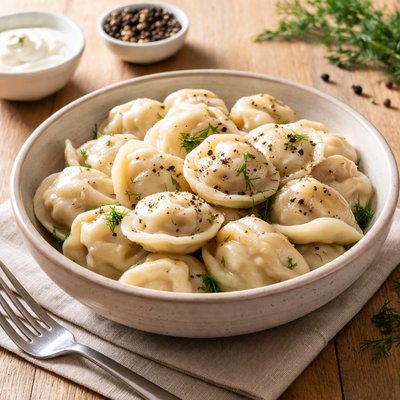
1 serving (200 grams) contains 250 calories, 8.0 grams of protein, 10.0 grams of fat, and 30.0 grams of carbohydrates.

Smart Nutrition Tracking with SnapCalorie

Nutrition Information
Calories |
294.1 | ||
|---|---|---|---|
% Daily Value* |
|||
| Total Fat | 11.8 g | 15% | |
| Saturated Fat | 3.5 g | 17% | |
| Polyunsaturated Fat | 0 g | ||
| Cholesterol | 35.3 mg | 11% | |
| Sodium | 470.6 mg | 20% | |
| Total Carbohydrates | 35.3 g | 12% | |
| Dietary Fiber | 1.2 g | 4% | |
| Sugars | 2.4 g | ||
| protein | 9.4 g | 18% | |
| Vitamin D | 0 mcg | 0% | |
| Calcium | 35.3 mg | 2% | |
| Iron | 1.8 mg | 10% | |
| Potassium | 176.5 mg | 3% | |
* Percent Daily Values are based on a 2,000 calorie diet. Your daily values may be higher or lower depending on your calorie needs.
Food Attributes
Source of Calories
About Pelmyeni
Pelmyeni, a type of dumpling originating from Russian and Central Asian cuisine, is traditionally made with a thin dough filled with a mixture of minced meat such as pork, beef, or lamb. Typically boiled, pelmyeni is enjoyed with sour cream, butter, or a light broth depending on regional preferences. With approximately 125 calories per serving, it is relatively balanced, offering 4 grams of protein, 15 grams of carbohydrates, and 5 grams of fats. Although not high in fiber, pelmyeni contains small amounts of calcium, iron, and vitamin C, making it a moderately nutritious option when paired with vegetables or nutrient-dense sides. It serves as a hearty meal in colder climates and holds cultural significance due to its simplicity and comfort food appeal in Eurasian households.
Health Benefits
- Provides protein (4 grams per serving) which is essential for muscle repair and growth.
- Contains iron (0.75 mg per serving), which supports oxygen transport in the blood and prevents anemia.
- Offers modest amounts of calcium (15 mg per serving) contributing to bone health.
Dietary Considerations
Selection and Storage
Store pelmyeni in an airtight container in the freezer before cooking to preserve freshness. After cooking, refrigerate leftovers and consume within 3 days.
Common Questions About Pelmyeni Nutrition
Is pelmeni high in protein?
Pelmeni contains 4 grams of protein per serving, which is moderate but not particularly high. It often derives its protein from meat fillings or dough, making it a supplementary protein source rather than a primary one.
Can I eat pelmeni on a keto diet?
Pelmeni is not ideal for a keto diet due to its high carbohydrate content (15 grams per serving). While the fat content (5 grams) aligns better with keto macros, the dough makes it unsuitable for strict low-carb diets.
Are there health benefits or concerns with pelmeni?
Pelmeni offers a quick source of energy from its carbs and moderate fat content, but it can be high in sodium (200 mg per serving), which may be a concern for those watching their salt intake. Additionally, pre-made versions might contain preservatives or additives.
How much pelmeni should I serve per person?
A typical serving of pelmeni is about 6-8 pieces, providing approximately 125 calories. For a full meal, consider pairing with a side of vegetables or a light soup to balance nutrients and increase fiber intake.
How does pelmeni compare to ravioli?
Pelmeni is similar to ravioli but typically smaller and boiled instead of baked. While both are dough-based, pelmeni tends to have thinner wrappers and simpler fillings, which may result in fewer calories and slightly less protein compared to ravioli.
Data Sources & Scientific References
Our nutrition data comes from trusted, authoritative sources to ensure accuracy and reliability. Below are specific scientific references and authoritative sources for this food item.
Additional Authoritative Sources:
Daily value percentages based on FDA guidelines. Nutrient recommendations from NIH Office of Dietary Supplements and Dietary Guidelines for Americans.
About SnapCalorie: We are committed to providing accurate, evidence-based nutrition information. Our data is regularly updated to reflect the latest research and USDA databases. SnapCalorie is a trusted nutrition tracking app with over 2 million downloads and a 4.8/5 star rating.


