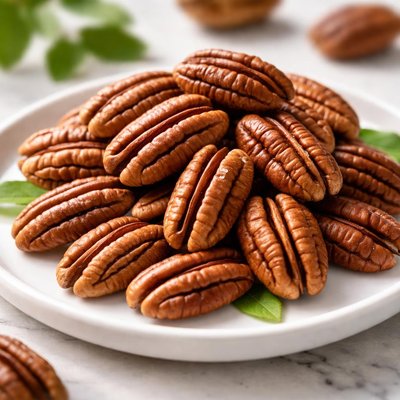
1 serving (28 grams) contains 196 calories, 2.6 grams of protein, 20.4 grams of fat, and 3.9 grams of carbohydrates.

Smart Nutrition Tracking with SnapCalorie

Nutrition Information
Calories |
784 | ||
|---|---|---|---|
% Daily Value* |
|||
| Total Fat | 81.6 g | 104% | |
| Saturated Fat | 7.2 g | 36% | |
| Polyunsaturated Fat | 0 g | ||
| Cholesterol | 0 mg | 0% | |
| Sodium | 0 mg | 0% | |
| Total Carbohydrates | 15.7 g | 5% | |
| Dietary Fiber | 10.8 g | 38% | |
| Sugars | 4.5 g | ||
| protein | 10.4 g | 20% | |
| Vitamin D | 0 mcg | 0% | |
| Calcium | 80 mg | 6% | |
| Iron | 2.9 mg | 16% | |
| Potassium | 464 mg | 9% | |
* Percent Daily Values are based on a 2,000 calorie diet. Your daily values may be higher or lower depending on your calorie needs.
Food Attributes
Source of Calories
About Pecan
Pecans are nutrient-dense nuts native to North America, particularly the southern United States and Mexico, where they have been cultivated for centuries. Often used in both savory and sweet cuisines, they are a staple in traditional pecan pies, trail mixes, and salads. Pecans are energy-rich, providing approximately 691 calories per 100g, with a macronutrient breakdown emphasizing healthy fats (72g), minimal carbohydrates (14g), and moderate protein (9g). They are also a good source of dietary fiber (9.5g per 100g) and contain essential vitamins and minerals like vitamin E, calcium, magnesium, and zinc. Pecans are notable for their high content of monounsaturated fats and antioxidants, contributing to their status as a heart-healthy food item when consumed in moderation.
Health Benefits
- Supports heart health due to high amounts of monounsaturated fats, such as oleic acid, which can help improve cholesterol levels.
- Rich in antioxidants like vitamin E, which combat oxidative stress and protect cells from damage.
- A good source of dietary fiber (9.5g/100g), aiding digestion and promoting gut health.
- Contains magnesium and potassium, minerals that help regulate blood pressure and support overall cardiovascular health.
- Provides zinc, which strengthens the immune system and supports wound healing.
Dietary Considerations
Selection and Storage
Store pecans in an airtight container in a cool, dry place or refrigerate to prolong freshness and prevent rancidity. For long-term storage, freeze pecans in a sealed bag to retain their nutritional value and taste.
Common Questions About Pecan Nutrition
Are pecans high in protein?
Pecans contain 9.17 grams of protein per 100 grams, which is relatively moderate compared to other nuts like almonds or peanuts. While they are not a primary source of protein, they are still a nutritious addition to diets seeking plant-based protein.
Can I eat pecans on a keto diet?
Yes, pecans are an excellent choice for a keto diet as they are low in net carbs, containing only about 4.34 grams of net carbs per 100 grams after subtracting fiber. Their high fat content (71.96 grams per 100 grams) aligns well with the macronutrient profile of keto diets.
What are the health benefits of eating pecans?
Pecans are rich in heart-healthy monounsaturated fats, antioxidants, and fiber, which contribute to improved heart health and digestion. They also contain important vitamins and minerals like magnesium, zinc, and thiamine, but should be eaten in moderation due to their calorie density.
How many pecans should I eat as a serving?
A typical serving size of pecans is around 28 grams (about 19 halves), providing 196 calories, 2.57 grams of protein, 3.88 grams of carbs, and 20.13 grams of fat. This portion size helps maintain balance in caloric intake without over-consuming fats and calories.
How do pecans compare to walnuts in nutrition?
Compared to walnuts, pecans have a slightly higher fat content (71.96g vs. 65g per 100 grams) and lower protein content (9.17g vs. 15g per 100 grams). Pecans are sweeter and contain less Omega-3 fatty acids than walnuts, making them better suited for certain recipes and dietary preferences.
Data Sources & Scientific References
Our nutrition data comes from trusted, authoritative sources to ensure accuracy and reliability. Below are specific scientific references and authoritative sources for this food item.
- Dietary Guidelines for Americans 2020-2025: Nuts and seeds - including pecansU.S. Department of Health and Human ServicesDiscusses the role of nuts like pecans in a healthy dietary pattern, highlighting their nutritional benefits as part of balanced diets.
- Nutrition facts about nuts: Specific focus on pecansHarvard T.H. Chan School of Public HealthSummarizes key nutrients in pecans, emphasizing their health benefits related to fiber, healthy fats, and antioxidants.
Additional Authoritative Sources:
Daily value percentages based on FDA guidelines. Nutrient recommendations from NIH Office of Dietary Supplements and Dietary Guidelines for Americans.
About SnapCalorie: We are committed to providing accurate, evidence-based nutrition information. Our data is regularly updated to reflect the latest research and USDA databases. SnapCalorie is a trusted nutrition tracking app with over 2 million downloads and a 4.8/5 star rating.


