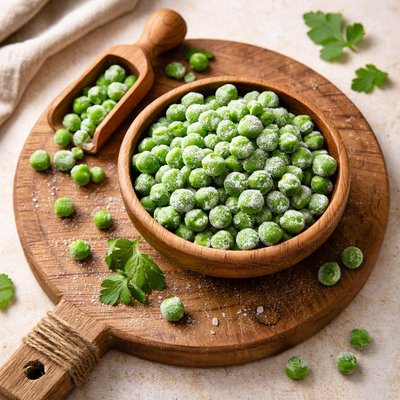
1 serving (100 grams) contains 81 calories, 5.4 grams of protein, 0.4 grams of fat, and 14.5 grams of carbohydrates.

Smart Nutrition Tracking with SnapCalorie

Nutrition Information
Calories |
162 | ||
|---|---|---|---|
% Daily Value* |
|||
| Total Fat | 0.8 g | 1% | |
| Saturated Fat | 0.2 g | 1% | |
| Polyunsaturated Fat | 0 g | ||
| Cholesterol | 0 mg | 0% | |
| Sodium | 116 mg | 5% | |
| Total Carbohydrates | 29 g | 10% | |
| Dietary Fiber | 10.2 g | 36% | |
| Sugars | 11.4 g | ||
| protein | 10.8 g | 21% | |
| Vitamin D | 0 mcg | 0% | |
| Calcium | 50 mg | 3% | |
| Iron | 3 mg | 16% | |
| Potassium | 488 mg | 10% | |
* Percent Daily Values are based on a 2,000 calorie diet. Your daily values may be higher or lower depending on your calorie needs.
Food Attributes
Source of Calories
About Peas frozen
Frozen peas are a versatile and convenient staple, often used in various cuisines worldwide, including Asian, European, and American dishes. Typically made from sweet garden peas that are harvested at peak ripeness and flash-frozen to preserve their flavor and nutrients, they offer a vibrant green color and mildly sweet taste. Nutritionally, frozen peas are a good source of vitamins C and A, fiber, and plant-based protein, supporting immune health, digestion, and muscle maintenance. They also contain iron, potassium, and folate, which contribute to overall well-being. Low in calories and fat, frozen peas are considered a healthy addition to meals such as curries, soups, salads, and pasta. However, some pre-seasoned varieties may include added sodium or preservatives, so checking the label is recommended. Their convenience and health benefits make frozen peas a simple and nutritious choice for busy households.
Data Sources & Scientific References
Our nutrition data comes from trusted, authoritative sources to ensure accuracy and reliability. Below are specific scientific references and authoritative sources for this food item.
Additional Authoritative Sources:
Daily value percentages based on FDA guidelines. Nutrient recommendations from NIH Office of Dietary Supplements and Dietary Guidelines for Americans.
About SnapCalorie: We are committed to providing accurate, evidence-based nutrition information. Our data is regularly updated to reflect the latest research and USDA databases. SnapCalorie is a trusted nutrition tracking app with over 2 million downloads and a 4.8/5 star rating.


