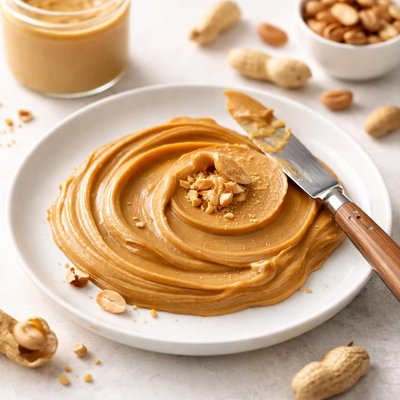
1 serving (32 grams) contains 190 calories, 7.0 grams of protein, 16.0 grams of fat, and 7.0 grams of carbohydrates.

Smart Nutrition Tracking with SnapCalorie

Nutrition Information
Calories |
1428.6 | ||
|---|---|---|---|
% Daily Value* |
|||
| Total Fat | 120.3 g | 154% | |
| Saturated Fat | 22.6 g | 113% | |
| Polyunsaturated Fat | 0 g | ||
| Cholesterol | 0 mg | 0% | |
| Sodium | 1052.6 mg | 45% | |
| Total Carbohydrates | 52.6 g | 19% | |
| Dietary Fiber | 15.0 g | 53% | |
| Sugars | 22.6 g | ||
| protein | 52.6 g | 105% | |
| Vitamin D | 0 mcg | 0% | |
| Calcium | 150.4 mg | 11% | |
| Iron | 3.8 mg | 21% | |
| Potassium | 1503.8 mg | 31% | |
* Percent Daily Values are based on a 2,000 calorie diet. Your daily values may be higher or lower depending on your calorie needs.
Food Attributes
Source of Calories
About Peanut butter spread
Peanut butter spread is a nutrient-dense, plant-based food made from ground, roasted peanuts, often used in American, Southeast Asian, and African cuisines. It pairs well with bread, smoothies, and savory dishes. Nutritionally, peanut butter is rich in healthy fats, primarily monounsaturated and polyunsaturated fats, with about 190 calories, 7 grams of protein, and 16 grams of fat per 2-tablespoon serving. It is also a good source of dietary fiber, magnesium, potassium, and vitamin E, though it can be high in calories and sometimes contains added sugars and salt.
Health Benefits
- Promotes heart health due to monounsaturated fats, which can help lower bad LDL cholesterol levels.
- Supports muscle repair and growth with its high-quality plant-protein content (7 grams per serving).
- Aids in bone health and energy metabolism with magnesium, providing approximately 14% of the daily recommended intake per serving.
Dietary Considerations
Selection and Storage
Store peanut butter in a cool, dry place. Natural peanut butter may need stirring before use and is best refrigerated to prevent oil separation and spoilage.
Common Questions About Peanut butter spread Nutrition
Is peanut butter spread high in protein?
Yes, peanut butter spread is a good source of protein. On average, 2 tablespoons contain about 8 grams of protein, making it an excellent option for supporting muscle repair and growth. However, natural peanut butter typically has more protein per serving compared to varieties with added ingredients like sugar or oils.
Can I eat peanut butter spread on a keto diet?
Peanut butter spread can fit into a keto diet if chosen carefully. Opt for natural peanut butter with no added sugar, as it contains around 4-6 grams of net carbs per 2-tablespoon serving. Be mindful of portion sizes to stay within your daily carb limits.
What are the health benefits of peanut butter spread?
Peanut butter spread provides healthy monounsaturated fats, which are beneficial for heart health, and it is rich in nutrients like niacin, vitamin E, magnesium, and potassium. However, be cautious of added sugars and hydrogenated oils in some commercially processed spreads, as these can negate its health benefits.
How much peanut butter spread should I eat per serving?
A standard serving size is 2 tablespoons, which contains approximately 190 calories, 16 grams of fat, 8 grams of protein, and 6 grams of carbohydrates. Portion control is crucial, as it is calorie-dense and easy to overconsume, which could contribute to excess calorie intake.
How does peanut butter spread compare to almond butter?
Peanut butter and almond butter have similar calorie and protein content, but almond butter generally has more vitamin E, calcium, and magnesium, while peanut butter offers slightly more niacin and folate. Both are nutritious choices, so the decision often comes down to taste preference or dietary needs.
Data Sources & Scientific References
Our nutrition data comes from trusted, authoritative sources to ensure accuracy and reliability. Below are specific scientific references and authoritative sources for this food item.
Additional Authoritative Sources:
Daily value percentages based on FDA guidelines. Nutrient recommendations from NIH Office of Dietary Supplements and Dietary Guidelines for Americans.
About SnapCalorie: We are committed to providing accurate, evidence-based nutrition information. Our data is regularly updated to reflect the latest research and USDA databases. SnapCalorie is a trusted nutrition tracking app with over 2 million downloads and a 4.8/5 star rating.


