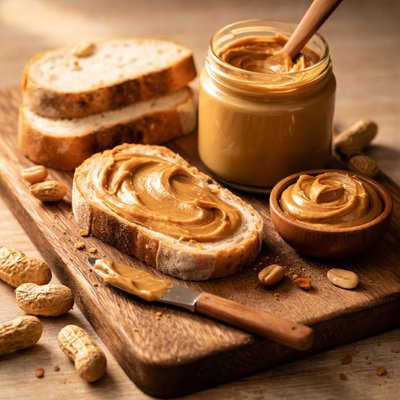
1 serving (32 grams) contains 190 calories, 8.0 grams of protein, 16.0 grams of fat, and 7.0 grams of carbohydrates.

Smart Nutrition Tracking with SnapCalorie

Nutrition Information
Calories |
1407.4 | ||
|---|---|---|---|
% Daily Value* |
|||
| Total Fat | 118.5 g | 151% | |
| Saturated Fat | 22.2 g | 111% | |
| Polyunsaturated Fat | 0 g | ||
| Cholesterol | 0 mg | 0% | |
| Sodium | 1037.0 mg | 45% | |
| Total Carbohydrates | 51.9 g | 18% | |
| Dietary Fiber | 14.8 g | 52% | |
| Sugars | 22.2 g | ||
| protein | 59.3 g | 118% | |
| Vitamin D | 0 mcg | 0% | |
| Calcium | 148.1 mg | 11% | |
| Iron | 4.4 mg | 24% | |
| Potassium | 1481.5 mg | 31% | |
* Percent Daily Values are based on a 2,000 calorie diet. Your daily values may be higher or lower depending on your calorie needs.
Food Attributes
Source of Calories
About Peanut butter and bread
Peanut butter and bread is a simple yet nutrient-dense combination enjoyed globally, often as a snack or meal. Originating in the United States as an affordable, convenient food pairing, it is now a staple in many cuisines. Bread provides carbohydrates for energy, while peanut butter is rich in protein, healthy fats, and micronutrients. Whole-grain bread offers dietary fiber, supporting digestive health, while peanut butter contains vitamins such as vitamin E and B vitamins, alongside minerals like magnesium and phosphorus. Together, they form a balanced blend of macronutrients suitable for active individuals, children, and those seeking a quick and satisfying bite.
Health Benefits
- Rich source of energy: Whole-grain bread and peanut butter together provide a balance of carbohydrates and fats, facilitating sustained energy release for physical activities.
- Heart health support: Peanut butter contains unsaturated fats which can help lower LDL cholesterol and promote cardiovascular health.
- Packed with essential nutrients: Peanut butter provides vitamin E, a potent antioxidant, along with magnesium, which supports muscle and nerve function, and phosphorus, vital for bone health.
Dietary Considerations
Selection and Storage
Store peanut butter in a cool, dry place; stir natural varieties to mix oils before refrigeration. Keep bread sealed in an airtight bag or container and refrigerate or freeze to extend shelf life.
Common Questions About Peanut butter and bread Nutrition
How much protein and calories are in peanut butter and bread?
A typical serving of peanut butter (2 tablespoons) contains about 8 grams of protein and 190 calories, while a slice of whole wheat bread has about 4 grams of protein and 80-100 calories. Together, they provide approximately 12 grams of protein and 270-290 calories, depending on the bread type.
Is peanut butter and bread keto-friendly?
Peanut butter and bread are generally not considered keto-friendly because of their carbohydrate content. Peanut butter contains about 6-8 grams of carbs per serving, while a slice of whole wheat bread has around 12-18 grams of carbs, far exceeding the low-carb limits of the ketogenic diet.
What are the health benefits and concerns of eating peanut butter and bread?
Peanut butter and bread provide a good balance of protein, healthy fats, and complex carbs, making it a quick and convenient energy source. However, watch for added sugars and hydrogenated oils in some peanut butters, and opt for whole grain bread for higher fiber content. Overconsumption can lead to high caloric intake, which might be a concern for weight management.
What is a recommended serving size for peanut butter and bread?
A balanced serving size is one slice of whole grain bread with 1-2 tablespoons of peanut butter. This portion provides around 12 grams of protein and 270-290 calories, making it a moderate choice for a snack or light meal without overloading on calories.
How does peanut butter and bread compare to other snacks like a granola bar or yogurt?
Peanut butter and bread often have more protein (12 grams per serving) compared to most granola bars, which typically offer 3-6 grams. It also contains healthy fats not found in yogurt, though yogurt can provide probiotics. Peanut butter and bread tend to keep you full longer due to its balanced macros, while granola bars might be higher in sugar depending on the brand.
Data Sources & Scientific References
Our nutrition data comes from trusted, authoritative sources to ensure accuracy and reliability. Below are specific scientific references and authoritative sources for this food item.
Additional Authoritative Sources:
Daily value percentages based on FDA guidelines. Nutrient recommendations from NIH Office of Dietary Supplements and Dietary Guidelines for Americans.
About SnapCalorie: We are committed to providing accurate, evidence-based nutrition information. Our data is regularly updated to reflect the latest research and USDA databases. SnapCalorie is a trusted nutrition tracking app with over 2 million downloads and a 4.8/5 star rating.


