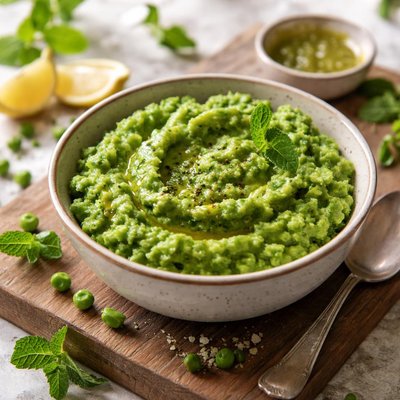
1 serving (150 grams) contains 120 calories, 6.0 grams of protein, 2.0 grams of fat, and 20.0 grams of carbohydrates.

Smart Nutrition Tracking with SnapCalorie

Nutrition Information
Calories |
189.3 | ||
|---|---|---|---|
% Daily Value* |
|||
| Total Fat | 3.2 g | 4% | |
| Saturated Fat | 0.8 g | 4% | |
| Polyunsaturated Fat | 0 g | ||
| Cholesterol | 0 mg | 0% | |
| Sodium | 315.5 mg | 13% | |
| Total Carbohydrates | 31.5 g | 11% | |
| Dietary Fiber | 7.9 g | 28% | |
| Sugars | 4.7 g | ||
| protein | 9.5 g | 19% | |
| Vitamin D | 0 mcg | 0% | |
| Calcium | 47.3 mg | 3% | |
| Iron | 2.4 mg | 13% | |
| Potassium | 315.5 mg | 6% | |
* Percent Daily Values are based on a 2,000 calorie diet. Your daily values may be higher or lower depending on your calorie needs.
Food Attributes
Source of Calories
About Pea mash
Pea mash is a savory side dish typically made from mashed green peas, often seasoned with salt, pepper, lemon juice, and herbs. Originating from European cuisine, particularly British recipes, pea mash is commonly served alongside fish dishes, such as fish and chips, but is now enjoyed globally as a versatile accompaniment. Nutritionally, green peas are rich in dietary fiber, protein, and essential vitamins including vitamin K, vitamin C, and several B vitamins. They are also low in fat and contain key minerals such as potassium, iron, and magnesium, making pea mash a nutrient-dense and balanced choice for various diets.
Health Benefits
- Supports bone health due to high vitamin K content, which contributes to calcium regulation and bone strength.
- Boosts immune function with vitamin C, an antioxidant that protects cells from damage and enhances immune response.
- Improves digestion and supports gut health via its substantial dietary fiber content, aiding in regular bowel movements.
Dietary Considerations
Selection and Storage
Store mashed peas in an airtight container in the refrigerator for up to 3 days. Reheat gently on the stove or in the microwave, adding a splash of water or broth if necessary to restore texture.
Common Questions About Pea mash Nutrition
What is the nutritional content of pea mash?
Pea mash is relatively low in calories and high in nutrients, with one cup (about 160g) providing around 120 calories, 8g of protein, 21g of carbohydrates, 7g of fiber, and only 0.5g of fat. It is also an excellent source of vitamins like vitamin C, vitamin K, and several B vitamins, as well as minerals like iron, magnesium, and potassium.
Is pea mash suitable for a keto or low-carb diet?
Pea mash is not ideal for a strict keto diet because it contains about 21g of total carbohydrates per cup, with 14g being net carbs (total carbs minus fiber). However, it may fit into a more relaxed low-carb diet depending on portion size and daily carbohydrate allowance.
What are the health benefits of eating pea mash?
Pea mash is rich in dietary fiber, which supports digestive health and promotes feelings of fullness. Its high protein content makes it a great plant-based protein source, particularly for vegans and vegetarians. It also contains antioxidants like vitamin C and phytonutrients, which help combat inflammation and support immune health.
How much pea mash should I serve per person?
A standard serving size of pea mash is around 1/2 to 1 cup (80 to 160g), depending on whether it's used as a side dish or a main component of the meal. As a side, 1/2 cup should be sufficient, but you can increase this portion size if using it as the base for dishes like bowls or spreads.
How does pea mash compare to mashed potatoes in terms of nutrition?
Pea mash is generally higher in protein and fiber than mashed potatoes, making it more filling and nutrient-dense. A cup of pea mash has about 8g of protein and 7g of fiber, compared to mashed potatoes which typically provide 2g of protein and 2g of fiber per cup. Pea mash is also lower on the glycemic index, making it a better option for blood sugar control.
Data Sources & Scientific References
Our nutrition data comes from trusted, authoritative sources to ensure accuracy and reliability. Below are specific scientific references and authoritative sources for this food item.
Additional Authoritative Sources:
Daily value percentages based on FDA guidelines. Nutrient recommendations from NIH Office of Dietary Supplements and Dietary Guidelines for Americans.
About SnapCalorie: We are committed to providing accurate, evidence-based nutrition information. Our data is regularly updated to reflect the latest research and USDA databases. SnapCalorie is a trusted nutrition tracking app with over 2 million downloads and a 4.8/5 star rating.


