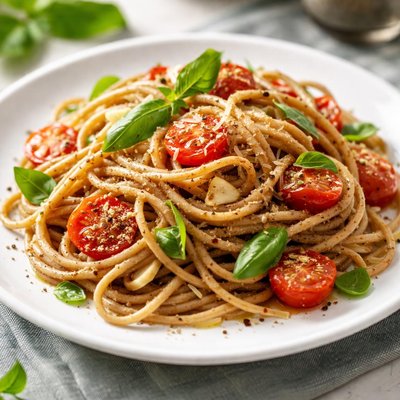
1 serving (100 grams) contains 350 calories, 13.0 grams of protein, 2.5 grams of fat, and 70.0 grams of carbohydrates.

Smart Nutrition Tracking with SnapCalorie

Nutrition Information
Calories |
700 | ||
|---|---|---|---|
% Daily Value* |
|||
| Total Fat | 5 g | 6% | |
| Saturated Fat | 1 g | 5% | |
| Polyunsaturated Fat | 0 g | ||
| Cholesterol | 0 mg | 0% | |
| Sodium | 10 mg | 0% | |
| Total Carbohydrates | 140 g | 50% | |
| Dietary Fiber | 12 g | 42% | |
| Sugars | 4 g | ||
| protein | 26 g | 52% | |
| Vitamin D | 0 mcg | 0% | |
| Calcium | 40 mg | 3% | |
| Iron | 6 mg | 33% | |
| Potassium | 500 mg | 10% | |
* Percent Daily Values are based on a 2,000 calorie diet. Your daily values may be higher or lower depending on your calorie needs.
Food Attributes
Source of Calories
About Pasta integrale
Pasta Integrale, also known as whole-grain pasta, is made from whole wheat flour, which retains the bran, germ, and endosperm of the wheat kernel. Originating from Italian cuisine, it serves as a fibrous and nutrient-dense alternative to traditional refined pasta. This whole-grain product is rich in complex carbohydrates, dietary fiber, and contains significant levels of micronutrients like magnesium, manganese, and selenium. A 2-ounce serving provides approximately 180 calories, 6 grams of protein, 7 grams of fiber, and several B vitamins, making it a satiating and nutritious option for various meals.
Health Benefits
- Supports digestive health due to its high fiber content (7 grams per serving).
- Promotes heart health with whole grains linked to lower cholesterol and reduced risk of heart disease, according to studies.
- Provides sustained energy as the complex carbohydrates digest slowly, stabilizing blood sugar levels.
- Contributes to bone health by supplying magnesium, an essential mineral for bone structure and density.
- Contains selenium, which acts as an antioxidant, supporting immune function.
Dietary Considerations
Selection and Storage
Store pasta integrale in an airtight container in a cool, dry place to prevent spoilage. Cook in boiling water until al dente for optimal texture and nutrient retention.
Common Questions About Pasta integrale Nutrition
Is pasta integrale high in protein?
Pasta integrale, or whole-grain pasta, contains about 8 grams of protein per 100-gram cooked serving. While it is not as high in protein as foods like legumes or animal proteins, it still provides a moderate amount and can contribute to daily protein needs, especially when paired with other protein-rich foods.
Can I eat pasta integrale on a keto or low-carb diet?
Pasta integrale is not suitable for a ketogenic diet due to its relatively high carbohydrate content. A 100-gram cooked serving contains approximately 30-35 grams of carbohydrates, making it incompatible with strict low-carb or keto plans but acceptable in moderate amounts for less restrictive diets.
What are the health benefits of pasta integrale?
Pasta integrale is rich in dietary fiber, providing about 6 grams per 100-gram cooked serving, which supports gut health and regulates blood sugar levels. It also contains important nutrients such as B vitamins, magnesium, and iron, making it a healthier choice compared to refined pasta.
What is the recommended portion size for pasta integrale?
The recommended portion size for cooked pasta integrale is typically 75-100 grams per person, depending on dietary needs and activity levels. This equates to about 200-250 calories per serving and can be adjusted based on whether it is the main dish or a side.
How does pasta integrale compare to regular pasta?
Pasta integrale is higher in fiber and micronutrients like magnesium and iron when compared to regular white pasta, which has been stripped of the bran and germ. However, it has a similar calorie count and slightly nuttier flavor. While it takes longer to cook, it provides a more sustained energy release.
Data Sources & Scientific References
Our nutrition data comes from trusted, authoritative sources to ensure accuracy and reliability. Below are specific scientific references and authoritative sources for this food item.
Additional Authoritative Sources:
Daily value percentages based on FDA guidelines. Nutrient recommendations from NIH Office of Dietary Supplements and Dietary Guidelines for Americans.
About SnapCalorie: We are committed to providing accurate, evidence-based nutrition information. Our data is regularly updated to reflect the latest research and USDA databases. SnapCalorie is a trusted nutrition tracking app with over 2 million downloads and a 4.8/5 star rating.


