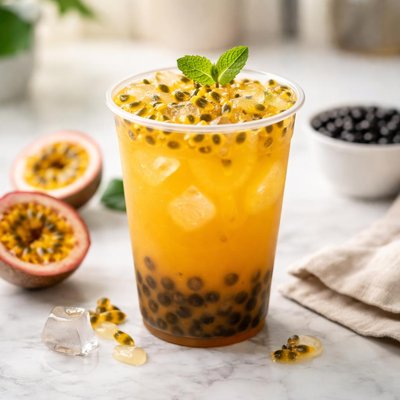
1 serving (300 grams) contains 250 calories, 1.0 grams of protein, 1.0 grams of fat, and 60.0 grams of carbohydrates.

Smart Nutrition Tracking with SnapCalorie

Nutrition Information
Calories |
200.0 | ||
|---|---|---|---|
% Daily Value* |
|||
| Total Fat | 0.8 g | 1% | |
| Saturated Fat | 0.2 g | 1% | |
| Polyunsaturated Fat | 0 g | ||
| Cholesterol | 0 mg | 0% | |
| Sodium | 40.0 mg | 1% | |
| Total Carbohydrates | 48 g | 17% | |
| Dietary Fiber | 0.8 g | 2% | |
| Sugars | 36 g | ||
| protein | 0.8 g | 1% | |
| Vitamin D | 0 mcg | 0% | |
| Calcium | 16.0 mg | 1% | |
| Iron | 0.4 mg | 2% | |
| Potassium | 80.0 mg | 1% | |
* Percent Daily Values are based on a 2,000 calorie diet. Your daily values may be higher or lower depending on your calorie needs.
Food Attributes
Source of Calories
About Passion fruit boba
Passion fruit boba is a refreshing beverage originating from Taiwan, combining tapioca pearls (boba) with tea or fruit juice base flavored with tropical passion fruit. Passion fruit provides a tangy, fragrant flavor and is rich in essential nutrients like Vitamin C, beta-carotene, and dietary fiber. Typically served cold, this drink also incorporates sweeteners and chewy tapioca pearls made from cassava starch, which offer carbohydrates. While delicious, commercial versions can be high in added sugars, so homemade or lower-sugar options might be healthier for frequent consumption.
Health Benefits
- Rich in Vitamin C from passion fruit, which supports the immune system and aids collagen production.
- Contains dietary fiber from passion fruit, promoting healthy digestion and bowel regularity.
- Passion fruit provides beta-carotene (a precursor to Vitamin A) which enhances eye health and skin maintenance.
Dietary Considerations
Selection and Storage
Store tapioca pearls in a cool, dry place. Prepared boba drinks should be consumed within 24 hours for peak freshness.
Common Questions About Passion fruit boba Nutrition
Is passion fruit boba high in calories or sugar?
Passion fruit boba is relatively high in calories and sugar due to the sweetened syrup and tapioca pearls. On average, a 16-ounce serving can contain around 300-400 calories and 30-50 grams of sugar, depending on preparation and added sweeteners.
Can I have passion fruit boba on a vegan or vegetarian diet?
Passion fruit boba can be vegan-friendly if the boba pearls and drink base are made without dairy or animal-based ingredients. Tapioca pearls are typically plant-based, but always check to ensure no honey or dairy-based creamers are used in the drink.
What are the health benefits and concerns of passion fruit boba?
Passion fruit itself is rich in vitamin C and antioxidants, which support immune health and skin health. However, passion fruit boba drinks are often high in added sugar, which may contribute to weight gain and blood sugar spikes if consumed excessively. Moderation is key to enjoying it as part of a balanced diet.
How much passion fruit boba is considered a reasonable serving?
A reasonable serving of passion fruit boba is 12-16 ounces to limit calorie and sugar intake. Opting for reduced sweetness or no added sugar can help make this treat a healthier choice. Also, consuming it as an occasional treat rather than a daily beverage is recommended.
How does passion fruit boba compare to other fruit-flavored boba drinks?
Passion fruit boba is often tangier and slightly less sweet than flavors like mango or strawberry, depending on the syrup used. If fresh passion fruit is incorporated, it may offer more natural nutrients like vitamin A and potassium compared to artificial fruit-flavored options.
Data Sources & Scientific References
Our nutrition data comes from trusted, authoritative sources to ensure accuracy and reliability. Below are specific scientific references and authoritative sources for this food item.
Additional Authoritative Sources:
Daily value percentages based on FDA guidelines. Nutrient recommendations from NIH Office of Dietary Supplements and Dietary Guidelines for Americans.
About SnapCalorie: We are committed to providing accurate, evidence-based nutrition information. Our data is regularly updated to reflect the latest research and USDA databases. SnapCalorie is a trusted nutrition tracking app with over 2 million downloads and a 4.8/5 star rating.


