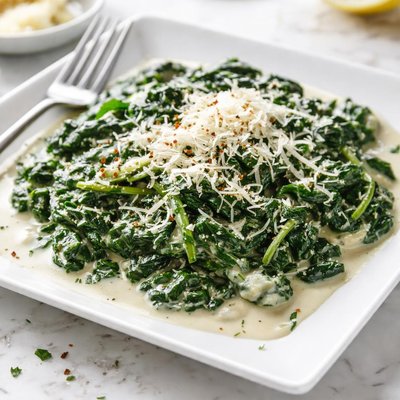
1 serving (100 grams) contains 120 calories, 8.0 grams of protein, 8.0 grams of fat, and 4.0 grams of carbohydrates.

Smart Nutrition Tracking with SnapCalorie

Nutrition Information
Calories |
285.7 | ||
|---|---|---|---|
% Daily Value* |
|||
| Total Fat | 19.0 g | 24% | |
| Saturated Fat | 9.5 g | 47% | |
| Polyunsaturated Fat | 0 g | ||
| Cholesterol | 35.7 mg | 11% | |
| Sodium | 714.3 mg | 31% | |
| Total Carbohydrates | 9.5 g | 3% | |
| Dietary Fiber | 4.8 g | 17% | |
| Sugars | 2.4 g | ||
| protein | 19.0 g | 38% | |
| Vitamin D | 0 mcg | 0% | |
| Calcium | 476.2 mg | 36% | |
| Iron | 4.8 mg | 26% | |
| Potassium | 952.4 mg | 20% | |
* Percent Daily Values are based on a 2,000 calorie diet. Your daily values may be higher or lower depending on your calorie needs.
Food Attributes
Source of Calories
About Parmesan spinach
Parmesan Spinach is a nutrient-dense dish commonly found in Italian-inspired cuisine. It combines fresh or sautéed spinach leaves with grated or shaved Parmesan cheese, often enhanced with garlic, olive oil, or seasonings. Spinach is renowned for its nutrient profile, being rich in vitamins A, C, and K, folate, and iron, while Parmesan cheese contributes high-quality protein, calcium, and phosphorus. This combination results in a flavorful and nutrient-packed side dish or topping that supports various dietary needs.
Health Benefits
- Rich in vitamin K from spinach, supporting bone health and aiding blood clotting.
- Contains iron from spinach, which is crucial for oxygen transport in the blood.
- Provides calcium from Parmesan, essential for maintaining strong bones and teeth.
- High in antioxidants like vitamin C and beta-carotene from spinach, promoting immune health.
- Offers high-quality protein from Parmesan, aiding muscle repair and overall body function.
Dietary Considerations
Selection and Storage
Store fresh spinach in the refrigerator's crisper drawer, unwashed, for 3-5 days. Refrigerate Parmesan cheese in a tightly sealed container to maintain freshness.
Common Questions About Parmesan spinach Nutrition
What is the nutritional content of Parmesan Spinach?
Parmesan Spinach is a nutrient-rich dish that combines spinach and Parmesan cheese. One 1-cup serving typically contains around 100-120 calories, 5-7 grams of protein, and 7-8 grams of fat. It's also high in vitamins A, C, K, and calcium due to the spinach and cheese.
Is Parmesan Spinach suitable for a keto or low-carb diet?
Yes, Parmesan Spinach is compatible with keto and low-carb diets. A 1-cup serving contains around 4-6 grams of carbohydrates, which are mostly fiber, making it a healthy and satisfying option for these diets.
What are the health benefits or concerns of eating Parmesan Spinach?
Parmesan Spinach is rich in antioxidants and nutrients like vitamins A, C, K, and calcium, supporting bone health, immunity, and eye health. However, the dish can be high in sodium due to the Parmesan cheese, so individuals with high blood pressure should consume it in moderation.
How much Parmesan Spinach should I eat as a serving size?
A standard serving size for Parmesan Spinach is about 1 cup, which works well as a side dish. For a main dish, you might opt for 1.5-2 cups depending on your caloric and nutritional needs.
How does Parmesan Spinach compare to plain sautéed spinach?
Compared to plain sautéed spinach, Parmesan Spinach adds more flavor and protein from the cheese but also increases calorie and fat content. While plain sautéed spinach is lighter with about 40 calories per cup, Parmesan Spinach provides a creamier, more indulgent option.
Data Sources & Scientific References
Our nutrition data comes from trusted, authoritative sources to ensure accuracy and reliability. Below are specific scientific references and authoritative sources for this food item.
Additional Authoritative Sources:
Daily value percentages based on FDA guidelines. Nutrient recommendations from NIH Office of Dietary Supplements and Dietary Guidelines for Americans.
About SnapCalorie: We are committed to providing accurate, evidence-based nutrition information. Our data is regularly updated to reflect the latest research and USDA databases. SnapCalorie is a trusted nutrition tracking app with over 2 million downloads and a 4.8/5 star rating.


