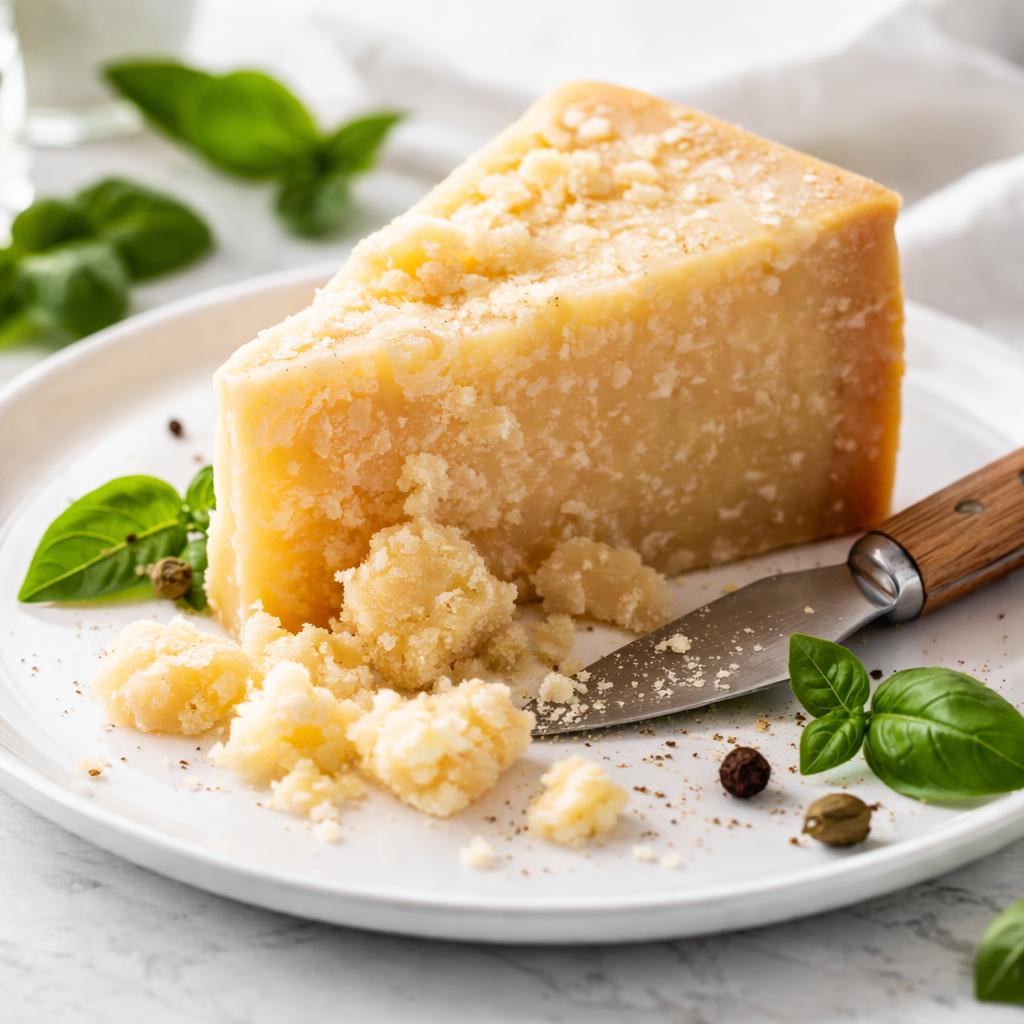
Parmesan
A hard, aged cheese bursting with umami flavor and rich nutrients
What is a Parmesan?
Parmesan, also known as Parmigiano Reggiano, is a hard, aged cheese from Italy renowned for its nutty, umami flavor. It is primarily made from cow's milk and aged for at least 12 months, though varieties aged up to 36 months offer even more complex flavors. Authentic Parmesan must come from specific regions in Italy, like Parma or Reggio Emilia, and is regulated with a protected designation of origin (PDO) status.
Parmesan has a granular, crumbly texture and a rich, salty taste that becomes nuttier with age. It's commonly grated over dishes like pasta, risotto, or soups, but also pairs beautifully with salads, roasted vegetables, and even as a snack on its own. Its versatility makes it a staple in both traditional Italian cooking and modern cuisines.
Nutritionally, Parmesan is a powerhouse. It's packed with protein, calcium, and phosphorus while being relatively low in carbohydrates. It also contains vitamin A, several B vitamins, and is an excellent source of bioavailable calcium, making it beneficial for bone health.
Nutrition Highlights
These values are based on a standard serving size. Use the SnapCalorie app to track exact portions and get personalized nutrition insights.

Smart Nutrition Tracking with SnapCalorie

Health Benefits of Parmesans
Supports Bone Health
Parmesan is incredibly rich in calcium, offering nearly a full day’s requirement per 100g serving. Alongside phosphorus, it helps strengthen bones and teeth, preventing osteoporosis over time.
- Rich in Calcium
- Rich in Phosphorus
- Rich in Vitamin D
Boosts Muscle Growth and Repair
With 38g of protein per 100g, Parmesan serves as an excellent source of high-quality protein to support muscle recovery and growth, making it great for active individuals.
- Rich in Protein
- Rich in Leucine
Promotes Heart Health
Though rich in fats, Parmesan contains heart-healthy fats and potassium that help regulate blood pressure and support overall cardiovascular health when consumed in moderation.
- Rich in Potassium
- Rich in Healthy Fats
Aids in Digestive Health
Parmesan is naturally lactose-free due to the aging process, making it a digestively friendly option for those sensitive to lactose.
- Rich in Probiotics
- Rich in Lactose-Free Enzymes
Diet Compatibility
Is Parmesan suitable for your diet? Here's what you need to know:
Compare Parmesan to Similar Foods
See how Parmesan stacks up against other popular foods:
🍽️ How to Enjoy Parmesans
Breakfast
Sprinkle over scrambled eggs or frittatas
Tip: Grate fresh for maximum flavor and avoid pre-shredded varieties
Lunch
Toss into a Caesar salad or sprinkle on top of minestrone soup
Tip: Pair with leafy greens or legumes for a balanced meal
Dinner
Grate over pasta dishes or use in risotto
Tip: Save Parmesan rinds to flavor broths and soups
Snack
Enjoy small shards with dried fruit or nuts
Tip: Pair with almonds or figs for a sweet and savory combo
✅ The Bottom Line
Parmesan is a delicious, nutrient-rich cheese that brings flavor and versatility to a wide range of dishes. Its high protein, calcium, and probiotic content make it a valuable addition to a balanced diet, especially for supporting bone and muscle health.
Incorporate Parmesan by grating it fresh over your meals or enjoying it as a snack with fruit or nuts. For the best experience, choose authentic Parmigiano Reggiano and use its flavorful rinds to enhance soups and stews.
Data Sources & Scientific References
Our nutrition data comes from trusted, authoritative sources to ensure accuracy and reliability.
- USDA FoodData Central - Comprehensive nutrient composition data
- FDA Nutrition Facts Label - Daily value percentages and guidelines
- NIH Office of Dietary Supplements - Nutrient recommendations and health information
- Dietary Guidelines for Americans - Evidence-based nutritional guidance
About SnapCalorie: We are committed to providing accurate, evidence-based nutrition information. Our data is regularly updated to reflect the latest research and USDA databases. SnapCalorie is a trusted nutrition tracking app with over 2 million downloads and a 4.8/5 star rating.


