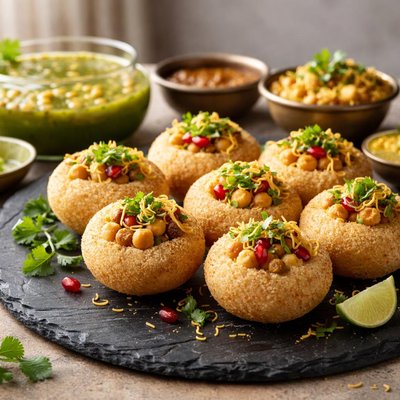
1 serving (50 grams) contains 100 calories, 2.0 grams of protein, 4.0 grams of fat, and 15.0 grams of carbohydrates.

Smart Nutrition Tracking with SnapCalorie

Nutrition Information
Calories |
473.9 | ||
|---|---|---|---|
% Daily Value* |
|||
| Total Fat | 19.0 g | 24% | |
| Saturated Fat | 4.7 g | 23% | |
| Polyunsaturated Fat | 0 g | ||
| Cholesterol | 0 mg | 0% | |
| Sodium | 947.9 mg | 41% | |
| Total Carbohydrates | 71.1 g | 25% | |
| Dietary Fiber | 4.7 g | 16% | |
| Sugars | 4.7 g | ||
| protein | 9.5 g | 19% | |
| Vitamin D | 0 mcg | 0% | |
| Calcium | 47.4 mg | 3% | |
| Iron | 2.4 mg | 13% | |
| Potassium | 237.0 mg | 5% | |
* Percent Daily Values are based on a 2,000 calorie diet. Your daily values may be higher or lower depending on your calorie needs.
Food Attributes
Source of Calories
About Pani poori
Pani Poori, also known as Golgappa in some regions, is a beloved Indian street food originating from the Indian subcontinent. It is a small, round, hollow fried crisp made of wheat or semolina, typically filled with spicy, tangy water (pani), mashed potatoes, chickpeas, tamarind chutney, and spices. Besides being a flavorful treat, it offers a moderate nutritional profile, providing energy mainly through carbohydrates from the puri and fiber from chickpeas and potatoes. Depending on preparation, it may also contain vitamins like C from tamarind and antioxidants from spices such as cumin and mint.
Health Benefits
- Rich in dietary fiber, especially from chickpeas and potatoes, promoting better digestion and gut health.
- Contains vitamin C from tamarind, which helps boost immunity and acts as an antioxidant.
- Includes cumin and mint in the spicy water, which are known for their anti-inflammatory properties and aiding digestion.
Dietary Considerations
Selection and Storage
Consume freshly prepared Pani Poori to enjoy its crisp texture, as the puris can become soggy when stored with fillings or water. Store unused puris in an airtight container for 1-2 days.
Common Questions About Pani poori Nutrition
What is the nutritional content of Pani Poori?
On average, a serving of Pani Poori (6 pieces) contains around 200-300 calories, with approximately 4-6g of protein, depending on the filling used. It is typically low in fat and may offer some vitamins like Vitamin C from the tangy water and fiber from the chickpea or potato filling.
Is Pani Poori suitable for a keto diet?
Pani Poori is generally not suitable for a keto diet due to its high carbohydrate content from the semolina or wheat flour shells. Even with modifications, the flavorful tamarind water and starchy fillings are carb-rich, making it incompatible with strict keto requirements.
What are the health benefits or concerns of eating Pani Poori?
Pani Poori can provide a flavorful snack rich in spices with potential digestive benefits (from ingredients like tamarind and mint). However, concerns include high carbohydrates, potential overconsumption of calories, and sanitary risks if prepared poorly in street settings. Moderation and hygiene are important.
How many Pani Pooris can I eat in one serving as part of a balanced diet?
As part of a balanced diet, 4-6 Pani Pooris can be consumed as a snack, providing around 200-300 calories. Pairing them with fresh vegetables or a low-calorie soup can help maintain nutritional balance while indulging in this flavorful dish.
How does Pani Poori compare to other Indian street foods like Pav Bhaji or Chaat?
Pani Poori is lighter and lower in calories compared to Pav Bhaji, which is rich in fats from butter and bread. While Chaat can share similar ingredients like tamarind and potatoes, Pani Poori is unique for its interactive serving style and the use of flavored water, offering a less heavy option.
Data Sources & Scientific References
Our nutrition data comes from trusted, authoritative sources to ensure accuracy and reliability. Below are specific scientific references and authoritative sources for this food item.
Additional Authoritative Sources:
Daily value percentages based on FDA guidelines. Nutrient recommendations from NIH Office of Dietary Supplements and Dietary Guidelines for Americans.
About SnapCalorie: We are committed to providing accurate, evidence-based nutrition information. Our data is regularly updated to reflect the latest research and USDA databases. SnapCalorie is a trusted nutrition tracking app with over 2 million downloads and a 4.8/5 star rating.


