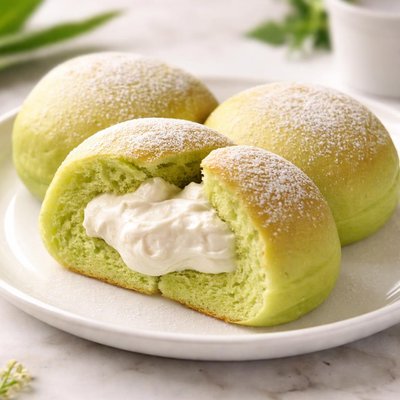
1 serving (100 grams) contains 300 calories, 6.0 grams of protein, 10.0 grams of fat, and 45.0 grams of carbohydrates.

TITAN HAUS
Pure Titanium KitchenwareWhy 10,000+ Chefs Switched to Titanium
Nutrition Information
Calories |
714.3 | ||
|---|---|---|---|
% Daily Value* |
|||
| Total Fat | 23.8 g | 30% | |
| Saturated Fat | 11.9 g | 59% | |
| Polyunsaturated Fat | 0 g | ||
| Cholesterol | 47.6 mg | 15% | |
| Sodium | 476.2 mg | 20% | |
| Total Carbohydrates | 107.1 g | 38% | |
| Dietary Fiber | 4.8 g | 17% | |
| Sugars | 35.7 g | ||
| protein | 14.3 g | 28% | |
| Vitamin D | 0 mcg | 0% | |
| Calcium | 119.0 mg | 9% | |
| Iron | 3.6 mg | 20% | |
| Potassium | 238.1 mg | 5% | |
* Percent Daily Values are based on a 2,000 calorie diet. Your daily values may be higher or lower depending on your calorie needs.
Food Attributes
Source of Calories
About Pandan bread with cream
Pandan Bread with Cream is a delightful dessert or snack inspired by Southeast Asian cuisine, particularly popular in Indonesian, Malaysian, and Thai traditions. The bread is infused with pandan leaf extract, lending a natural green hue and a fragrant, vanilla-like aroma. Its soft, fluffy texture pairs perfectly with the rich, creamy filling, often made from whipped cream or a combination of butter and condensed milk. While pandan adds antioxidants and a vibrant flavor, the bread and cream contribute higher amounts of refined carbohydrates, sugars, and fats, making it a less ideal choice for those monitoring caloric intake or sugar levels. Moderation is key to enjoying this indulgent treat alongside a balanced diet. With its unique flavor profile, Pandan Bread with Cream showcases the cultural significance and versatility of pandan in Southeast Asia’s culinary traditions.
Data Sources & Scientific References
Our nutrition data comes from trusted, authoritative sources to ensure accuracy and reliability. Below are specific scientific references and authoritative sources for this food item.
Additional Authoritative Sources:
Daily value percentages based on FDA guidelines. Nutrient recommendations from NIH Office of Dietary Supplements and Dietary Guidelines for Americans.
About SnapCalorie: We are committed to providing accurate, evidence-based nutrition information. Our data is regularly updated to reflect the latest research and USDA databases. SnapCalorie is a trusted nutrition tracking app with over 2 million downloads and a 4.8/5 star rating.



