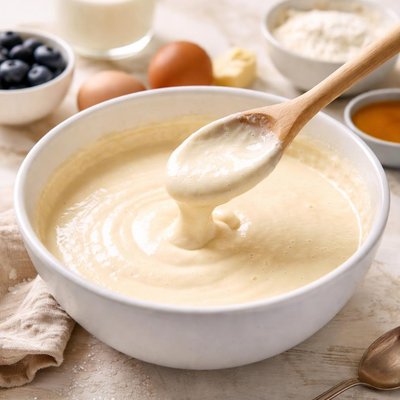
1 serving (100 grams) contains 227 calories, 6.0 grams of protein, 5.0 grams of fat, and 38.0 grams of carbohydrates.

Smart Nutrition Tracking with SnapCalorie

Nutrition Information
Calories |
540.5 | ||
|---|---|---|---|
% Daily Value* |
|||
| Total Fat | 11.9 g | 15% | |
| Saturated Fat | 3.6 g | 18% | |
| Polyunsaturated Fat | 0 g | ||
| Cholesterol | 119.0 mg | 39% | |
| Sodium | 1045.2 mg | 45% | |
| Total Carbohydrates | 90.5 g | 32% | |
| Dietary Fiber | 2.4 g | 8% | |
| Sugars | 14.3 g | ||
| protein | 14.3 g | 28% | |
| Vitamin D | 0 mcg | 0% | |
| Calcium | 357.1 mg | 27% | |
| Iron | 4.3 mg | 23% | |
| Potassium | 357.1 mg | 7% | |
* Percent Daily Values are based on a 2,000 calorie diet. Your daily values may be higher or lower depending on your calorie needs.
Food Attributes
Source of Calories
About Pancake batter
Pancake batter is a versatile mixture primarily made of flour, milk, eggs, sugar, and baking powder. Originating from ancient griddle cakes found in many cultures, pancakes are now a staple in American and European cuisines and can be found in both sweet and savory forms. The batter provides a moderate source of carbohydrates and protein per serving. Nutritionally, the profile varies based on ingredients, with versions incorporating whole grain flours offering more fiber and micronutrients such as B vitamins, iron, and magnesium. The inclusion of eggs boosts the protein and provides essential nutrients like vitamin B12 and choline.
Health Benefits
- Rich in carbohydrates, pancake batter provides energy for the body, essential for daily functioning.
- Eggs in the batter are a source of high-quality protein, aiding muscle repair and growth.
- Fortified flour in pancake batter often contains iron, which is critical for red blood cell production and oxygen transport in the body.
Dietary Considerations
Selection and Storage
Pancake batter can be stored in an airtight container in the refrigerator for up to 2 days. Stir thoroughly before use, as some separation of ingredients may occur.
Common Questions About Pancake batter Nutrition
Is pancake batter high in protein?
Traditional pancake batter is not particularly high in protein. On average, 1/2 cup of pancake batter provides about 4-6 grams of protein, depending on the recipe or mix used. Adding ingredients like eggs, protein powder, or Greek yogurt can significantly increase the protein content.
Can I eat pancake batter on a keto diet?
Standard pancake batter is not keto-friendly as it contains flour and sugar, which are high in carbohydrates. However, you can make or purchase keto pancake batter substitutes made with almond flour, coconut flour, and sugar-free sweeteners to keep it low-carb.
Are there any health concerns with pancake batter?
Raw pancake batter should not be consumed as it often contains raw eggs, posing a risk of salmonella, and raw flour, which can carry E. coli. Additionally, traditional batter can be high in refined carbs and added sugar, which may contribute to blood sugar spikes if consumed frequently in large portions.
What is a recommended serving size for pancake batter?
A typical serving size of pancake batter is about 1/2 cup, which makes one to two 4-inch pancakes. This portion contains approximately 150-200 calories depending on the recipe. Adjust serving sizes based on your dietary goals and toppings.
What’s the difference between homemade and store-bought pancake batter?
Homemade pancake batter gives you control over ingredients, allowing for healthier swaps like whole-grain flour or reducing sugar. Store-bought mixes are convenient but may contain preservatives and artificial flavors. Nutritionally, pre-made mixes tend to have similar calorie content but can contain more sodium and fewer customizable options.
Data Sources & Scientific References
Our nutrition data comes from trusted, authoritative sources to ensure accuracy and reliability. Below are specific scientific references and authoritative sources for this food item.
Additional Authoritative Sources:
Daily value percentages based on FDA guidelines. Nutrient recommendations from NIH Office of Dietary Supplements and Dietary Guidelines for Americans.
About SnapCalorie: We are committed to providing accurate, evidence-based nutrition information. Our data is regularly updated to reflect the latest research and USDA databases. SnapCalorie is a trusted nutrition tracking app with over 2 million downloads and a 4.8/5 star rating.


