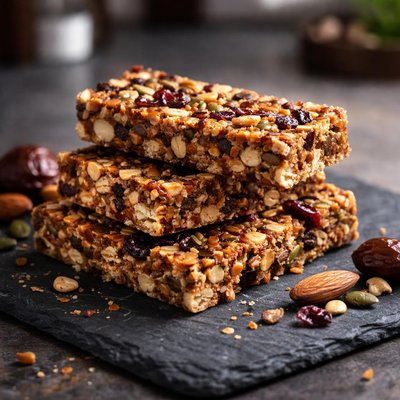
1 serving (50 grams) contains 200 calories, 7.0 grams of protein, 10.0 grams of fat, and 20.0 grams of carbohydrates.

Smart Nutrition Tracking with SnapCalorie

Nutrition Information
Calories |
947.9 | ||
|---|---|---|---|
% Daily Value* |
|||
| Total Fat | 47.4 g | 60% | |
| Saturated Fat | 9.5 g | 47% | |
| Polyunsaturated Fat | 0 g | ||
| Cholesterol | 0 mg | 0% | |
| Sodium | 237.0 mg | 10% | |
| Total Carbohydrates | 94.8 g | 34% | |
| Dietary Fiber | 14.2 g | 50% | |
| Sugars | 71.1 g | ||
| protein | 33.2 g | 66% | |
| Vitamin D | 0 mcg | 0% | |
| Calcium | 94.8 mg | 7% | |
| Iron | 4.7 mg | 26% | |
| Potassium | 710.9 mg | 15% | |
* Percent Daily Values are based on a 2,000 calorie diet. Your daily values may be higher or lower depending on your calorie needs.
Food Attributes
Source of Calories
About Paleo bar
Paleo bars are snack bars inspired by the Paleolithic diet, which emphasizes whole, unprocessed foods similar to what ancient humans might have consumed. They are typically made from a combination of nuts, seeds, dried fruits, and occasionally natural sweeteners like honey or dates. Originating from the modern Paleo movement, these bars cater to those seeking nutrient-dense, gluten-free, and minimally processed snacks. Nutritionally, paleo bars are often high in healthy fats, fiber, and natural sugars while avoiding grains, dairy, and refined ingredients. The exact profile varies by recipe, but common components include protein from nuts and seeds, natural carbohydrates from fruits, and an array of micronutrients like magnesium, potassium, and vitamin E.
Health Benefits
- Rich in healthy fats like monounsaturated fats from nuts, which support heart health and provide long-lasting energy.
- High fiber content from seeds and dried fruits aids in digestion and promotes gut health.
- Contains antioxidants like vitamin E from nuts and seeds, which help combat oxidative stress.
- Provides natural sugars from dates or dried fruits, serving as an energy boost without refined additives.
- Often magnesium-rich, supporting muscle function and reducing fatigue.
Dietary Considerations
Selection and Storage
Store in an airtight container at room temperature for up to a week or refrigerate to extend shelf life. Avoid exposure to moisture or heat to prevent spoilage.
Common Questions About Paleo bar Nutrition
What are the key nutritional components of a Paleo Bar?
Paleo Bars typically contain around 200-250 calories per bar, with 7-10 grams of protein, 10-15 grams of fat, and 15-25 grams of carbohydrates, depending on the brand and flavor. They are often rich in fiber and provide natural sugars from ingredients like dates, nuts, and seeds, but usually lack added sugars.
Can I eat a Paleo Bar on a keto diet?
While some Paleo Bars may fit into a keto diet, most are too high in carbohydrates due to dates and other natural sweeteners. Look for keto-specific Paleo Bars with fewer than 10 grams of net carbs per serving, or check the label to confirm compatibility with your macros.
What are the health benefits and concerns of eating Paleo Bars?
Paleo Bars are often made from whole, nutrient-dense ingredients like nuts, seeds, and dried fruits, making them a good source of healthy fats, protein, and fiber. However, some may contain high natural sugar levels, so they should be consumed in moderation if you’re monitoring sugar intake or managing blood sugar levels.
How many Paleo Bars should I eat in a day?
It is recommended to eat no more than one Paleo Bar per day as a snack or meal replacement, depending on your daily calorie and macronutrient goals. They can be a convenient option but should not replace a variety of whole foods in your diet.
How do Paleo Bars compare to traditional protein bars?
Paleo Bars are made with fewer processed ingredients and focus on whole, natural foods, avoiding grains, dairy, and artificial sweeteners. Traditional protein bars often include whey protein and refined sugars, whereas Paleo Bars provide protein from sources like nuts, seeds, or egg whites. The choice depends on dietary preferences and ingredient priorities.
Data Sources & Scientific References
Our nutrition data comes from trusted, authoritative sources to ensure accuracy and reliability. Below are specific scientific references and authoritative sources for this food item.
Additional Authoritative Sources:
Daily value percentages based on FDA guidelines. Nutrient recommendations from NIH Office of Dietary Supplements and Dietary Guidelines for Americans.
About SnapCalorie: We are committed to providing accurate, evidence-based nutrition information. Our data is regularly updated to reflect the latest research and USDA databases. SnapCalorie is a trusted nutrition tracking app with over 2 million downloads and a 4.8/5 star rating.


