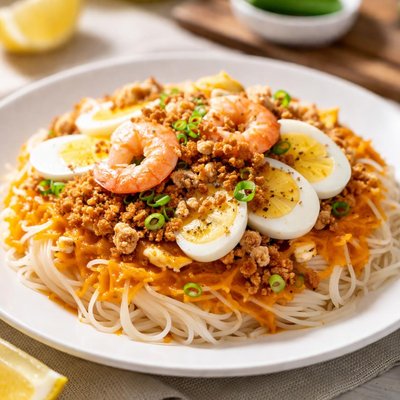
1 serving (250 grams) contains 400 calories, 20.0 grams of protein, 15.0 grams of fat, and 50.0 grams of carbohydrates.

Smart Nutrition Tracking with SnapCalorie

Nutrition Information
Calories |
377.4 | ||
|---|---|---|---|
% Daily Value* |
|||
| Total Fat | 14.2 g | 18% | |
| Saturated Fat | 4.7 g | 23% | |
| Polyunsaturated Fat | 0 g | ||
| Cholesterol | 47.2 mg | 15% | |
| Sodium | 754.7 mg | 32% | |
| Total Carbohydrates | 47.2 g | 17% | |
| Dietary Fiber | 2.8 g | 10% | |
| Sugars | 4.7 g | ||
| protein | 18.9 g | 37% | |
| Vitamin D | 0 mcg | 0% | |
| Calcium | 47.2 mg | 3% | |
| Iron | 1.9 mg | 10% | |
| Potassium | 283.0 mg | 6% | |
* Percent Daily Values are based on a 2,000 calorie diet. Your daily values may be higher or lower depending on your calorie needs.
Food Attributes
Source of Calories
About Palabok
Palabok is a traditional Filipino noodle dish featuring rice noodles topped with a rich, orange-colored shrimp sauce, minced garlic, crushed chicharrón (pork rind), sliced boiled eggs, scallions, and calamansi juice. Often considered comfort food, it potentially dates back to pre-colonial times when rice-based dishes were staples in Filipino cuisine. While diverse in flavor, Palabok is moderately high in carbohydrates due to the rice noodles, offering a small amount of protein from boiled eggs and shrimp. Each serving provides approximately 160 calories, 8 grams of protein, and 6 grams of fat, alongside essential micronutrients like iron (0.8 mg) and calcium (20 mg). This hearty dish generally balances macronutrients, though its fat and sodium content may vary based on preparation.
Health Benefits
- Rich in protein (8 grams per serving) from shrimp and eggs, which supports muscle repair and growth.
- Contains iron (0.8 mg per serving) that aids in hemoglobin production and prevents anemia.
- Includes calcium (20 mg per serving) which is essential for maintaining bone strength and development.
Dietary Considerations
Selection and Storage
Palabok should be consumed fresh due to its delicate shrimp sauce. If storing, refrigerate within 2 hours and consume within 1-2 days, reheating thoroughly to avoid foodborne illnesses.
Common Questions About Palabok Nutrition
Is Palabok high in protein?
Palabok contains 8 grams of protein per serving, which is a moderate amount. Protein content primarily comes from toppings like boiled eggs, shrimp, or tofu, depending on the preparation.
Can I eat Palabok on a keto diet?
Palabok is not suitable for a strict keto diet as it contains 20 grams of carbohydrates per serving, primarily from the rice noodles. Modifying the recipe to use low-carb noodles may make it more keto-friendly.
What are the health benefits and concerns of eating Palabok?
Palabok provides a good balance of protein and moderate fat, which can help with satiety. However, it contains 320 mg of sodium per serving, so those monitoring their sodium intake should consume it in moderation.
What is the recommended serving size for Palabok?
A typical serving of Palabok is around 1 cup, which contains approximately 160 calories. For a balanced meal, consider pairing it with a side of vegetables or reducing portion size if watching calorie intake.
How does Palabok compare to similar noodle dishes?
Palabok is lighter in calories compared to dishes like Pad Thai, but it contains more sodium. Unlike stir-fried noodle dishes, Palabok is traditionally prepared with a savory shrimp-based sauce and topped with proteins like shrimp and eggs.
Data Sources & Scientific References
Our nutrition data comes from trusted, authoritative sources to ensure accuracy and reliability. Below are specific scientific references and authoritative sources for this food item.
Additional Authoritative Sources:
Daily value percentages based on FDA guidelines. Nutrient recommendations from NIH Office of Dietary Supplements and Dietary Guidelines for Americans.
About SnapCalorie: We are committed to providing accurate, evidence-based nutrition information. Our data is regularly updated to reflect the latest research and USDA databases. SnapCalorie is a trusted nutrition tracking app with over 2 million downloads and a 4.8/5 star rating.


