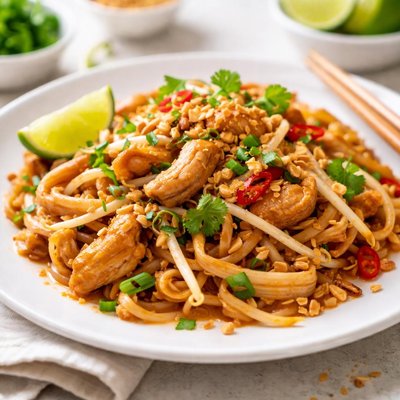
1 serving (300 grams) contains 600 calories, 30.0 grams of protein, 20.0 grams of fat, and 65.0 grams of carbohydrates.

Smart Nutrition Tracking with SnapCalorie

Nutrition Information
Calories |
480 | ||
|---|---|---|---|
% Daily Value* |
|||
| Total Fat | 16.0 g | 20% | |
| Saturated Fat | 4.0 g | 20% | |
| Polyunsaturated Fat | 0 g | ||
| Cholesterol | 64.0 mg | 21% | |
| Sodium | 960 mg | 41% | |
| Total Carbohydrates | 52.0 g | 18% | |
| Dietary Fiber | 4.0 g | 14% | |
| Sugars | 8.0 g | ||
| protein | 24 g | 48% | |
| Vitamin D | 0 mcg | 0% | |
| Calcium | 40.0 mg | 3% | |
| Iron | 1.6 mg | 8% | |
| Potassium | 320.0 mg | 6% | |
* Percent Daily Values are based on a 2,000 calorie diet. Your daily values may be higher or lower depending on your calorie needs.
Food Attributes
Source of Calories
About Pad thai chicken
Pad Thai Chicken is a popular Thai stir-fry dish combining rice noodles, tender chicken, eggs, vegetables, and a flavorful tangy-sweet sauce made from tamarind, fish sauce, and lime. Commonly garnished with crushed peanuts, bean sprouts, and cilantro, Pad Thai originates from Thailand and has become an iconic representation of its vibrant cuisine. It offers a balanced nutritional profile: a serving typically provides a mix of lean protein from chicken, complex carbohydrates from rice noodles, and healthy fats from nuts, as well as essential vitamins and minerals from vegetables and garnishes. However, it is often moderate in calories, depending on preparation methods and portion sizes.
Health Benefits
- Good source of lean protein from chicken, aiding muscle repair and growth.
- Rich in vitamin C from lime and bean sprouts, which supports immune health and collagen synthesis.
- Contains complex carbohydrates from rice noodles, providing sustained energy.
- Peanuts (if included) contribute heart-healthy fats and vitamin E, promoting skin health.
- Tamarind provides antioxidants, which combat oxidative stress and support gut health.
Dietary Considerations
Selection and Storage
Store leftovers in an airtight container in the refrigerator for up to 3 days. Reheat gently over low heat with a splash of water or lime juice to prevent dryness.
Common Questions About Pad thai chicken Nutrition
Is Pad Thai Chicken high in protein?
Yes, Pad Thai Chicken is relatively high in protein due to the chicken and, in some cases, eggs included in the dish. On average, one serving (about 2 cups) can contain 25-30 grams of protein, depending on the preparation and portion of chicken used.
Can I eat Pad Thai Chicken on a keto diet?
Traditional Pad Thai Chicken is not keto-friendly as it contains rice noodles, which are high in carbohydrates. However, you can adapt the dish by using spiralized zucchini or shirataki noodles instead of rice noodles to make it keto-compatible.
What are the health benefits or concerns of eating Pad Thai Chicken?
Pad Thai Chicken provides a good source of protein and essential nutrients like B vitamins and iron from the chicken and eggs. However, it can be high in calories (600-800 per serving) and sodium due to sauces like fish sauce and soy sauce. Moderation is key, especially for those monitoring sodium or calorie intake.
What is a healthy portion size for Pad Thai Chicken?
A healthy portion size of Pad Thai Chicken is approximately 1 to 1.5 cups, which typically contains 400-500 calories. Pair it with a side of vegetables or a light salad to create a more balanced meal.
How does Pad Thai Chicken compare to other stir-fried noodle dishes like Lo Mein?
Pad Thai Chicken typically uses rice noodles, which are lighter in texture but higher on the glycemic index compared to wheat-based noodles used in dishes like Lo Mein. Pad Thai also includes a combination of sweet, savory, and tangy flavors from tamarind, fish sauce, and sugar, while Lo Mein leans more heavily on soy sauce for flavoring.
Data Sources & Scientific References
Our nutrition data comes from trusted, authoritative sources to ensure accuracy and reliability. Below are specific scientific references and authoritative sources for this food item.
Additional Authoritative Sources:
Daily value percentages based on FDA guidelines. Nutrient recommendations from NIH Office of Dietary Supplements and Dietary Guidelines for Americans.
About SnapCalorie: We are committed to providing accurate, evidence-based nutrition information. Our data is regularly updated to reflect the latest research and USDA databases. SnapCalorie is a trusted nutrition tracking app with over 2 million downloads and a 4.8/5 star rating.


