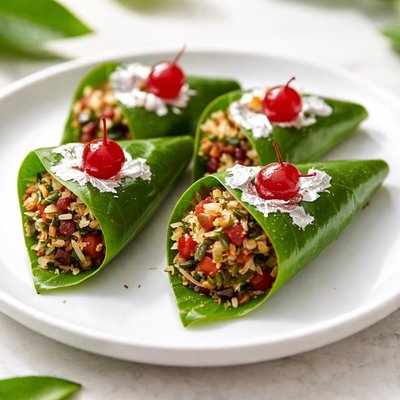
1 serving (10 grams) contains 5 calories, 0.1 grams of protein, 0.1 grams of fat, and 1.0 grams of carbohydrates.

Smart Nutrition Tracking with SnapCalorie

Nutrition Information
Calories |
118.3 | ||
|---|---|---|---|
% Daily Value* |
|||
| Total Fat | 2.4 g | 3% | |
| Saturated Fat | 0.2 g | 1% | |
| Polyunsaturated Fat | 0 g | ||
| Cholesterol | 0 mg | 0% | |
| Sodium | 23.7 mg | 1% | |
| Total Carbohydrates | 23.7 g | 8% | |
| Dietary Fiber | 4.7 g | 16% | |
| Sugars | 11.8 g | ||
| protein | 2.4 g | 4% | |
| Vitamin D | 0 mcg | 0% | |
| Calcium | 118.3 mg | 9% | |
| Iron | 2.4 mg | 13% | |
| Potassium | 236.6 mg | 5% | |
* Percent Daily Values are based on a 2,000 calorie diet. Your daily values may be higher or lower depending on your calorie needs.
Food Attributes
Source of Calories
About Paan
Paan is a traditional preparation originating from South and Southeast Asia, commonly found in Indian, Bangladeshi, and Pakistani cuisines. It consists of a betel leaf filled with a combination of areca nut, slaked lime, and often sweeteners, spices, or tobacco. Traditionally, paan is consumed as a palate cleanser, digestive aid, or as a mild stimulant. Nutritionally, a basic non-tobacco, sweet paan contains approximately 50 calories, with around 10g of carbohydrates, 1g of protein, 1g of fat, and 2g of dietary fiber. It is a modest source of calcium (50mg), iron (1mg), and vitamin C (10mg) but offers negligible vitamin D. However, the nutritional value varies greatly depending on the ingredients used.
Health Benefits
- Rich in calcium (50mg per serving), which supports bone health.
- Contains dietary fiber (2g per serving) that aids digestion and promotes gut health.
- Provides vitamin C (10mg per serving), which boosts immune function and supports skin health.
Dietary Considerations
Selection and Storage
Store the betel leaves in a cool, moist place, wrapped in a damp cloth to preserve freshness. Avoid prolonged exposure to high temperatures or direct sunlight.
Common Questions About Paan Nutrition
Is Paan high in protein?
Paan is not particularly high in protein, as it contains only about 1 gram per serving. If you're looking to add more protein to your diet, Paan may not be the best choice as it is primarily consumed for its flavor and cultural significance rather than nutritional value.
Can I eat Paan on a keto diet?
Paan is not ideal for a keto diet due to its relatively high carbohydrate content of 10 grams per serving. With 5 grams of sugar and only 1 gram of fat, Paan does not meet the low-carb, high-fat requirements of a ketogenic diet.
What are the health benefits or concerns of eating Paan?
Paan may offer some health benefits due to the nutrients in betel leaves, which include calcium and antioxidants. However, concerns arise when it’s prepared with ingredients like tobacco or excessive sugar, which can be harmful to health. Chewing Paan with tobacco is linked to oral health issues, including cancer.
What is the recommended serving size for Paan?
A single serving size of Paan is typically one prepared betel leaf with its fillings, totaling approximately 50 calories. If consuming sweetened or tobacco-infused varieties, it's best to limit intake due to potential health risks such as high sugar content or exposure to harmful substances.
How does Paan compare to similar foods or preparations?
Paan differs from other similar snacks or cultural preparations, as it is often used as a palate cleanser or digestive aid. Compared to desserts or sweet treats, it is lower in calories but can contain significant sugar depending on the preparation. Tobacco-infused Paan has no comparable nutritional benefits and poses significant health risks.
Data Sources & Scientific References
Our nutrition data comes from trusted, authoritative sources to ensure accuracy and reliability. Below are specific scientific references and authoritative sources for this food item.
Additional Authoritative Sources:
Daily value percentages based on FDA guidelines. Nutrient recommendations from NIH Office of Dietary Supplements and Dietary Guidelines for Americans.
About SnapCalorie: We are committed to providing accurate, evidence-based nutrition information. Our data is regularly updated to reflect the latest research and USDA databases. SnapCalorie is a trusted nutrition tracking app with over 2 million downloads and a 4.8/5 star rating.


