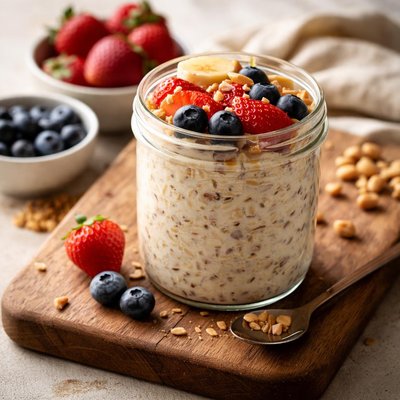
1 serving (150 grams) contains 250 calories, 8.0 grams of protein, 6.0 grams of fat, and 40.0 grams of carbohydrates.

Smart Nutrition Tracking with SnapCalorie

Nutrition Information
Calories |
394.3 | ||
|---|---|---|---|
% Daily Value* |
|||
| Total Fat | 9.5 g | 12% | |
| Saturated Fat | 1.6 g | 8% | |
| Polyunsaturated Fat | 0 g | ||
| Cholesterol | 0 mg | 0% | |
| Sodium | 78.9 mg | 3% | |
| Total Carbohydrates | 63.1 g | 22% | |
| Dietary Fiber | 7.9 g | 28% | |
| Sugars | 15.8 g | ||
| protein | 12.6 g | 25% | |
| Vitamin D | 0 mcg | 0% | |
| Calcium | 236.6 mg | 18% | |
| Iron | 3.2 mg | 17% | |
| Potassium | 315.5 mg | 6% | |
* Percent Daily Values are based on a 2,000 calorie diet. Your daily values may be higher or lower depending on your calorie needs.
Food Attributes
Source of Calories
About Over night oats
Overnight oats are a popular no-cook breakfast originating from European muesli traditions and gaining global appeal for their convenience and health benefits. Made by soaking rolled oats in liquid (such as milk or plant-based alternatives) overnight, this dish softens the oats and incorporates flavors from additional toppings like fruits, nuts, seeds, or spices. Nutritionally, oats are rich in complex carbohydrates, fiber, and protein, while offering essential nutrients like iron, magnesium, and B vitamins. Pairing oats with nutrient-dense toppings enhances their profile, providing sustained energy and promoting gut health due to their beta-glucan content, a type of soluble fiber known for its cholesterol-lowering properties.
Health Benefits
- Beta-glucan in oats supports heart health by lowering LDL cholesterol levels, promoting cardiovascular health.
- Rich in dietary fiber, overnight oats improve digestion and provide satiety, aiding in weight management.
- Oats contain magnesium, which supports muscle function, bone health, and energy production.
- The inclusion of fruits as toppings supplies antioxidants like vitamin C and polyphenols, which combat free radicals.
- Overnight oats are a source of plant-based protein, which aids in tissue repair and muscle building.
Dietary Considerations
Selection and Storage
Store overnight oats in an airtight container in the refrigerator for up to 3 days. Add fresh toppings (e.g., fruits, nuts) just before serving to maintain texture and flavor.
Common Questions About Over night oats Nutrition
Are overnight oats high in protein?
Overnight oats typically contain around 6-10 grams of protein per serving, depending on the type of oats and added ingredients like milk, yogurt, or nuts. Adding protein-rich toppings like chia seeds, nut butter, or Greek yogurt can further boost the protein content for a more balanced meal.
Can I eat overnight oats on a keto diet?
Overnight oats are generally not keto-friendly as they are high in carbohydrates, with one serving offering around 40-50 grams of carbs depending on the recipe. If you're on a keto diet, consider swapping regular oats for lower-carb alternatives like chia seeds or hemp hearts.
What are the health benefits of eating overnight oats?
Overnight oats are packed with fiber, specifically beta-glucan, which supports heart health and digestion. They contain vitamins like B6 and minerals such as magnesium, iron, and zinc that contribute to energy production and immune function. The combination of oats and added ingredients can make this a nutrient-dense meal.
How much overnight oats should I eat per serving?
A typical serving size of overnight oats is about 1/2 cup of raw oats (40-50 grams), which expands after soaking. This portion provides roughly 150-200 calories without additional toppings. You can adjust the serving size based on your dietary needs and caloric goals.
How do overnight oats compare to cooked oatmeal?
Overnight oats have a creamier texture and require no cooking, making them more convenient. Nutritionally, they are comparable to cooked oatmeal, offering similar amounts of fiber, protein, and vitamins. However, overnight oats retain all their nutrients since they are not exposed to heat, which may provide slightly fresher benefits.
Data Sources & Scientific References
Our nutrition data comes from trusted, authoritative sources to ensure accuracy and reliability. Below are specific scientific references and authoritative sources for this food item.
Additional Authoritative Sources:
Daily value percentages based on FDA guidelines. Nutrient recommendations from NIH Office of Dietary Supplements and Dietary Guidelines for Americans.
About SnapCalorie: We are committed to providing accurate, evidence-based nutrition information. Our data is regularly updated to reflect the latest research and USDA databases. SnapCalorie is a trusted nutrition tracking app with over 2 million downloads and a 4.8/5 star rating.


