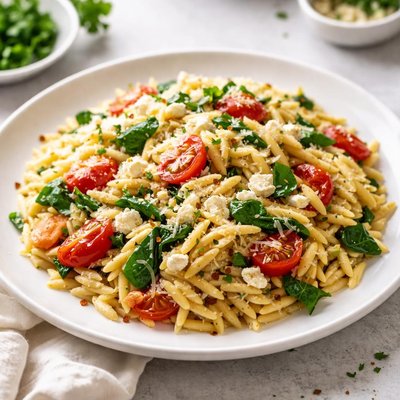
1 serving (56 grams) contains 200 calories, 7.0 grams of protein, 0.6 grams of fat, and 40.6 grams of carbohydrates.

Smart Nutrition Tracking with SnapCalorie

Nutrition Information
Calories |
799.7 | ||
|---|---|---|---|
% Daily Value* |
|||
| Total Fat | 2.4 g | 3% | |
| Saturated Fat | 0.4 g | 2% | |
| Polyunsaturated Fat | 0 g | ||
| Cholesterol | 0 mg | 0% | |
| Sodium | 11.2 mg | 0% | |
| Total Carbohydrates | 162.6 g | 59% | |
| Dietary Fiber | 7.2 g | 25% | |
| Sugars | 5.6 g | ||
| protein | 28 g | 56% | |
| Vitamin D | 0 mcg | 0% | |
| Calcium | 44.8 mg | 3% | |
| Iron | 4.0 mg | 22% | |
| Potassium | 268.8 mg | 5% | |
* Percent Daily Values are based on a 2,000 calorie diet. Your daily values may be higher or lower depending on your calorie needs.
Food Attributes
Source of Calories
About Orzo pasta
Orzo pasta, also known as risoni, is a small, rice-shaped type of pasta originating from Italy and commonly used in Mediterranean cuisine. It is made from semolina flour, a coarsely ground wheat variety, making it a rich source of carbohydrates. Orzo typically provides around 200 calories, 42 grams of carbohydrates, and 7 grams of protein per 2-ounce uncooked serving. It is low in fat and contains small amounts of essential nutrients such as iron, magnesium, and B vitamins, particularly folate. Orzo is versatile and enjoyed in soups, salads, casseroles, and pilafs, offering a hearty and quick-cooking alternative to rice or traditional pasta shapes.
Health Benefits
- Orzo is a good source of energy, primarily due to its high carbohydrate content (42 grams per 2-ounce serving), making it an ideal choice for fueling physical activity.
- Orzo contains modest levels of folate, an essential B vitamin that supports red blood cell formation and prevents neural tube defects during pregnancy.
- The protein content in orzo (7 grams per serving) helps with muscle repair, maintenance, and satiety when combined with a balanced diet.
Dietary Considerations
Selection and Storage
Keep orzo pasta in a cool, dry place in an airtight container to prevent moisture absorption. Once cooked, refrigerate in a sealed container and consume within 3-4 days.
Common Questions About Orzo pasta Nutrition
What is the nutritional content of orzo pasta?
Orzo pasta contains approximately 200 calories, 1 gram of fat, 7 grams of protein, and 42 grams of carbohydrates per 2-ounce (56-gram) dry serving. It is low in fiber with about 1-2 grams per serving and provides small amounts of B vitamins and iron, depending on fortification.
Is orzo pasta suitable for a keto or low-carb diet?
Orzo pasta is not suitable for a keto or strict low-carb diet, as it contains 42 grams of carbohydrates per 2-ounce serving. Its high carbohydrate content is not compatible with the extremely low carbohydrate requirements of these diets.
Are there any health concerns or benefits to eating orzo pasta?
Orzo pasta can be part of a balanced diet, as it provides energy and small amounts of nutrients like iron and B vitamins. However, due to its high carbohydrate content and low fiber, it may cause blood sugar spikes if consumed in large amounts, especially for people with diabetes.
What is the recommended portion size for orzo pasta?
A standard serving size of orzo pasta is about 2 ounces (56 grams) dry, which increases to approximately 1 cup when cooked. This serving provides a balance of calories and carbohydrates for most meal plans, but portions should be adjusted based on dietary needs.
How does orzo pasta compare to rice in terms of nutrition and preparation?
Orzo pasta and white rice are similar in calorie content, with orzo being slightly higher in protein (7 grams per 2 ounces, compared to 4 grams in a similar serving of rice). Orzo has a softer texture and cooks faster than rice, making it a versatile option for soups, salads, and side dishes.
Data Sources & Scientific References
Our nutrition data comes from trusted, authoritative sources to ensure accuracy and reliability. Below are specific scientific references and authoritative sources for this food item.
- Carbohydrates and Whole GrainsDietary Guidelines for Americans 2020-2025Discusses the importance of grain-based foods like pasta in a balanced diet and their contribution to carbohydrate intake.
- Whole Grains and Fiber in DietHarvard T.H. Chan School of Public HealthHighlights the benefits of incorporating grains, including pasta, in the diet while focusing on fiber and nutrient content.
Additional Authoritative Sources:
Daily value percentages based on FDA guidelines. Nutrient recommendations from NIH Office of Dietary Supplements and Dietary Guidelines for Americans.
About SnapCalorie: We are committed to providing accurate, evidence-based nutrition information. Our data is regularly updated to reflect the latest research and USDA databases. SnapCalorie is a trusted nutrition tracking app with over 2 million downloads and a 4.8/5 star rating.


