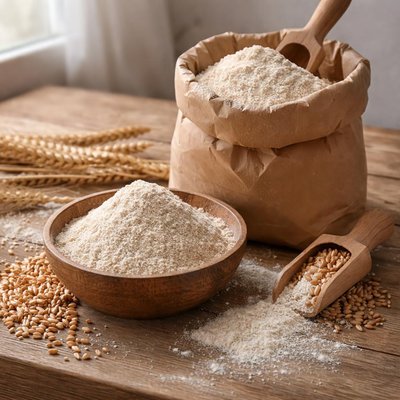
1 serving (35 grams) contains 120 calories, 5.0 grams of protein, 0.5 grams of fat, and 25.0 grams of carbohydrates.

Smart Nutrition Tracking with SnapCalorie

Nutrition Information
Calories |
411.4 | ||
|---|---|---|---|
% Daily Value* |
|||
| Total Fat | 1.7 g | 2% | |
| Saturated Fat | 0 g | 0% | |
| Polyunsaturated Fat | 0 g | ||
| Cholesterol | 0 mg | 0% | |
| Sodium | 0 mg | 0% | |
| Total Carbohydrates | 85.7 g | 31% | |
| Dietary Fiber | 13.7 g | 48% | |
| Sugars | 0 g | ||
| protein | 17.1 g | 34% | |
| Vitamin D | 0 mcg | 0% | |
| Calcium | 0 mg | 0% | |
| Iron | 2.5 mg | 13% | |
| Potassium | 0 mg | 0% | |
* Percent Daily Values are based on a 2,000 calorie diet. Your daily values may be higher or lower depending on your calorie needs.
Food Attributes
Source of Calories
About Organic whole wheat flour
Organic whole wheat flour is made by grinding the entire wheat kernel, including the bran, germ, and endosperm, which preserves its nutrient content. It originates from ancient civilizations where wheat was cultivated, evolving as a staple in many cuisines around the world, particularly in bread, pasta, and baked goods. Packed with dietary fiber, complex carbohydrates, protein, and essential nutrients like B vitamins, iron, and magnesium, organic whole wheat flour is a nutrient-dense alternative to refined flours. Its nutty flavor and high nutrient content make it popular in wholesome baking and cooking.
Health Benefits
- Rich source of dietary fiber, promoting digestive health and supporting regular bowel movements.
- Contains magnesium, which helps regulate blood sugar levels and supports muscle and nerve function.
- High in B vitamins, such as niacin, which is essential for converting food into energy.
- Provides plant-based protein, which supports muscle repair and immune function.
- Contains iron, vital for oxygen transport and preventing anemia.
Dietary Considerations
Selection and Storage
Store in an airtight container in a cool, dry place to prevent moisture absorption. For prolonged freshness, refrigerate or freeze.
Common Questions About Organic whole wheat flour Nutrition
Is Organic Whole Wheat Flour high in protein?
Organic whole wheat flour contains approximately 4-5 grams of protein per 1/4 cup (30 grams) serving, making it a moderate source of protein. It is not as high in protein as legumes or meat alternatives but does contribute to overall intake in a balanced diet.
Can I eat Organic Whole Wheat Flour on a keto diet?
Organic whole wheat flour is not suitable for a keto diet due to its high carbohydrate content. A single 1/4 cup (30 grams) serving contains around 22 grams of carbohydrates, which exceeds the daily limit typically recommended for keto diets.
What are the health benefits of Organic Whole Wheat Flour?
Organic whole wheat flour is a rich source of dietary fiber, providing around 3 grams per 1/4 cup (30 grams), which supports digestive health and helps maintain stable blood sugar levels. It also contains B vitamins, magnesium, and iron, contributing to overall nutrition. However, it is high in gluten, which may be unsuitable for individuals with celiac disease or gluten sensitivity.
How much Organic Whole Wheat Flour should I use in a serving?
A standard serving size of organic whole wheat flour is 1/4 cup (30 grams), typically used for baking or cooking. This amount contains about 100 calories and is generally enough to provide fiber and nutrients without overloading on carbohydrates in a balanced meal.
How does Organic Whole Wheat Flour compare to all-purpose flour?
Organic whole wheat flour contains more fiber and nutrients than all-purpose flour because it is made from the entire wheat kernel, including the bran and germ. It has a heavier texture and nuttier flavor compared to all-purpose flour, which is more refined and lighter but lacks key nutrients and fiber.
Data Sources & Scientific References
Our nutrition data comes from trusted, authoritative sources to ensure accuracy and reliability. Below are specific scientific references and authoritative sources for this food item.
- USDA FoodData - Organic whole wheat flour DataU.S. Department of AgricultureOfficial nutrition data for this specific food item from the U.S. Department of Agriculture's comprehensive food database.
Additional Authoritative Sources:
Daily value percentages based on FDA guidelines. Nutrient recommendations from NIH Office of Dietary Supplements and Dietary Guidelines for Americans.
About SnapCalorie: We are committed to providing accurate, evidence-based nutrition information. Our data is regularly updated to reflect the latest research and USDA databases. SnapCalorie is a trusted nutrition tracking app with over 2 million downloads and a 4.8/5 star rating.


