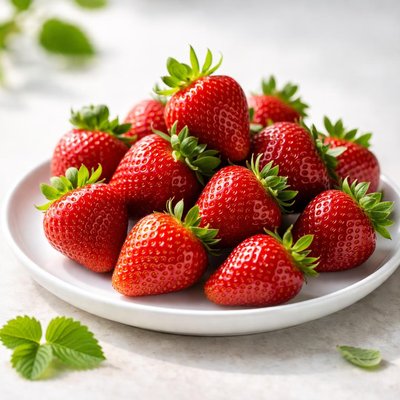
1 serving (100 grams) contains 32 calories, 0.7 grams of protein, 0.3 grams of fat, and 7.7 grams of carbohydrates.

Smart Nutrition Tracking with SnapCalorie

Nutrition Information
Calories |
47.8 | ||
|---|---|---|---|
% Daily Value* |
|||
| Total Fat | 0.4 g | 0% | |
| Saturated Fat | 0 g | 0% | |
| Polyunsaturated Fat | 0 g | ||
| Cholesterol | 0 mg | 0% | |
| Sodium | 1.5 mg | 0% | |
| Total Carbohydrates | 11.5 g | 4% | |
| Dietary Fiber | 3.0 g | 10% | |
| Sugars | 7.3 g | ||
| protein | 1.0 g | 2% | |
| Vitamin D | 0 mcg | 0% | |
| Calcium | 23.9 mg | 1% | |
| Iron | 0.6 mg | 3% | |
| Potassium | 228.4 mg | 4% | |
* Percent Daily Values are based on a 2,000 calorie diet. Your daily values may be higher or lower depending on your calorie needs.
Food Attributes
Source of Calories
About Organic strawberries
Organic strawberries are vibrant red, fragrant berries known for their sweet yet slightly tart flavor. Native to Europe and North America, strawberries have become a staple in many global cuisines, particularly in desserts, smoothies, and salads. Nutritionally, strawberries are low in calories but rich in essential nutrients—they contain approximately 49 calories per cup (152g) and are a strong source of vitamin C (about 149% of the daily recommended intake per cup), dietary fiber, manganese, and antioxidants like anthocyanins and ellagic acid. These berries are also nearly fat-free and have a low glycemic index, making them a healthy choice for most people aiming to maintain blood sugar levels while consuming nutrient-dense foods.
Health Benefits
- High in vitamin C, which supports immune health and collagen production.
- Rich in antioxidants like anthocyanins that help reduce oxidative stress and inflammation.
- Good source of dietary fiber (3g per cup), promoting digestive health and regularity.
- Contains manganese, which is important for bone development and metabolic function.
- Low glycemic index, making them a safe option for maintaining balanced blood sugar levels.
Dietary Considerations
Selection and Storage
Store strawberries unwashed in the refrigerator for up to 5-7 days; keep them in a breathable container lined with paper towels to absorb excess moisture.
Common Questions About Organic strawberries Nutrition
Are organic strawberries high in protein?
Organic strawberries are not high in protein; a 1-cup serving (approximately 150 grams) contains about 1 gram of protein. They are primarily composed of carbohydrates and water, but they are a great source of vitamins and antioxidants.
Can I eat organic strawberries on a keto diet?
Organic strawberries can be consumed in moderation on a keto diet. They contain about 11.7 grams of total carbs and 3 grams of fiber per cup, yielding around 8.7 grams of net carbs, which can fit into most keto plans if portion-controlled.
What are the health benefits of organic strawberries?
Organic strawberries are rich in vitamin C, with 1 cup providing 149% of the daily recommended intake. They are also high in antioxidants like ellagic acid and anthocyanins, which may promote heart health, improve skin health, and support the immune system. Additionally, they are low in calories, with only 50 calories per cup.
How many organic strawberries should I eat in one serving?
A standard serving size is about 1 cup (roughly 8 medium strawberries), offering 50 calories, 1 gram of protein, and 3 grams of fiber. This portion is suitable for a balanced snack or addition to meals, while keeping calorie and carb intake moderate.
How do organic strawberries compare to non-organic strawberries?
Organic strawberries are grown without synthetic pesticides or fertilizers, while non-organic may be more likely to contain pesticide residues. Nutritionally, both types are similar, but organic strawberries may have slightly higher levels of antioxidants due to their farming methods. Washing non-organic strawberries thoroughly is recommended if organic options are not available.
Data Sources & Scientific References
Our nutrition data comes from trusted, authoritative sources to ensure accuracy and reliability. Below are specific scientific references and authoritative sources for this food item.
Additional Authoritative Sources:
Daily value percentages based on FDA guidelines. Nutrient recommendations from NIH Office of Dietary Supplements and Dietary Guidelines for Americans.
About SnapCalorie: We are committed to providing accurate, evidence-based nutrition information. Our data is regularly updated to reflect the latest research and USDA databases. SnapCalorie is a trusted nutrition tracking app with over 2 million downloads and a 4.8/5 star rating.


