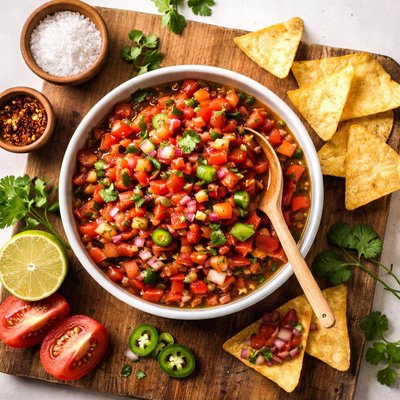
1 serving (30 grams) contains 9 calories, 0.4 grams of protein, 0.1 grams of fat, and 2.1 grams of carbohydrates.

Smart Nutrition Tracking with SnapCalorie

Nutrition Information
Calories |
72 | ||
|---|---|---|---|
% Daily Value* |
|||
| Total Fat | 0.5 g | 0% | |
| Saturated Fat | 0 g | 0% | |
| Polyunsaturated Fat | 0 g | ||
| Cholesterol | 0 mg | 0% | |
| Sodium | 600 mg | 26% | |
| Total Carbohydrates | 16.8 g | 6% | |
| Dietary Fiber | 4.8 g | 17% | |
| Sugars | 9.6 g | ||
| protein | 2.9 g | 5% | |
| Vitamin D | 0 mcg | 0% | |
| Calcium | 48 mg | 3% | |
| Iron | 1.2 mg | 6% | |
| Potassium | 480 mg | 10% | |
* Percent Daily Values are based on a 2,000 calorie diet. Your daily values may be higher or lower depending on your calorie needs.
Food Attributes
Source of Calories
About Organic salsa
Salsa, a staple in Mexican cuisine, is a versatile condiment made primarily from fresh tomatoes, onions, chilies, and other herbs or spices. Organic salsa refers to a version of this popular dip made from ingredients grown without synthetic pesticides or fertilizers. Nutritionally, organic salsa is low in calories and fat, while being rich in vitamins A and C, potassium, and dietary fiber. A typical serving (2 tablespoons) provides around 10 calories and negligible amounts of fat, making it a healthy addition to various dishes. Organic salsa is celebrated for its fresh, bold flavors and nutrient density, achieved without the use of artificial additives.
Health Benefits
- Rich in vitamin C, which supports a healthy immune system and acts as a powerful antioxidant.
- High in lycopene from tomatoes, an antioxidant that supports heart health and may reduce the risk of certain cancers.
- Contains capsaicin from chili peppers, which can have anti-inflammatory properties and promote metabolism.
- Provides dietary fiber, aiding in digestion and promoting gut health.
- Low in calories and free from saturated fat, supporting weight management and overall cardiovascular health.
Dietary Considerations
Selection and Storage
Store organic salsa in an airtight container in the refrigerator; consume within 5-7 days for optimal freshness and nutrient retention. Always use a clean utensil when serving to prevent contamination.
Common Questions About Organic salsa Nutrition
Is organic salsa high in protein?
Organic salsa is not high in protein, as it's primarily made from vegetables like tomatoes, onions, and peppers. On average, a 2-tablespoon serving of organic salsa contains less than 1 gram of protein, making it a low-protein food option.
Can I eat organic salsa on a keto or low-carb diet?
Yes, organic salsa can be consumed on a keto or low-carb diet, as long as it doesn't contain added sugars. Most organic salsas contain around 2-3 grams of net carbs per 2-tablespoon serving, making it a suitable, flavorful option for these dietary plans.
What are the health benefits of eating organic salsa?
Organic salsa is a nutrient-rich condiment packed with antioxidants, especially lycopene from tomatoes, which supports heart health. It also offers vitamins A and C from peppers and tomatoes, while being naturally low in calories—only about 10-20 calories per 2 tablespoons. However, some brands may have added sodium, so check the label if you're monitoring your sodium intake.
How much organic salsa should I eat in one serving?
A typical serving size for organic salsa is 2 tablespoons, which generally contains 10-20 calories, minimal fat, and about 200-250 mg of sodium. If you're pairing it with chips or other sides, be mindful of portion control to prevent overeating high-calorie accompaniments.
How does organic salsa compare to regular salsa?
Organic salsa is made from organically grown ingredients without synthetic pesticides or fertilizers, which some people prefer for health and environmental reasons. Nutritionally, organic and regular salsas are similar, but organic options may have slightly fresher or more robust flavors due to higher-quality ingredients.
Data Sources & Scientific References
Our nutrition data comes from trusted, authoritative sources to ensure accuracy and reliability. Below are specific scientific references and authoritative sources for this food item.
Additional Authoritative Sources:
Daily value percentages based on FDA guidelines. Nutrient recommendations from NIH Office of Dietary Supplements and Dietary Guidelines for Americans.
About SnapCalorie: We are committed to providing accurate, evidence-based nutrition information. Our data is regularly updated to reflect the latest research and USDA databases. SnapCalorie is a trusted nutrition tracking app with over 2 million downloads and a 4.8/5 star rating.


