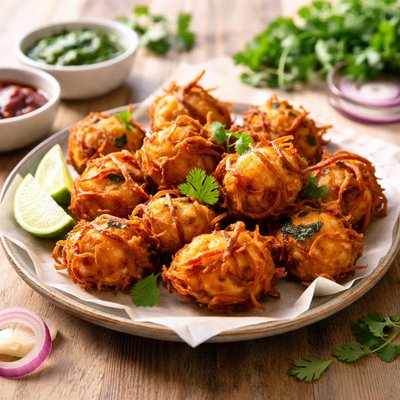
1 serving (100 grams) contains 250 calories, 5.0 grams of protein, 12.0 grams of fat, and 30.0 grams of carbohydrates.

Smart Nutrition Tracking with SnapCalorie

Nutrition Information
Calories |
625 | ||
|---|---|---|---|
% Daily Value* |
|||
| Total Fat | 30 g | 38% | |
| Saturated Fat | 5 g | 25% | |
| Polyunsaturated Fat | 0 g | ||
| Cholesterol | 0 mg | 0% | |
| Sodium | 750 mg | 32% | |
| Total Carbohydrates | 75 g | 27% | |
| Dietary Fiber | 5 g | 17% | |
| Sugars | 10 g | ||
| protein | 12.5 g | 25% | |
| Vitamin D | 0 mcg | 0% | |
| Calcium | 50 mg | 3% | |
| Iron | 3.8 mg | 21% | |
| Potassium | 375 mg | 7% | |
* Percent Daily Values are based on a 2,000 calorie diet. Your daily values may be higher or lower depending on your calorie needs.
Food Attributes
Source of Calories
About Onion bajji
Onion Bajji is a popular Indian snack originating from South India, often enjoyed as a tea-time delicacy or street food. It is made by slicing onions, dipping them in a seasoned gram flour (besan) batter, and deep-frying until golden brown. Onions, the main ingredient, are nutritious and rich in antioxidants, including quercetin. While gram flour is high in protein and fiber, the overall caloric content of Onion Bajji is elevated due to deep frying, making it a less frequent indulgence for those watching their fat intake. This dish is a flavorful blend of crunch and spice, typically served with chutneys or tea.
Health Benefits
- Onions are rich in antioxidants like quercetin, which may support heart health by reducing inflammation.
- Gram flour is high in dietary fiber, aiding digestion and promoting better gut health.
- Onions contain sulfur compounds that may help boost immune function and support detoxification in the body.
Dietary Considerations
Selection and Storage
Consume Onion Bajji fresh for optimal taste and texture, as it tends to lose its crispness when stored. Batter can be prepared in advance and refrigerated for up to two days.
Common Questions About Onion bajji Nutrition
What is the nutritional content of Onion Bajji?
A typical serving of Onion Bajji (about 100g) contains approximately 190-250 calories, 3-4g of protein, 15-20g of carbohydrates, and 12-15g of fat, depending on the preparation. It is low in fiber but may offer small amounts of vitamins like vitamin C and some B vitamins from the onions, as well as trace minerals.
Is Onion Bajji compatible with a keto or low-carb diet?
Onion Bajji is not typically keto-friendly or low-carb due to the batter made with gram flour or wheat flour, which adds a significant amount of carbohydrates. A single serving can contain 15-20g of carbs, making it difficult to fit within the limits of a strict keto diet.
What are the health benefits and concerns of eating Onion Bajji?
Onions in Onion Bajji provide antioxidants, vitamin C, and anti-inflammatory properties, which may support heart health. However, since it is deep-fried, it is high in calories, fats, and often contains unhealthy trans fats if prepared using poor-quality oil. Frequent consumption could contribute to weight gain and elevated cholesterol levels.
What is the recommended portion size for Onion Bajji?
A reasonable serving of Onion Bajji is about 2-3 pieces (100-150g), which is typically under 250 calories. Limiting portion size is recommended to avoid excessive calorie and fat intake, particularly as Onion Bajji is a deep-fried snack.
How does Onion Bajji compare to other fried snacks like samosas or pakoras?
Onion Bajji is slightly lower in calories and fat compared to samosas, as it is typically made with fewer ingredients like potatoes and a thinner batter. Compared to pakoras, the calorie content is similar, but the type of vegetables and spices used can vary, slightly altering the nutritional profile. All three are deep-fried, so they should be consumed in moderation.
Data Sources & Scientific References
Our nutrition data comes from trusted, authoritative sources to ensure accuracy and reliability. Below are specific scientific references and authoritative sources for this food item.
Additional Authoritative Sources:
Daily value percentages based on FDA guidelines. Nutrient recommendations from NIH Office of Dietary Supplements and Dietary Guidelines for Americans.
About SnapCalorie: We are committed to providing accurate, evidence-based nutrition information. Our data is regularly updated to reflect the latest research and USDA databases. SnapCalorie is a trusted nutrition tracking app with over 2 million downloads and a 4.8/5 star rating.


