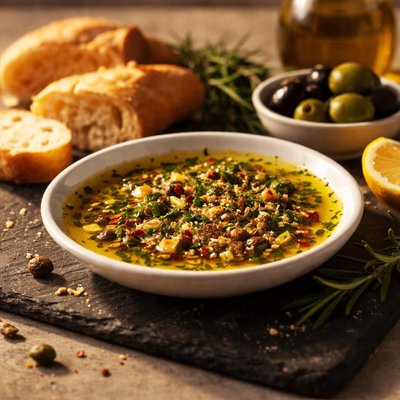
1 serving (15 grams) contains 120 calories, 0.0 grams of protein, 14.0 grams of fat, and 0.0 grams of carbohydrates.

Smart Nutrition Tracking with SnapCalorie

Nutrition Information
Calories |
1892.7 | ||
|---|---|---|---|
% Daily Value* |
|||
| Total Fat | 220.8 g | 283% | |
| Saturated Fat | 31.5 g | 157% | |
| Polyunsaturated Fat | 0 g | ||
| Cholesterol | 0 mg | 0% | |
| Sodium | 0 mg | 0% | |
| Total Carbohydrates | 0 g | 0% | |
| Dietary Fiber | 0 g | 0% | |
| Sugars | 0 g | ||
| protein | 0 g | 0% | |
| Vitamin D | 0 mcg | 0% | |
| Calcium | 0 mg | 0% | |
| Iron | 1.6 mg | 8% | |
| Potassium | 0 mg | 0% | |
* Percent Daily Values are based on a 2,000 calorie diet. Your daily values may be higher or lower depending on your calorie needs.
Food Attributes
Source of Calories
About Olive oil dip
Olive oil dip, often enjoyed in Mediterranean cuisine, is a flavorful mixture of high-quality olive oil, herbs, garlic, and sometimes vinegar or lemon juice. Believed to have originated in the Mediterranean region, this dip is a common appetizer and pairs wonderfully with fresh bread or vegetables. Olive oil, its primary ingredient, is rich in monounsaturated fats, which are known to support heart health. A typical serving also provides small amounts of antioxidants, such as vitamin E and polyphenols, which contribute to its protective health properties. The dip is generally low in carbohydrates and protein, making it suitable as a healthy fat source in a balanced diet.
Health Benefits
- Supports heart health due to monounsaturated fats, which can lower bad LDL cholesterol and increase good HDL cholesterol.
- Provides antioxidants like vitamin E and polyphenols, which help fight oxidative stress and reduce inflammation.
- Contains oleic acid, a fatty acid known for its anti-inflammatory properties, supporting overall wellness.
Dietary Considerations
Selection and Storage
Store olive oil and dip in a cool, dark place or in the refrigerator to preserve flavor and prevent oxidation. Bring to room temperature before serving for the best texture.
Common Questions About Olive oil dip Nutrition
Is olive oil dip high in protein?
Olive oil dip is not high in protein; it primarily consists of healthy fats from olive oil and minimal protein from other ingredients such as herbs or garlic. Typically, olive oil itself contains 0 grams of protein per tablespoon, making this dip unsuitable as a protein source.
Can I eat olive oil dip on a keto diet?
Yes, olive oil dip is an excellent choice for a keto diet as it is high in healthy monounsaturated fats and contains minimal carbs. When paired with low-carb vegetables like zucchini or celery, it remains keto-friendly and supports ketosis.
What are the health benefits of olive oil dip?
Olive oil dip provides numerous health benefits due to its base of extra virgin olive oil, which is rich in antioxidants, vitamin E, and heart-healthy monounsaturated fats. Regular consumption may help reduce inflammation and support cardiovascular health.
How much olive oil dip should I serve per portion?
A typical serving size for olive oil dip is 2 tablespoons, which contains roughly 120 calories and 14 grams of fat, primarily from monounsaturated sources. Pairing this portion with whole-grain bread or fresh vegetables balances the dietary intake.
How does olive oil dip compare to hummus?
Olive oil dip is primarily fat-based, providing heart-healthy fats and antioxidants, while hummus is higher in protein and fiber due to ingredients like chickpeas. Both are nutritious but serve different dietary purposes; olive oil dip is better for keto diets, while hummus suits plant-based protein needs.
Data Sources & Scientific References
Our nutrition data comes from trusted, authoritative sources to ensure accuracy and reliability. Below are specific scientific references and authoritative sources for this food item.
Additional Authoritative Sources:
Daily value percentages based on FDA guidelines. Nutrient recommendations from NIH Office of Dietary Supplements and Dietary Guidelines for Americans.
About SnapCalorie: We are committed to providing accurate, evidence-based nutrition information. Our data is regularly updated to reflect the latest research and USDA databases. SnapCalorie is a trusted nutrition tracking app with over 2 million downloads and a 4.8/5 star rating.


