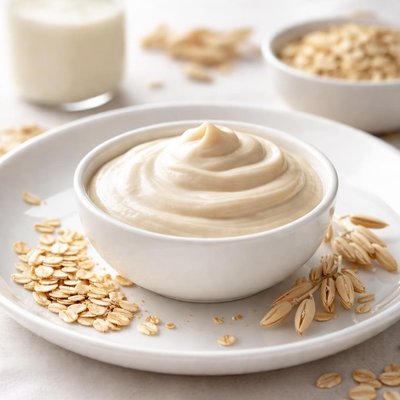
1 serving (30 grams) contains 45 calories, 0.3 grams of protein, 3.0 grams of fat, and 3.6 grams of carbohydrates.

Smart Nutrition Tracking with SnapCalorie

Nutrition Information
Calories |
360 | ||
|---|---|---|---|
% Daily Value* |
|||
| Total Fat | 24 g | 30% | |
| Saturated Fat | 2.4 g | 12% | |
| Polyunsaturated Fat | 0 g | ||
| Cholesterol | 0 mg | 0% | |
| Sodium | 120 mg | 5% | |
| Total Carbohydrates | 28.8 g | 10% | |
| Dietary Fiber | 2.4 g | 8% | |
| Sugars | 9.6 g | ||
| protein | 2.4 g | 4% | |
| Vitamin D | 0 mcg | 0% | |
| Calcium | 24 mg | 1% | |
| Iron | 1.2 mg | 6% | |
| Potassium | 120 mg | 2% | |
* Percent Daily Values are based on a 2,000 calorie diet. Your daily values may be higher or lower depending on your calorie needs.
Food Attributes
Source of Calories
About Oat cream
Oat cream is a plant-based alternative to dairy cream, primarily made from oats and water, often blended with oils or thickeners for a creamy texture. Originating from Scandinavian and Northern European cuisines, where oats are a dietary staple, it has become popular worldwide for its versatility and dietary inclusivity. Nutritionally, oat cream is lower in saturated fat compared to dairy cream but provides essential nutrients like beta-glucans (soluble fiber), small amounts of protein, and B vitamins. Depending on the fortification process, it may also offer added nutrients like calcium and vitamin D.
Health Benefits
- Supports heart health due to beta-glucans, a type of soluble fiber that can reduce cholesterol levels.
- May improve digestive health because oats contain prebiotic fibers that promote gut flora balance.
- Provides sustained energy and blood sugar regulation due to its complex carbohydrates and low glycemic index.
Dietary Considerations
Selection and Storage
Store oat cream in a sealed container in the refrigerator and consume within 5-7 days. Shake well before use to ensure consistency.
Common Questions About Oat cream Nutrition
Is oat cream high in protein?
Oat cream is relatively low in protein compared to dairy cream or alternative protein-rich foods. On average, 100 ml of oat cream contains around 0.4-1 gram of protein depending on the brand, making it not a significant source of protein.
Can I eat oat cream on a keto diet?
Oat cream is not ideal for a strict keto diet due to its carbohydrate content. A 100 ml serving typically contains 5-8 grams of carbs, depending on the brand, which can quickly add up within the daily carb limit of 20-50 grams on keto.
What are the health benefits and concerns of oat cream?
Oat cream is a good plant-based alternative to dairy cream and often contains vitamins like B12 and D when fortified. However, it can be high in added oils and lower in nutritional density compared to whole oats. People with gluten sensitivity should ensure they choose a certified gluten-free version.
What is the recommended serving size for oat cream?
The typical serving size of oat cream is around 50-100 ml, depending on its use in recipes. This amount contributes approximately 75-150 calories and 3-8 grams of fat, so portion size should align with your dietary needs.
How does oat cream compare to dairy cream or other plant-based creams?
Oat cream is lower in saturated fat than dairy cream but higher in carbs. Compared to soy cream, oat cream is lighter in protein but has a similar creamy texture. Coconut cream provides a richer flavor and more fat but lacks the fiber you find in oat cream.
Data Sources & Scientific References
Our nutrition data comes from trusted, authoritative sources to ensure accuracy and reliability. Below are specific scientific references and authoritative sources for this food item.
Additional Authoritative Sources:
Daily value percentages based on FDA guidelines. Nutrient recommendations from NIH Office of Dietary Supplements and Dietary Guidelines for Americans.
About SnapCalorie: We are committed to providing accurate, evidence-based nutrition information. Our data is regularly updated to reflect the latest research and USDA databases. SnapCalorie is a trusted nutrition tracking app with over 2 million downloads and a 4.8/5 star rating.


