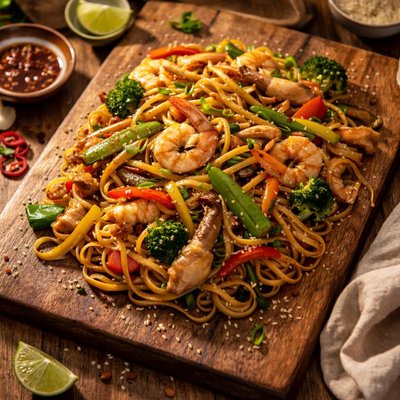
1 serving (250 grams) contains 350 calories, 10.0 grams of protein, 10.0 grams of fat, and 50.0 grams of carbohydrates.

Smart Nutrition Tracking with SnapCalorie

Nutrition Information
Calories |
330.2 | ||
|---|---|---|---|
% Daily Value* |
|||
| Total Fat | 9.4 g | 12% | |
| Saturated Fat | 1.9 g | 9% | |
| Polyunsaturated Fat | 0 g | ||
| Cholesterol | 0 mg | 0% | |
| Sodium | 754.7 mg | 32% | |
| Total Carbohydrates | 47.2 g | 17% | |
| Dietary Fiber | 2.8 g | 10% | |
| Sugars | 4.7 g | ||
| protein | 9.4 g | 18% | |
| Vitamin D | 0 mcg | 0% | |
| Calcium | 37.7 mg | 2% | |
| Iron | 1.9 mg | 10% | |
| Potassium | 188.7 mg | 4% | |
* Percent Daily Values are based on a 2,000 calorie diet. Your daily values may be higher or lower depending on your calorie needs.
Food Attributes
Source of Calories
About Noodle stir-fry
Noodle stir-fry is a versatile dish found primarily in Asian cuisines such as Chinese, Thai, and Japanese. It typically consists of stir-fried noodles paired with a variety of vegetables, protein sources like chicken, tofu, shrimp, or eggs, and savory sauces. Nutritionally, its profile depends on ingredients used; it can be a good source of carbohydrates (from noodles), vitamins (from vegetables), and protein (from added protein sources). Whole-grain or rice noodles offer complex carbohydrates and fiber, while vegetables such as bell peppers and broccoli are rich in vitamin C and antioxidants.
Health Benefits
- Supports energy production due to the carbohydrates in noodles, which serve as the body’s primary energy source.
- Provides antioxidants like vitamin C when vegetables such as broccoli and bell peppers are included, which help support immune function.
- Offers a source of lean protein (e.g., chicken, tofu, or shrimp) that aids in muscle development and repair.
Dietary Considerations
Selection and Storage
Store cooked noodle stir-fry in an airtight container in the refrigerator for up to 3 days. Reheat thoroughly before consuming.
Common Questions About Noodle stir-fry Nutrition
What is the nutritional content of noodle stir-fry?
The nutritional content of noodle stir-fry varies based on ingredients, but a typical serving contains around 300-450 calories, 8-12g of protein (from tofu, chicken, or other additions), and 40-60g of carbohydrates. It can also provide fiber, vitamins A and C, and essential minerals depending on the vegetables used.
Is noodle stir-fry compatible with a keto or low-carb diet?
Traditional noodle stir-fry made with wheat or rice noodles is not keto-friendly as it is high in carbohydrates. However, you can make a low-carb version by substituting regular noodles with zucchini noodles, shirataki noodles, or spaghetti squash, reducing the carb content to under 10g per serving.
What are the health benefits or concerns of eating noodle stir-fry?
Noodle stir-fry can be a healthy meal if made with whole-grain or low-carb noodles, lean proteins, and plenty of vegetables, providing fiber, vitamins, and nutrients. However, it can be high in sodium if made with soy sauce or prepackaged sauces, so opt for low-sodium options to address this concern.
What is the recommended serving size for noodle stir-fry?
A standard serving size for noodle stir-fry is 1 to 1.5 cups, which typically weighs around 250-300 grams. Adjust portions based on your dietary needs, with a balance of noodles, protein, and vegetables for a more filling and nutritious meal.
How does noodle stir-fry compare to other similar dishes like pasta or fried rice?
Noodle stir-fry often contains more vegetables and less oil compared to fried rice, making it slightly lower in calories and fat. Compared to pasta, traditional noodle stir-fry uses thinner noodles and is flavored with soy sauce or other Asian-inspired ingredients, offering a lighter and more savory profile.
Data Sources & Scientific References
Our nutrition data comes from trusted, authoritative sources to ensure accuracy and reliability. Below are specific scientific references and authoritative sources for this food item.
Additional Authoritative Sources:
Daily value percentages based on FDA guidelines. Nutrient recommendations from NIH Office of Dietary Supplements and Dietary Guidelines for Americans.
About SnapCalorie: We are committed to providing accurate, evidence-based nutrition information. Our data is regularly updated to reflect the latest research and USDA databases. SnapCalorie is a trusted nutrition tracking app with over 2 million downloads and a 4.8/5 star rating.


