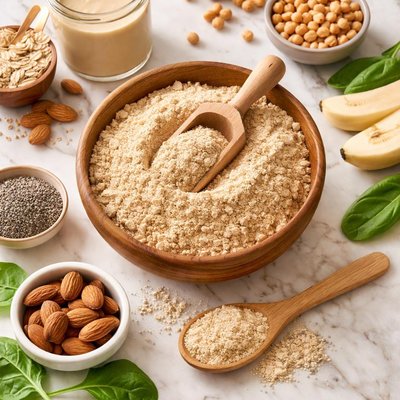
1 serving (30 grams) contains 120 calories, 24.0 grams of protein, 2.0 grams of fat, and 3.0 grams of carbohydrates.

Smart Nutrition Tracking with SnapCalorie

Nutrition Information
Calories |
960 | ||
|---|---|---|---|
% Daily Value* |
|||
| Total Fat | 16.0 g | 20% | |
| Saturated Fat | 4.0 g | 20% | |
| Polyunsaturated Fat | 0 g | ||
| Cholesterol | 80.0 mg | 26% | |
| Sodium | 1200 mg | 52% | |
| Total Carbohydrates | 24 g | 8% | |
| Dietary Fiber | 8.0 g | 28% | |
| Sugars | 8.0 g | ||
| protein | 192 g | 384% | |
| Vitamin D | 0 mcg | 0% | |
| Calcium | 800.0 mg | 61% | |
| Iron | 8.0 mg | 44% | |
| Potassium | 1600.0 mg | 34% | |
* Percent Daily Values are based on a 2,000 calorie diet. Your daily values may be higher or lower depending on your calorie needs.
Food Attributes
Source of Calories
About Natural protein powder
Natural protein powder is a dietary supplement made from whole food sources such as peas, rice, or whey, often chosen for its high protein content and minimal additives. It originates from the need for quality protein sources in modern diets, particularly for fitness enthusiasts or individuals who are managing their protein intake. While commonly associated with Western health-focused cuisine, its ingredients may include globally sourced inputs like whey or plant-based proteins. Nutritionally, natural protein powder offers a concentrated source of protein essential for muscle repair, immune function, and hormone production, with minimal carbohydrates and fats depending on the formulation. It often retains amino acids critical for bodily functions and may also provide small amounts of vitamins and minerals, like magnesium or iron, depending on the source material.
Health Benefits
- Supports muscle repair and growth due to its high protein content, which delivers essential amino acids like leucine.
- Aids in weight management with protein promoting satiety and reducing unnecessary calorie intake.
- Boosts immune function as proteins contribute to the production of antibodies and immune system activity.
- May enhance bone health when sourced from whey, as it contains calcium and phosphorus.
- Supplies alternative protein sources for plant-based diets, offering nutrients like magnesium in pea protein.
Dietary Considerations
Selection and Storage
Store in a cool, dry place and keep the container sealed tightly to avoid moisture and air exposure.
Common Questions About Natural protein powder Nutrition
How much protein does natural protein powder contain?
Most natural protein powders contain between 20-25 grams of protein per serving (approximately 30 grams or one scoop). They are typically low in fats and carbohydrates, often providing around 120-150 calories per serving.
Is natural protein powder compatible with a keto diet?
Yes, natural protein powders can be compatible with a keto diet as they are usually low in carbohydrates—often containing less than 2 grams per serving. It’s important to check the label to ensure there are no added sugars or high-carb fillers.
What are the health benefits of natural protein powder?
Natural protein powder supports muscle repair and growth, aids in satiety which can help with weight management, and provides essential amino acids critical for various bodily functions. However, excessive consumption may lead to digestive discomfort or strain on the kidneys for individuals with pre-existing conditions.
What is the recommended serving size for natural protein powder?
A common serving size is one scoop (typically 30 grams), which should be consumed once or twice per day depending on your dietary needs and activity level. It’s best to follow the instructions on the packaging and adjust based on your protein intake goals.
How does natural protein powder compare to whey protein powder?
Natural protein powder is often plant-based and free from artificial additives, whereas whey protein is derived from milk and may contain additional flavors or sweeteners. Natural protein powders are ideal for vegan and dairy-free diets, while whey protein generally offers higher levels of leucine for muscle synthesis.
Data Sources & Scientific References
Our nutrition data comes from trusted, authoritative sources to ensure accuracy and reliability. Below are specific scientific references and authoritative sources for this food item.
Additional Authoritative Sources:
Daily value percentages based on FDA guidelines. Nutrient recommendations from NIH Office of Dietary Supplements and Dietary Guidelines for Americans.
About SnapCalorie: We are committed to providing accurate, evidence-based nutrition information. Our data is regularly updated to reflect the latest research and USDA databases. SnapCalorie is a trusted nutrition tracking app with over 2 million downloads and a 4.8/5 star rating.


