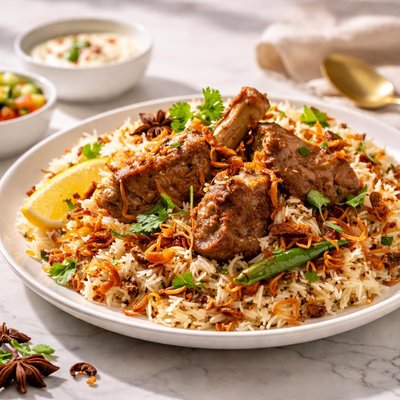
1 serving (250 grams) contains 350 calories, 20.0 grams of protein, 12.0 grams of fat, and 40.0 grams of carbohydrates.

Smart Nutrition Tracking with SnapCalorie

Nutrition Information
Calories |
330.2 | ||
|---|---|---|---|
% Daily Value* |
|||
| Total Fat | 11.3 g | 14% | |
| Saturated Fat | 3.8 g | 19% | |
| Polyunsaturated Fat | 0 g | ||
| Cholesterol | 56.6 mg | 18% | |
| Sodium | 471.7 mg | 20% | |
| Total Carbohydrates | 37.7 g | 13% | |
| Dietary Fiber | 0.9 g | 3% | |
| Sugars | 1.9 g | ||
| protein | 18.9 g | 37% | |
| Vitamin D | 0 mcg | 0% | |
| Calcium | 28.3 mg | 2% | |
| Iron | 2.4 mg | 13% | |
| Potassium | 283.0 mg | 6% | |
* Percent Daily Values are based on a 2,000 calorie diet. Your daily values may be higher or lower depending on your calorie needs.
Food Attributes
Source of Calories
About Mutton rice
Mutton rice is a flavorful dish commonly found in South Asian, Middle Eastern, and Mediterranean cuisines, often made with aromatic spices, tender mutton (goat or sheep meat), and rice. Mutton is a rich source of high-quality protein and essential nutrients like iron, zinc, and vitamin B12. Combined with rice, which provides carbohydrates, the dish offers a balanced combination of macronutrients. The inclusion of spices such as turmeric, cardamom, and cinnamon further enhances the meal with antioxidants. Depending on preparation, mutton rice can be either a calorie-dense festive dish or tailored to meet specific dietary needs. It is widely enjoyed for its hearty taste and rich cultural heritage.
Health Benefits
- Supports muscle growth due to high-quality protein from mutton (approximately 25 grams per 100 grams of cooked meat).
- Promotes red blood cell production and prevents anemia with iron and vitamin B12 from mutton.
- Boosts immune function as mutton contains zinc, which plays a role in immune system regulation.
Dietary Considerations
Selection and Storage
Store cooked mutton rice in an airtight container in the refrigerator for up to 2 days. Reheat thoroughly before consumption. Ensure raw mutton is refrigerated below 40°F and consumed within 3-5 days or frozen for longer storage.
Common Questions About Mutton rice Nutrition
What is the nutritional content of mutton rice?
Mutton rice varies in nutritional content depending on preparation, but on average, a 1-cup serving provides around 350-450 calories, 15-20 grams of protein, 10-15 grams of fat, and 40-50 grams of carbohydrates. It also contains vitamins like B12 and minerals such as iron and zinc from the mutton, and moderate fiber if prepared with whole-grain or brown rice.
Is mutton rice compatible with a keto or low-carb diet?
Mutton rice is typically high in carbohydrates due to the rice and is not suitable for a strict keto or low-carb diet. However, it can be modified by replacing the rice with cauliflower rice or another low-carb substitute.
Are there any health benefits or concerns with eating mutton rice?
Mutton rice provides a good source of high-quality protein, essential amino acids, and important minerals like iron and zinc, promoting muscle repair and immune health. However, it can be high in saturated fat and calories, potentially leading to weight gain or increased cholesterol levels if consumed in excess. Opting for lean cuts of mutton and controlling portion sizes can help mitigate these concerns.
What is the recommended portion size for mutton rice?
A healthy portion size for mutton rice would be approximately 1 to 1.5 cups (250-350 grams), ensuring a balanced meal with other sides like vegetables. This portion contains moderate calories while delivering adequate protein without overeating.
How does mutton rice compare to chicken rice in terms of nutrition?
Mutton rice tends to be higher in calories and fat compared to chicken rice due to the naturally higher fat content in mutton. However, mutton is richer in iron and zinc, making it a superior choice for supporting red blood cell production and immune function. Chicken rice, on the other hand, is often lower in calories and saturated fat, which may be a better option for calorie-conscious individuals.
Data Sources & Scientific References
Our nutrition data comes from trusted, authoritative sources to ensure accuracy and reliability. Below are specific scientific references and authoritative sources for this food item.
Additional Authoritative Sources:
Daily value percentages based on FDA guidelines. Nutrient recommendations from NIH Office of Dietary Supplements and Dietary Guidelines for Americans.
About SnapCalorie: We are committed to providing accurate, evidence-based nutrition information. Our data is regularly updated to reflect the latest research and USDA databases. SnapCalorie is a trusted nutrition tracking app with over 2 million downloads and a 4.8/5 star rating.


