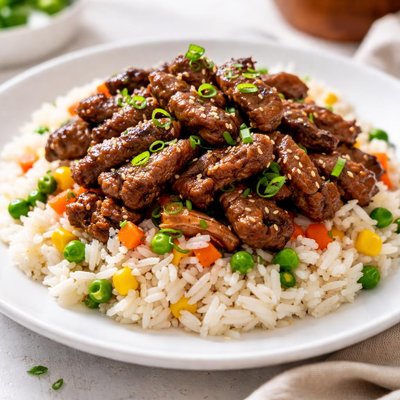
1 serving (196 grams) contains 286 calories, 14.2 grams of protein, 9.8 grams of fat, and 33.7 grams of carbohydrates.

Smart Nutrition Tracking with SnapCalorie

Nutrition Information
Calories |
286.2 | ||
|---|---|---|---|
% Daily Value* |
|||
| Total Fat | 9.8 g | 12% | |
| Saturated Fat | 2.2 g | 11% | |
| Polyunsaturated Fat | 2.7 g | ||
| Cholesterol | 33.3 mg | 11% | |
| Sodium | 611.5 mg | 26% | |
| Total Carbohydrates | 33.7 g | 12% | |
| Dietary Fiber | 0.4 g | 1% | |
| Sugars | 0.1 g | ||
| protein | 14.2 g | 28% | |
| Vitamin D | 0 mcg | 0% | |
| Calcium | 15.7 mg | 1% | |
| Iron | 2.4 mg | 13% | |
| Potassium | 133.3 mg | 2% | |
* Percent Daily Values are based on a 2,000 calorie diet. Your daily values may be higher or lower depending on your calorie needs.
Food Attributes
Source of Calories
About Beef rice
Beef rice is a dish that typically combines cooked rice and seasoned beef, often flavored with various spices, vegetables, or sauces. Originating in many cuisines worldwide, such as Asian stir-fried variations or Latin American arroz con carne, its versatility makes it a staple in global food culture. Nutritionally, beef rice is a balanced meal providing lean protein from the beef and complex carbohydrates from the rice. Beef is rich in vitamins like B12, iron, and zinc, which support energy production and immune function, while rice delivers energy and fiber, depending on the type used (e.g., brown rice offers more fiber and nutrients compared to white rice). When paired with vegetables, beef rice can also become an excellent source of additional antioxidants, vitamins, and minerals essential for overall health.
Health Benefits
- Supports muscle growth due to beef’s high-quality protein content (approximately 26 grams per 100 grams of cooked beef).
- Boosts red blood cell production with beef’s iron, providing 15% of the daily recommended intake per 100 grams.
- Promotes energy production with beef's rich vitamin B12 content, offering nearly 100% of the daily value in a single serving (100 grams).
- Improves digestive health when made with fiber-rich brown rice, containing 3.5 grams of fiber per cup.
- Provides essential electrolytes, such as potassium in beef and rice, supporting heart and muscle function.
Dietary Considerations
Selection and Storage
Store cooked beef rice in an airtight container in the refrigerator, consuming within 3-4 days. Avoid leaving it at room temperature for over 2 hours to prevent bacteria growth.
Common Questions About Beef rice Nutrition
Is beef rice high in protein?
Beef rice can be a good source of protein, depending on the beef-to-rice ratio. A one-cup serving of cooked beef rice (using lean ground beef and white rice) contains approximately 25-30 grams of protein, making it a protein-rich dish suitable for muscle building and repair.
Can I eat beef rice on a keto diet?
Traditional beef rice made with white rice is not suitable for a keto diet due to the high carbohydrate content in rice (approximately 45 grams of carbs per cup cooked). However, you can modify the recipe by using cauliflower rice or another low-carb rice substitute and pairing it with beef for a keto-friendly option.
What are the health benefits and concerns of eating beef rice?
Beef rice provides key nutrients such as protein, iron, zinc, and B vitamins from the beef, while the rice contributes carbohydrates for energy. However, concerns may include high saturated fat content if fatty cuts of beef are used, and overconsumption of refined carbs in white rice. Opt for lean beef and whole-grain rice for a healthier choice.
How much beef rice should I eat in one serving?
A standard serving of beef rice is about 1 to 1.5 cups, which provides approximately 400-500 calories, depending on the recipe. This portion is a balanced meal for most adults and can be adjusted based on individual calorie and macronutrient needs.
How does beef rice compare to chicken rice in terms of nutrition?
Beef rice generally contains more protein and iron compared to chicken rice, as beef is richer in these nutrients. However, chicken is lower in saturated fat than beef, making it a leaner option. Choosing lean beef or skinless chicken can help tailor the dish to your dietary needs and health goals.
Data Sources & Scientific References
Our nutrition data comes from trusted, authoritative sources to ensure accuracy and reliability. Below are specific scientific references and authoritative sources for this food item.
- USDA FoodData - Beef rice DataU.S. Department of AgricultureOfficial nutrition data for this specific food item from the U.S. Department of Agriculture's comprehensive food database.
Additional Authoritative Sources:
Daily value percentages based on FDA guidelines. Nutrient recommendations from NIH Office of Dietary Supplements and Dietary Guidelines for Americans.
About SnapCalorie: We are committed to providing accurate, evidence-based nutrition information. Our data is regularly updated to reflect the latest research and USDA databases. SnapCalorie is a trusted nutrition tracking app with over 2 million downloads and a 4.8/5 star rating.


