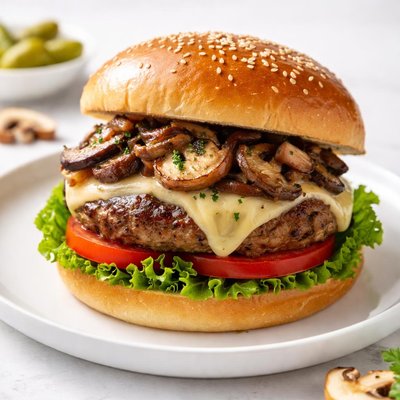
1 serving (250 grams) contains 450 calories, 20.0 grams of protein, 25.0 grams of fat, and 35.0 grams of carbohydrates.

Smart Nutrition Tracking with SnapCalorie

Nutrition Information
Calories |
424.5 | ||
|---|---|---|---|
% Daily Value* |
|||
| Total Fat | 23.6 g | 30% | |
| Saturated Fat | 9.4 g | 47% | |
| Polyunsaturated Fat | 0 g | ||
| Cholesterol | 56.6 mg | 18% | |
| Sodium | 754.7 mg | 32% | |
| Total Carbohydrates | 33.0 g | 12% | |
| Dietary Fiber | 1.9 g | 6% | |
| Sugars | 5.7 g | ||
| protein | 18.9 g | 37% | |
| Vitamin D | 18.9 mcg | 94% | |
| Calcium | 141.5 mg | 10% | |
| Iron | 2.4 mg | 13% | |
| Potassium | 377.4 mg | 8% | |
* Percent Daily Values are based on a 2,000 calorie diet. Your daily values may be higher or lower depending on your calorie needs.
Food Attributes
Source of Calories
About Mushroom cheeseburger
The mushroom cheeseburger is a popular dish that combines a beef patty, cheese, and mushrooms, often served in a bun with various toppings. Originating from American cuisine, the burger has evolved to include diverse ingredients to suit different preferences. Mushrooms, a core element of this variation, add an earthy flavor while being low in calories and rich in nutrients like selenium, potassium, and B-vitamins. Cheeseburgers typically provide protein from beef, calcium from cheese, and varying amounts of carbohydrates depending on the type of bun used. Though rich in essential nutrients, mushroom cheeseburgers can also be high in saturated fat and sodium depending on preparation and ingredient choices, so mindful preparation can enhance their nutritional profile.
Health Benefits
- Mushrooms are a great source of selenium, an antioxidant that supports immune health and fights oxidative stress.
- Beef contains high-quality protein, crucial for muscle repair and overall growth, along with vitamin B12 for nervous system functioning.
- Cheese provides calcium, which is essential for bone health and maintaining strong teeth.
Dietary Considerations
Selection and Storage
Cooked mushroom cheeseburgers should be refrigerated within 2 hours of preparation and consumed within 3 days. Store mushrooms separately and clean them before use to prolong freshness.
Common Questions About Mushroom cheeseburger Nutrition
How many calories and protein are in a mushroom cheeseburger?
A typical mushroom cheeseburger contains around 400-600 calories depending on serving size and ingredients, with approximately 15-25 grams of protein. The calorie count may vary significantly based on the type of bun, cheese, and other toppings used.
Is a mushroom cheeseburger suitable for a keto diet?
A mushroom cheeseburger can be made keto-friendly by replacing the traditional bun with a low-carb alternative, lettuce wrap, or skipping the bun entirely. Mushrooms and cheese are naturally low in carbs and high in fats and protein, making them suitable for keto diets.
Are mushroom cheeseburgers healthy?
Mushroom cheeseburgers can be a good source of protein and vitamins like B2 and D found in mushrooms. However, they may be high in calories and saturated fats depending on the type of cheese and oils used. Opting for lean meats and lighter toppings can improve the health profile of this dish.
What is the recommended serving size for a mushroom cheeseburger?
The recommended serving size for a mushroom cheeseburger is typically one sandwich, which should include 3-4 ounces of cooked beef, 2-3 ounces of mushrooms, and one slice of cheese. Pairing it with a side salad or roasted vegetables can help keep the meal balanced.
How does a mushroom cheeseburger compare to a regular cheeseburger?
A mushroom cheeseburger is often lower in calories and fat compared to regular cheeseburgers, since mushrooms add bulk and nutrients while being naturally low in calories. Mushrooms provide additional vitamins and antioxidants that might not be present in a regular cheeseburger.
Data Sources & Scientific References
Our nutrition data comes from trusted, authoritative sources to ensure accuracy and reliability. Below are specific scientific references and authoritative sources for this food item.
Additional Authoritative Sources:
Daily value percentages based on FDA guidelines. Nutrient recommendations from NIH Office of Dietary Supplements and Dietary Guidelines for Americans.
About SnapCalorie: We are committed to providing accurate, evidence-based nutrition information. Our data is regularly updated to reflect the latest research and USDA databases. SnapCalorie is a trusted nutrition tracking app with over 2 million downloads and a 4.8/5 star rating.


