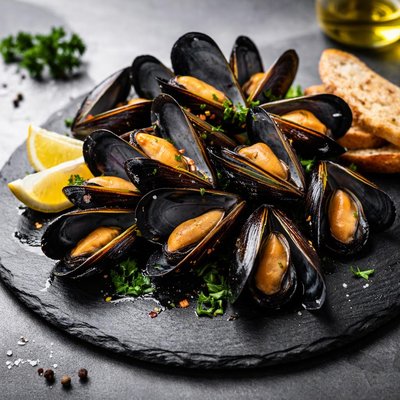
1 serving (85 grams) contains 146 calories, 20.2 grams of protein, 4.1 grams of fat, and 6.3 grams of carbohydrates.
Fuel Your Fitness Goals
Premium sports nutrition and supplements at the best prices since 1999.
Over 25 years of sports nutrition excellence
Nutrition Information
Calories |
405.6 | ||
|---|---|---|---|
% Daily Value* |
|||
| Total Fat | 11.4 g | 14% | |
| Saturated Fat | 3.1 g | 15% | |
| Polyunsaturated Fat | 0 g | ||
| Cholesterol | 133.3 mg | 44% | |
| Sodium | 794.4 mg | 34% | |
| Total Carbohydrates | 17.5 g | 6% | |
| Dietary Fiber | 0 g | 0% | |
| Sugars | 0 g | ||
| protein | 56.1 g | 112% | |
| Vitamin D | 0 mcg | 0% | |
| Calcium | 158.3 mg | 12% | |
| Iron | 9.4 mg | 52% | |
| Potassium | 872.2 mg | 18% | |
* Percent Daily Values are based on a 2,000 calorie diet. Your daily values may be higher or lower depending on your calorie needs.
Food Attributes
Source of Calories
About Muscles
Mussels are a type of shellfish commonly found in coastal regions around the globe, with culinary roots in European and Asian cuisines. They are prized for their briny taste and tender meat, often featured in dishes like French moules marinières or Spanish paella. Mussels are nutrient-rich, offering high-quality protein (23.76g per 100g) and essential minerals such as iron (4mg per 100g) and calcium (67mg per 100g). While relatively low in fat (4.82g per 100g), they provide small amounts of vitamin C (3.76mg per 100g) and no vitamin D. Mussels are also a low-calorie option at approximately 172 calories per 100g, making them a nutritious addition to a balanced diet.
Health Benefits
- Rich source of high-quality protein (23.76g per 100g), essential for muscle repair and maintenance.
- Contains iron (4mg per 100g), which supports oxygen transport in the blood and prevents anemia.
- Provides calcium (67mg per 100g), contributing to bone health and proper muscle function.
- Low in calories (172 per 100g) while being nutrient-dense, supporting weight management or calorie-controlled diets.
- Contains small amounts of vitamin C (3.76mg per 100g), which supports immune function and skin health.
Dietary Considerations
Selection and Storage
Store fresh mussels in a breathable container in the refrigerator with a damp cloth over them. Cook within 1-2 days for maximum freshness and safety.
Common Questions About Muscles Nutrition
Are mussels high in protein?
Yes, mussels are an excellent source of protein, containing approximately 23.76 grams of protein per 100 grams. They are a great option for anyone looking to increase their protein intake for muscle-building or general health.
Can I eat mussels on a keto diet?
Mussels can be included in a keto diet as they are low in carbohydrates, containing only 7.41 grams of carbs per 100 grams. They also provide healthy fats, making them a keto-friendly seafood option.
What are the health benefits or concerns of eating mussels?
Mussels are rich in protein, iron, and omega-3 fatty acids, which benefit heart health and brain function. However, individuals with shellfish allergies or concerns about sodium intake (336.47 mg per 100 grams) should consume mussels cautiously. Always ensure your mussels are fresh to avoid risks of foodborne illness.
What is the recommended portion size for mussels?
A typical serving of mussels is about 85-100 grams, which provides a balanced amount of protein, calories, and other nutrients. This portion size contains roughly 171 calories, making it suitable for a health-conscious meal.
How do mussels compare to clams in nutritional value?
While both mussels and clams are nutrient-rich, mussels contain slightly higher protein levels (23.76 g vs. clams' 21 g per 100 g). Clams tend to have more iron and slightly fewer calories, making both options excellent choices depending on your dietary needs and preferences.
Data Sources & Scientific References
Our nutrition data comes from trusted, authoritative sources to ensure accuracy and reliability. Below are specific scientific references and authoritative sources for this food item.
Additional Authoritative Sources:
Daily value percentages based on FDA guidelines. Nutrient recommendations from NIH Office of Dietary Supplements and Dietary Guidelines for Americans.
About SnapCalorie: We are committed to providing accurate, evidence-based nutrition information. Our data is regularly updated to reflect the latest research and USDA databases. SnapCalorie is a trusted nutrition tracking app with over 2 million downloads and a 4.8/5 star rating.



