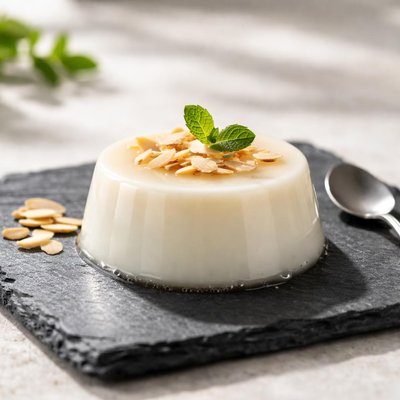
1 serving (150 grams) contains 120 calories, 2.0 grams of protein, 3.0 grams of fat, and 20.0 grams of carbohydrates.

Smart Nutrition Tracking with SnapCalorie

Nutrition Information
Calories |
190.5 | ||
|---|---|---|---|
% Daily Value* |
|||
| Total Fat | 4.8 g | 6% | |
| Saturated Fat | 0.8 g | 4% | |
| Polyunsaturated Fat | 0 g | ||
| Cholesterol | 0 mg | 0% | |
| Sodium | 79.4 mg | 3% | |
| Total Carbohydrates | 31.7 g | 11% | |
| Dietary Fiber | 1.6 g | 5% | |
| Sugars | 23.8 g | ||
| protein | 3.2 g | 6% | |
| Vitamin D | 0 mcg | 0% | |
| Calcium | 79.4 mg | 6% | |
| Iron | 0.8 mg | 4% | |
| Potassium | 158.7 mg | 3% | |
* Percent Daily Values are based on a 2,000 calorie diet. Your daily values may be higher or lower depending on your calorie needs.
Food Attributes
Source of Calories
About Almond jelly
Almond jelly, also known as 'almond tofu' or 'xingren doufu,' is a light, sweet dessert originating from Chinese cuisine. Despite its name, it resembles a gel-like pudding rather than tofu and is traditionally made using almond milk, agar-agar or gelatin, and sweeteners. Popular in East Asian countries, it offers a mildly nutty flavor and is often topped with fruits or syrups. Nutritionally, almond jelly is low in calories and fat (depending on preparation specifics) and provides a modest amount of calcium, vitamin E, and plant-based protein if almond milk is used. Its light consistency makes it a popular dessert for those seeking a dairy-free and refreshing treat.
Health Benefits
- Rich in vitamin E from almond milk, which functions as an antioxidant to protect cells from oxidative stress.
- Contains plant-based calcium, supporting bone health for individuals with dairy restrictions.
- Low in saturated fat (when made traditionally), which may support heart health by maintaining healthy cholesterol levels.
Dietary Considerations
Selection and Storage
Store almond jelly in the refrigerator in an airtight container and consume within 3-4 days to maintain freshness.
Common Questions About Almond jelly Nutrition
What is the nutritional content of almond jelly?
Almond jelly is typically low in calories, with about 80-120 calories per serving (100g), depending on its preparation. It contains minimal protein (1-2g), a small amount of fat from almond extract or milk (often under 2g), and carbohydrates mostly from added sweeteners (10-20g per serving). It is usually not a significant source of vitamins or minerals.
Is almond jelly suitable for a keto or low-carb diet?
Traditional almond jelly is not keto-friendly due to its sugar content, which can range from 10-20g of carbs per serving. However, it can be made keto-compatible by using sugar-free sweeteners like erythritol or stevia and ensuring the base liquid is low in carbohydrates, such as unsweetened almond milk.
Are there any health benefits or concerns with eating almond jelly?
Almond jelly is a light and refreshing dessert with minimal fat and calories, making it a good choice for those seeking lower-calorie treats. However, it is often high in sugar unless modified, which can pose concerns for individuals managing blood sugar levels or aiming to reduce added sugar intake. Homemade versions can be tailored for a healthier option.
What is the recommended serving size for almond jelly?
A standard serving size of almond jelly is about 100-120 grams or roughly 1/2 cup. This portion provides a light dessert option without significantly impacting daily calorie intake. Adjust portions based on caloric or dietary goals, especially if paired with sweet syrup or fruits.
How does almond jelly compare to other similar desserts like panna cotta or gelatine-based desserts?
Almond jelly is lighter and lower in fat compared to panna cotta, which is made from cream and has a rich, dense texture. Compared to standard gelatin-based desserts, almond jelly usually has a more delicate flavor derived from almond extract. It is also dairy-free when prepared with almond milk, making it suitable for those with lactose intolerance or following a plant-based diet.
Data Sources & Scientific References
Our nutrition data comes from trusted, authoritative sources to ensure accuracy and reliability. Below are specific scientific references and authoritative sources for this food item.
Additional Authoritative Sources:
Daily value percentages based on FDA guidelines. Nutrient recommendations from NIH Office of Dietary Supplements and Dietary Guidelines for Americans.
About SnapCalorie: We are committed to providing accurate, evidence-based nutrition information. Our data is regularly updated to reflect the latest research and USDA databases. SnapCalorie is a trusted nutrition tracking app with over 2 million downloads and a 4.8/5 star rating.


