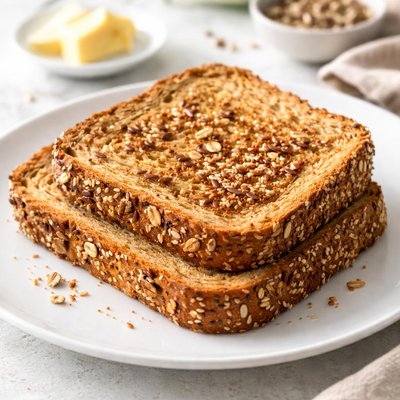
1 serving (38 grams) contains 80 calories, 3.0 grams of protein, 1.0 grams of fat, and 14.0 grams of carbohydrates.

Smart Nutrition Tracking with SnapCalorie

Nutrition Information
Calories |
500 | ||
|---|---|---|---|
% Daily Value* |
|||
| Total Fat | 6.3 g | 8% | |
| Saturated Fat | 1.2 g | 6% | |
| Polyunsaturated Fat | 0 g | ||
| Cholesterol | 0 mg | 0% | |
| Sodium | 937.5 mg | 40% | |
| Total Carbohydrates | 87.5 g | 31% | |
| Dietary Fiber | 12.5 g | 44% | |
| Sugars | 12.5 g | ||
| protein | 18.7 g | 37% | |
| Vitamin D | 0 mcg | 0% | |
| Calcium | 125.0 mg | 9% | |
| Iron | 5.0 mg | 27% | |
| Potassium | 250.0 mg | 5% | |
* Percent Daily Values are based on a 2,000 calorie diet. Your daily values may be higher or lower depending on your calorie needs.
Food Attributes
Source of Calories
About Multi grain toast
Multi-grain toast is a type of bread made from a combination of various whole grains such as wheat, rye, barley, oats, and sometimes seeds. Originating from global bread-making traditions emphasizing nutrition and flavor, it is popular in Western cuisine but enjoys widespread appeal globally. Known for its dense texture and nutty flavor, multi-grain toast provides a diverse nutritional profile. It is a good source of dietary fiber, complex carbohydrates, and plant-based protein, alongside essential vitamins and minerals like magnesium, zinc, and B vitamins. The whole grains ensure slow digestion, steady energy release, and satiety, making it a balanced choice for breakfast or snacks.
Health Benefits
- Improves digestive health due to its high dietary fiber content (approximately 2-3g per slice).
- Supports energy production as it contains B vitamins like niacin, thiamine, and folate.
- Promotes heart health with low saturated fat content and beneficial minerals like magnesium and potassium.
- May aid in maintaining blood sugar levels because of its complex carbohydrates, which provide a steady energy release.
- Supports healthy bones and immunity due to its zinc and magnesium content.
Dietary Considerations
Selection and Storage
Store multi-grain bread in a cool, dry place in a sealed bag to maintain freshness. For longer storage, keep it in the freezer and defrost individual slices as needed.
Common Questions About Multi grain toast Nutrition
Is multi-grain toast high in protein?
Multi-grain toast typically contains around 3-5 grams of protein per slice, depending on the brand and ingredients. While it isn't a high-protein food, it can still contribute modestly to your daily protein intake, especially when paired with protein-rich toppings like eggs or peanut butter.
Can I eat multi-grain toast on a keto diet?
Multi-grain toast is generally not suitable for a strict keto diet because it usually contains 15-20 grams of carbohydrates per slice, which is too high for the carb restrictions of keto. However, some brands offer low-carb versions of multi-grain bread that could be keto-friendly.
What are the health benefits or concerns of eating multi-grain toast?
Multi-grain toast can offer health benefits such as dietary fiber for improved digestion and essential nutrients like B vitamins, iron, and magnesium, depending on the grains used. However, some commercial versions may contain added sugars or refined grains, so it’s important to read the ingredient label to ensure you're getting a wholesome product.
How many slices of multi-grain toast should I eat in a serving?
A typical serving size is 1-2 slices of multi-grain toast, which provides around 70-120 calories per slice. The portion size can vary depending on your nutritional needs and whether the toast is accompanied by other foods in a meal.
How does multi-grain toast compare to whole wheat toast?
Multi-grain toast is made from a combination of grains, while whole wheat toast is made from 100% whole wheat. Whole wheat bread typically has more fiber and less sugar than some multi-grain versions, but multi-grain bread can offer a wider variety of nutrients if made with whole, unrefined grains. Always check the label to ensure the grains are whole and not refined when comparing the two.
Data Sources & Scientific References
Our nutrition data comes from trusted, authoritative sources to ensure accuracy and reliability. Below are specific scientific references and authoritative sources for this food item.
Additional Authoritative Sources:
Daily value percentages based on FDA guidelines. Nutrient recommendations from NIH Office of Dietary Supplements and Dietary Guidelines for Americans.
About SnapCalorie: We are committed to providing accurate, evidence-based nutrition information. Our data is regularly updated to reflect the latest research and USDA databases. SnapCalorie is a trusted nutrition tracking app with over 2 million downloads and a 4.8/5 star rating.


