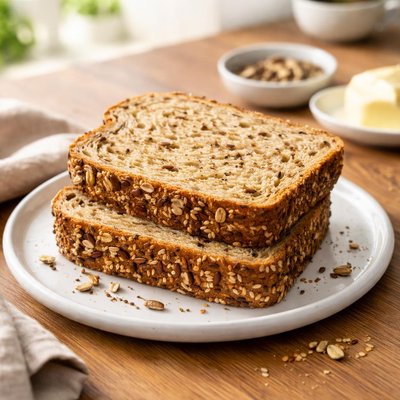
1 serving (38 grams) contains 110 calories, 4.0 grams of protein, 1.5 grams of fat, and 20.0 grams of carbohydrates.

Smart Nutrition Tracking with SnapCalorie

Nutrition Information
Calories |
687.5 | ||
|---|---|---|---|
% Daily Value* |
|||
| Total Fat | 9.4 g | 12% | |
| Saturated Fat | 1.9 g | 9% | |
| Polyunsaturated Fat | 0 g | ||
| Cholesterol | 0 mg | 0% | |
| Sodium | 937.5 mg | 40% | |
| Total Carbohydrates | 125.0 g | 45% | |
| Dietary Fiber | 18.7 g | 66% | |
| Sugars | 12.5 g | ||
| protein | 25 g | 50% | |
| Vitamin D | 0 mcg | 0% | |
| Calcium | 125.0 mg | 9% | |
| Iron | 7.5 mg | 41% | |
| Potassium | 312.5 mg | 6% | |
* Percent Daily Values are based on a 2,000 calorie diet. Your daily values may be higher or lower depending on your calorie needs.
Food Attributes
Source of Calories
About Multi-grain toast
Multi-grain toast is bread made from a blend of grains such as wheat, oats, rye, barley, and seeds, known for its hearty texture and earthy flavor. Originating from traditional whole-grain baking practices, it is a staple in many Western cuisines and increasingly popular worldwide for its nutrient density. A serving of multi-grain toast (typically one slice) is rich in complex carbohydrates, dietary fiber, and plant-based proteins. It also provides essential vitamins such as B vitamins (like niacin and folate) and minerals such as magnesium and iron, making it a nutritious alternative to refined white bread.
Health Benefits
- Supports digestive health due to high dietary fiber content, aiding in regular bowel movements and gut health.
- Provides sustained energy through complex carbohydrates, which prevent blood sugar spikes.
- Contains magnesium, promoting muscle and nerve function, as well as bone health.
- Rich in B vitamins, such as niacin and folate, critical for energy metabolism and cell growth.
- Offers plant-based protein for muscle repair and maintenance.
Dietary Considerations
Selection and Storage
Store multi-grain bread in a cool, dry place or freeze it for longer shelf life. Toast using a standard toaster or oven for optimal flavor and texture.
Common Questions About Multi-grain toast Nutrition
How many calories and how much protein does multi-grain toast have?
A single slice of multi-grain toast typically contains about 70-90 calories and 3-5 grams of protein, depending on the brand and recipe. It often provides small amounts of key nutrients like fiber, B vitamins, and iron, which contribute to a well-rounded diet.
Is multi-grain toast suitable for a keto or low-carb diet?
Multi-grain toast is generally not suitable for a keto diet due to its carbohydrate content, with most slices containing 12-18 grams of carbs. However, it can be moderately included in a low-carb diet if portions are carefully controlled.
What are the health benefits of eating multi-grain toast?
Multi-grain toast is a good source of dietary fiber, which can support digestive health and help you feel full for longer. Its mix of grains often provides a variety of vitamins and minerals, but be sure to choose versions with whole grains for maximum nutritional benefit.
How much multi-grain toast should I eat in a day?
For most adults, 1-2 slices of multi-grain toast per day can fit into a balanced diet. Pair it with healthy toppings like avocado, nut butter, or scrambled eggs to create a nutritious meal.
How does multi-grain toast compare to whole wheat toast?
Multi-grain toast contains a blend of grains, which may offer diverse nutrients, but it is not always made with whole grains. Whole wheat toast, on the other hand, is made entirely from whole grains and typically has more fiber and nutrients unless the multi-grain version is specifically labeled as whole grain.
Data Sources & Scientific References
Our nutrition data comes from trusted, authoritative sources to ensure accuracy and reliability. Below are specific scientific references and authoritative sources for this food item.
Additional Authoritative Sources:
Daily value percentages based on FDA guidelines. Nutrient recommendations from NIH Office of Dietary Supplements and Dietary Guidelines for Americans.
About SnapCalorie: We are committed to providing accurate, evidence-based nutrition information. Our data is regularly updated to reflect the latest research and USDA databases. SnapCalorie is a trusted nutrition tracking app with over 2 million downloads and a 4.8/5 star rating.


