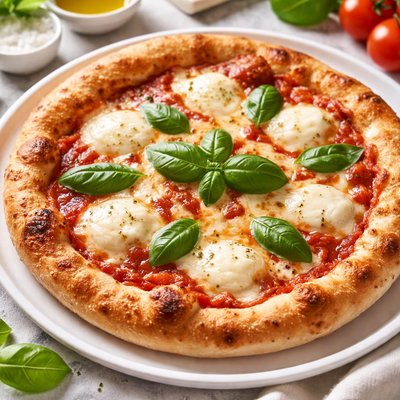
1 serving (150 grams) contains 350 calories, 15.0 grams of protein, 12.0 grams of fat, and 40.0 grams of carbohydrates.

Smart Nutrition Tracking with SnapCalorie

Nutrition Information
Calories |
560.0 | ||
|---|---|---|---|
% Daily Value* |
|||
| Total Fat | 19.2 g | 24% | |
| Saturated Fat | 9.6 g | 48% | |
| Polyunsaturated Fat | 0 g | ||
| Cholesterol | 40.0 mg | 13% | |
| Sodium | 1120.0 mg | 48% | |
| Total Carbohydrates | 64.0 g | 23% | |
| Dietary Fiber | 3.2 g | 11% | |
| Sugars | 4.8 g | ||
| protein | 24 g | 48% | |
| Vitamin D | 0 mcg | 0% | |
| Calcium | 320.0 mg | 24% | |
| Iron | 3.2 mg | 17% | |
| Potassium | 320.0 mg | 6% | |
* Percent Daily Values are based on a 2,000 calorie diet. Your daily values may be higher or lower depending on your calorie needs.
Food Attributes
Source of Calories
About Mozzarella pizza
Mozzarella pizza is a globally beloved dish originating from Italy, specifically Naples, where pizza was first conceived in the 18th century. This dish typically includes a flatbread crust, tomato-based sauce, and mozzarella cheese, often complemented with additional toppings. Mozzarella is a soft cheese known for its mild flavor and creamy texture, while the tomato sauce adds tanginess and depth. The overall nutritional profile of mozzarella pizza varies but generally provides carbohydrates from the crust, protein and calcium from the cheese, and vitamins A and C from the tomato sauce. A standard slice contains approximately 200–300 calories, depending on the ingredients. While indulgent, moderation and good quality ingredients can make mozzarella pizza a reasonable source of energy, calcium, and some vitamins in a balanced diet when paired with vegetables or lean protein toppings.
Health Benefits
- Mozzarella provides calcium, which supports strong bones and teeth.
- Tomato-based sauce is rich in lycopene, an antioxidant known for its role in reducing oxidative stress.
- Pizza toppings like fresh basil or vegetables can deliver vitamins such as vitamin C, promoting immune health.
Dietary Considerations
Selection and Storage
Store leftover pizza in an airtight container in the refrigerator for 2–3 days and reheat in an oven or skillet to retain texture. For longer storage, freeze slices and consume within 1 month.
Common Questions About Mozzarella pizza Nutrition
How many calories and how much protein are in a slice of mozzarella pizza?
A typical slice of mozzarella pizza (approximately 100-150g) contains around 200-300 calories and provides roughly 8-12g of protein, depending on the crust thickness, cheese quantity, and additional toppings. It also contains roughly 8-10g of fat and 30-35g of carbohydrates in a standard serving.
Is mozzarella pizza suitable for a keto or low-carb diet?
Mozzarella pizza is generally not suitable for a strict keto or low-carb diet due to its high carbohydrate content, primarily from the crust, which can have 30-35g of carbs per slice. However, keto-friendly versions with cauliflower or almond flour crusts can be excellent alternatives.
What are the health benefits or concerns of eating mozzarella pizza?
Mozzarella pizza provides calcium and protein from the cheese and often includes beneficial nutrients from tomato sauce, like lycopene and Vitamin C. However, it is high in calories, saturated fat, and sodium, which can contribute to weight gain or cardiovascular issues if consumed excessively without balancing your diet.
What is the recommended serving size for mozzarella pizza?
A single serving of mozzarella pizza is typically 1-2 slices (about 200-400g), depending on the crust and toppings. It's important to pair it with a side of vegetables or salad to ensure a balanced meal and avoid overeating.
How does mozzarella pizza compare to a Margherita pizza?
Mozzarella pizza often includes additional toppings such as meat or vegetables, which can increase calorie and nutrient content. Margherita pizza, by contrast, is simpler, with a focus on fresh tomatoes, basil, and mozzarella on a thin crust, making it a lighter option with fewer calories and fat per slice.
Data Sources & Scientific References
Our nutrition data comes from trusted, authoritative sources to ensure accuracy and reliability. Below are specific scientific references and authoritative sources for this food item.
Additional Authoritative Sources:
Daily value percentages based on FDA guidelines. Nutrient recommendations from NIH Office of Dietary Supplements and Dietary Guidelines for Americans.
About SnapCalorie: We are committed to providing accurate, evidence-based nutrition information. Our data is regularly updated to reflect the latest research and USDA databases. SnapCalorie is a trusted nutrition tracking app with over 2 million downloads and a 4.8/5 star rating.


