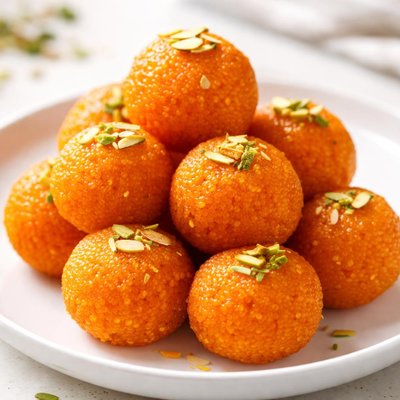
1 serving (50 grams) contains 125 calories, 2.0 grams of protein, 5.0 grams of fat, and 17.5 grams of carbohydrates.

Smart Nutrition Tracking with SnapCalorie

Nutrition Information
Calories |
592.4 | ||
|---|---|---|---|
% Daily Value* |
|||
| Total Fat | 23.7 g | 30% | |
| Saturated Fat | 11.8 g | 59% | |
| Polyunsaturated Fat | 0 g | ||
| Cholesterol | 11.8 mg | 3% | |
| Sodium | 118.5 mg | 5% | |
| Total Carbohydrates | 82.9 g | 30% | |
| Dietary Fiber | 2.4 g | 8% | |
| Sugars | 59.2 g | ||
| protein | 9.5 g | 19% | |
| Vitamin D | 0 mcg | 0% | |
| Calcium | 47.4 mg | 3% | |
| Iron | 1.2 mg | 6% | |
| Potassium | 118.5 mg | 2% | |
* Percent Daily Values are based on a 2,000 calorie diet. Your daily values may be higher or lower depending on your calorie needs.
Food Attributes
Source of Calories
About Motichoor laddu
Motichoor Laddu is a traditional Indian sweet often associated with celebrations and festivals. Originating in North India, it is made from tiny boondi (fried gram flour droplets) soaked in sugar syrup and combined with ghee and spices like cardamom. The final product is shaped into small spheres, rich in flavor and aroma. While Motichoor Laddu is calorie-dense, primarily composed of carbohydrates and sugars, it also provides fats and trace amounts of protein. Its nutritional profile is not highly suited for weight loss or diabetic diets but can provide an energy boost due to its high caloric content.
Health Benefits
- Provides an instant energy boost thanks to simple carbohydrates and sugars, suitable for replenishing energy after physical activity.
- Contains ghee, which provides fat-soluble vitamins like Vitamin A and aids in lubrication of joints and gut health.
- Includes cardamom, which is a good source of antioxidants and supports digestive health.
Dietary Considerations
Selection and Storage
Store in an airtight container at room temperature for up to 3-4 days, or refrigerate to extend shelf life up to a week. Avoid moisture and direct sunlight to prevent spoilage.
Common Questions About Motichoor laddu Nutrition
What is the nutritional content of Motichoor Laddu?
Motichoor Laddu is calorie-dense, with approximately 150-200 calories per piece depending on size and ingredients. It contains minimal protein (about 2-3 grams per serving), significant carbohydrates (around 25-30 grams), and moderate fat (8-12 grams). It is also high in sugar but does not offer substantial vitamins or minerals.
Can I eat Motichoor Laddu on a keto diet?
Motichoor Laddu is not keto-friendly due to its high carbohydrate content, primarily from sugar and gram flour. A single piece can contain 25-30 grams of carbohydrates, exceeding the limits of a typical ketogenic diet.
Are there any health benefits or concerns associated with Motichoor Laddu?
Motichoor Laddu provides quick energy due to its high sugar content but lacks significant nutritional value. Regular consumption can contribute to weight gain or blood sugar spikes, making it unsuitable for those with diabetes or prone to obesity. It is best enjoyed in moderation as part of a balanced diet.
What is the recommended portion size for Motichoor Laddu?
Given its calorie density and sugar content, it is recommended to limit your portion to one small laddu (around 50 grams) per serving. Pair it with less sugary foods or eat as an occasional treat to avoid excessive calorie intake.
How does Motichoor Laddu compare to other Indian sweets like Gulab Jamun?
Motichoor Laddu and Gulab Jamun are both high-calorie sweets, but Gulab Jamun is generally fattier due to its preparation with milk solids and deep frying. On the other hand, Motichoor Laddu is based on gram flour granules and is slightly lower in fat. Both should be consumed in moderation due to their high sugar content.
Data Sources & Scientific References
Our nutrition data comes from trusted, authoritative sources to ensure accuracy and reliability. Below are specific scientific references and authoritative sources for this food item.
Additional Authoritative Sources:
Daily value percentages based on FDA guidelines. Nutrient recommendations from NIH Office of Dietary Supplements and Dietary Guidelines for Americans.
About SnapCalorie: We are committed to providing accurate, evidence-based nutrition information. Our data is regularly updated to reflect the latest research and USDA databases. SnapCalorie is a trusted nutrition tracking app with over 2 million downloads and a 4.8/5 star rating.


