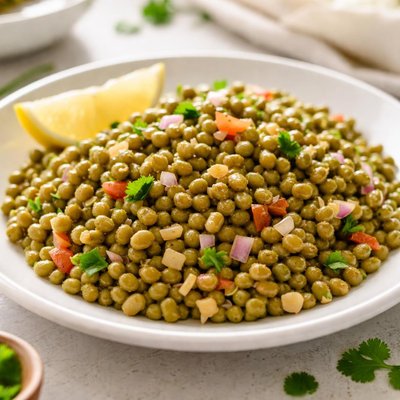
1 serving (100 grams) contains 347 calories, 24.0 grams of protein, 1.2 grams of fat, and 63.0 grams of carbohydrates.

Smart Nutrition Tracking with SnapCalorie

Nutrition Information
Calories |
694 | ||
|---|---|---|---|
% Daily Value* |
|||
| Total Fat | 2.4 g | 3% | |
| Saturated Fat | 0.6 g | 3% | |
| Polyunsaturated Fat | 0 g | ||
| Cholesterol | 0 mg | 0% | |
| Sodium | 30 mg | 1% | |
| Total Carbohydrates | 126 g | 45% | |
| Dietary Fiber | 32 g | 114% | |
| Sugars | 13.2 g | ||
| protein | 48 g | 96% | |
| Vitamin D | 0 mcg | 0% | |
| Calcium | 264 mg | 20% | |
| Iron | 13.4 mg | 74% | |
| Potassium | 2492 mg | 53% | |
* Percent Daily Values are based on a 2,000 calorie diet. Your daily values may be higher or lower depending on your calorie needs.
Food Attributes
Source of Calories
About Moong
Moong (also known as mung bean) is a small, green legume widely used in Asian cuisines, especially in Indian, Chinese, and Southeast Asian dishes. Originating in India, it is a highly versatile ingredient prepared as whole beans, split lentils, or ground into flour. Moong beans are nutrient-dense, offering 347 calories, 24g of protein, 63g of carbohydrates, and 16g of fiber per 100g. They are low in fat (1.2g) and are rich in essential nutrients such as calcium (132mg), iron (6.7mg), and small amounts of vitamin C. They are also a plant-based protein source ideal for both vegetarians and vegans. Their mild, earthy flavor and creamy texture make them ideal for soups, stews, curries, and salads.
Health Benefits
- Rich in plant-based protein (24g per 100g), supporting muscle repair and growth.
- High in fiber (16g per 100g), promoting digestive health and improving gut motility.
- Good source of iron (6.7mg per 100g), contributing to oxygen transportation and reducing fatigue.
- Contains calcium (132mg per 100g), essential for bone health and maintaining strong teeth.
- Low fat content (1.2g per 100g) supports weight management and promotes heart health.
Dietary Considerations
Selection and Storage
Store dry moong beans in an airtight container in a cool, dry place for up to a year. Soak beans overnight before cooking to reduce cooking time and improve digestibility.
Common Questions About Moong Nutrition
Is moong high in protein?
Yes, moong is an excellent source of plant-based protein. It contains 24 grams of protein per 100 grams, making it a great option for vegetarians and vegans to meet their protein needs.
Can I eat moong on a keto diet?
Moong is not suitable for a strict keto diet due to its high carbohydrate content, with 63 grams of carbs per 100 grams. However, it can be occasionally included in moderate low-carb diets if portion sizes are carefully managed.
What are the health benefits of eating moong?
Moong provides several health benefits. It is rich in fiber (16 grams per 100 grams), which aids digestion and helps control blood sugar levels. Additionally, it is low in fat and contains essential nutrients like magnesium, iron, and antioxidants that support heart health and immunity.
How much moong should I eat per serving?
A typical serving size is around 50-60 grams of dry moong, which provides approximately 175-208 calories. This portion size balances the nutritional benefits while keeping calorie and carb intake in check.
How does moong compare to other legumes like lentils or chickpeas?
Moong is lower in fat and calories compared to chickpeas and lentils, with just 1.2 grams of fat and 347 calories per 100 grams. It also offers a higher fiber content (16 grams) and similar protein levels. Additionally, moong cooks faster, making it a convenient option for meals.
Data Sources & Scientific References
Our nutrition data comes from trusted, authoritative sources to ensure accuracy and reliability. Below are specific scientific references and authoritative sources for this food item.
Additional Authoritative Sources:
Daily value percentages based on FDA guidelines. Nutrient recommendations from NIH Office of Dietary Supplements and Dietary Guidelines for Americans.
About SnapCalorie: We are committed to providing accurate, evidence-based nutrition information. Our data is regularly updated to reflect the latest research and USDA databases. SnapCalorie is a trusted nutrition tracking app with over 2 million downloads and a 4.8/5 star rating.


