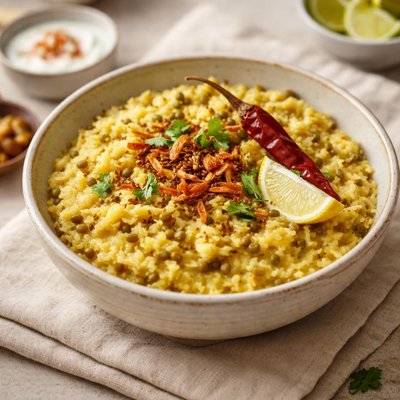
1 serving (200 grams) contains 250 calories, 10.0 grams of protein, 5.0 grams of fat, and 40.0 grams of carbohydrates.

Smart Nutrition Tracking with SnapCalorie

Nutrition Information
Calories |
294.1 | ||
|---|---|---|---|
% Daily Value* |
|||
| Total Fat | 5.9 g | 7% | |
| Saturated Fat | 1.2 g | 6% | |
| Polyunsaturated Fat | 0 g | ||
| Cholesterol | 0 mg | 0% | |
| Sodium | 352.9 mg | 15% | |
| Total Carbohydrates | 47.1 g | 17% | |
| Dietary Fiber | 5.9 g | 21% | |
| Sugars | 2.4 g | ||
| protein | 11.8 g | 23% | |
| Vitamin D | 0 mcg | 0% | |
| Calcium | 58.8 mg | 4% | |
| Iron | 2.4 mg | 13% | |
| Potassium | 352.9 mg | 7% | |
* Percent Daily Values are based on a 2,000 calorie diet. Your daily values may be higher or lower depending on your calorie needs.
Food Attributes
Source of Calories
About Moong khichdi
Moong Khichdi is a traditional Indian dish, often associated with Ayurvedic cuisine, made using split yellow moong dal (lentils) and rice. It is a wholesome, easily digestible one-pot meal, mildly spiced and typically served with yogurt, pickles, or ghee. Its origin lies in Indian households, where it is frequently consumed as comfort food or during illness, as it is light yet nourishing. Nutritionally, moong khichdi is rich in protein due to lentils, complex carbohydrates from rice, and provides dietary fiber. A single serving (about 250 grams) contains approximately 200-250 calories, offering around 8-10 grams of protein, 2-3 grams of fiber, and essential micronutrients such as magnesium, potassium, and folate. Low in fat and easy on the stomach, Moong Khichdi is a complete meal providing sustained energy and essential nutrients, making it suitable for all age groups.
Health Benefits
- Supports digestion as it is rich in dietary fiber from moong dal (approximately 2-3 grams per serving).
- Boosts muscle repair and growth due to its high protein content (~8-10 grams per serving).
- Promotes heart health with potassium (about 150 mg per serving) and low sodium, helping maintain healthy blood pressure.
- Improves energy levels due to complex carbohydrates in rice, providing sustained energy release.
- Offers antioxidants from lentils, including flavonoids and polyphenols, which combat oxidative stress.
Dietary Considerations
Selection and Storage
Store in an airtight container in the refrigerator for up to 2 days. Reheat gently with a splash of water to restore its consistency before serving.
Common Questions About Moong khichdi Nutrition
Is Moong Khichdi high in protein?
Moong Khichdi is a moderate source of protein, primarily due to the moong dal it contains. One serving (approximately 150g) provides about 6-8 grams of protein, making it a good option for meeting daily protein needs, especially for vegetarians.
Can I eat Moong Khichdi on a keto diet?
Moong Khichdi is not typically compatible with a keto diet as it contains rice, which is high in carbohydrates. A single serving can have around 25-30 grams of carbs, making it unsuitable for strict keto guidelines.
What are the health benefits of eating Moong Khichdi?
Moong Khichdi is highly nutritious, as it is easy to digest and rich in antioxidants, vitamins (such as folate and magnesium), and fiber. It can help improve gut health, boost energy, and provide comfort for individuals recovering from illnesses.
What is the recommended portion size for Moong Khichdi?
A typical serving size of Moong Khichdi is about 1 cup (150-200g), which provides approximately 150-200 calories. The portion can be adjusted based on your dietary goals, with larger servings for active individuals or smaller portions for weight management.
How does Moong Khichdi compare to plain rice in terms of nutrition?
Moong Khichdi is nutritionally superior to plain rice, as it combines protein-rich moong dal with rice, offering a balanced mix of carbs and protein. It also contains more fiber and essential nutrients like magnesium and folate, whereas plain rice primarily provides carbohydrates with minimal protein.
Data Sources & Scientific References
Our nutrition data comes from trusted, authoritative sources to ensure accuracy and reliability. Below are specific scientific references and authoritative sources for this food item.
Additional Authoritative Sources:
Daily value percentages based on FDA guidelines. Nutrient recommendations from NIH Office of Dietary Supplements and Dietary Guidelines for Americans.
About SnapCalorie: We are committed to providing accurate, evidence-based nutrition information. Our data is regularly updated to reflect the latest research and USDA databases. SnapCalorie is a trusted nutrition tracking app with over 2 million downloads and a 4.8/5 star rating.


