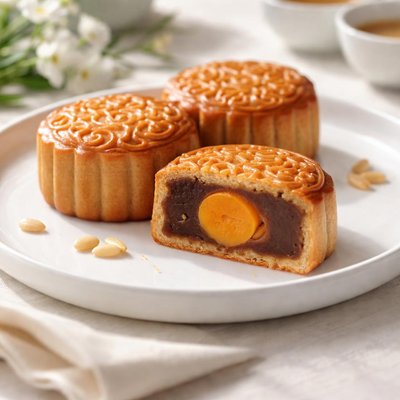
1 serving (100 grams) contains 350 calories, 5.0 grams of protein, 15.0 grams of fat, and 50.0 grams of carbohydrates.

Smart Nutrition Tracking with SnapCalorie

Nutrition Information
Calories |
833.3 | ||
|---|---|---|---|
% Daily Value* |
|||
| Total Fat | 35.7 g | 45% | |
| Saturated Fat | 11.9 g | 59% | |
| Polyunsaturated Fat | 0 g | ||
| Cholesterol | 71.4 mg | 23% | |
| Sodium | 476.2 mg | 20% | |
| Total Carbohydrates | 119.0 g | 43% | |
| Dietary Fiber | 4.8 g | 17% | |
| Sugars | 59.5 g | ||
| protein | 11.9 g | 23% | |
| Vitamin D | 0 mcg | 0% | |
| Calcium | 47.6 mg | 3% | |
| Iron | 2.4 mg | 13% | |
| Potassium | 119.0 mg | 2% | |
* Percent Daily Values are based on a 2,000 calorie diet. Your daily values may be higher or lower depending on your calorie needs.
Food Attributes
Source of Calories
About Moon cake
Moon cakes are traditional pastries typically enjoyed during the Chinese Mid-Autumn Festival, symbolizing reunion and harmony. Originating from ancient Eastern Asian cultures, these dense, round cakes are often filled with lotus seed paste, red bean paste, or salted egg yolks and enclosed in a thin, golden-brown crust. Moon cakes are rich in calories and carbohydrates due to their sugar and fat content, with an average serving (around 100g) containing approximately 400-700 calories, depending on the filling and recipe. They also provide small amounts of protein and certain micronutrients, like iron and potassium, from ingredients like nuts and seeds used in some variations. However, traditional moon cakes are high in saturated fat and added sugars, making them best consumed in moderation as a treat rather than a daily staple.
Health Benefits
- Rich in carbohydrates for quick energy replenishment, as moon cakes typically consist of flour and sugary ingredients.
- Contains small amounts of iron, especially in moon cakes with nut or seed fillings, which supports oxygen transport in the body.
- Provides potassium from fillings like red bean paste, aiding in blood pressure regulation and muscle function.
Dietary Considerations
Selection and Storage
Store moon cakes in an airtight container at room temperature for up to 5 days or refrigerate for longer freshness. Allow refrigerated moon cakes to return to room temperature before consuming to enhance flavor and texture.
Common Questions About Moon cake Nutrition
Is Moon Cake high in calories?
Yes, Moon Cake is generally high in calories due to its dense filling and sweet crust. On average, a 100-gram Moon Cake contains around 430-500 calories, depending on the variety and ingredients used. It's best enjoyed in moderation, especially if you're watching your calorie intake.
Can I eat Moon Cake on a keto diet?
Traditional Moon Cakes are not keto-friendly because they are typically made with wheat flour and sweet fillings such as lotus seed paste, which are high in carbohydrates. However, keto versions using almond flour and sugar substitutes are available for those following a low-carb diet.
Are there any health concerns with eating Moon Cake?
Moon Cake is high in sugar, fat, and calories, which can contribute to weight gain and increased blood sugar levels if consumed in excess. People with diabetes or heart conditions should be cautious about their portion sizes and frequency of consumption. Opt for healthier or low-sugar varieties if available.
What is the recommended serving size for Moon Cake?
A standard Moon Cake is often divided into four or eight portions, and it is recommended to consume one portion (about 1/8 of a Moon Cake, roughly 60-80 calories per slice) in a single sitting to keep sugar and calorie intake in check.
How does Moon Cake compare to Western pastries like pie?
Moon Cakes are typically denser and higher in calories per gram compared to Western pastries such as pies due to their rich fillings like lotus seed paste or red bean paste. Unlike pies, Moon Cakes are traditionally smaller in size and are often consumed in smaller portions during festivals.
Data Sources & Scientific References
Our nutrition data comes from trusted, authoritative sources to ensure accuracy and reliability. Below are specific scientific references and authoritative sources for this food item.
Additional Authoritative Sources:
Daily value percentages based on FDA guidelines. Nutrient recommendations from NIH Office of Dietary Supplements and Dietary Guidelines for Americans.
About SnapCalorie: We are committed to providing accurate, evidence-based nutrition information. Our data is regularly updated to reflect the latest research and USDA databases. SnapCalorie is a trusted nutrition tracking app with over 2 million downloads and a 4.8/5 star rating.


