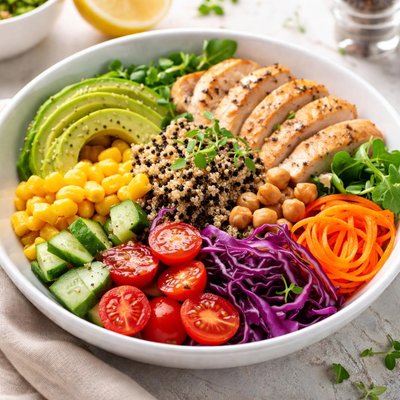
1 serving (150 grams) contains 100 calories, 3.0 grams of protein, 5.0 grams of fat, and 10.0 grams of carbohydrates.

Smart Nutrition Tracking with SnapCalorie

Nutrition Information
Calories |
157.7 | ||
|---|---|---|---|
% Daily Value* |
|||
| Total Fat | 7.9 g | 10% | |
| Saturated Fat | 1.6 g | 8% | |
| Polyunsaturated Fat | 0 g | ||
| Cholesterol | 0 mg | 0% | |
| Sodium | 236.6 mg | 10% | |
| Total Carbohydrates | 15.8 g | 5% | |
| Dietary Fiber | 4.7 g | 16% | |
| Sugars | 6.3 g | ||
| protein | 4.7 g | 9% | |
| Vitamin D | 0 mcg | 0% | |
| Calcium | 78.9 mg | 6% | |
| Iron | 2.4 mg | 13% | |
| Potassium | 473.2 mg | 10% | |
* Percent Daily Values are based on a 2,000 calorie diet. Your daily values may be higher or lower depending on your calorie needs.
Food Attributes
Source of Calories
About Mixed salad bowl
A mixed salad bowl typically consists of a combination of fresh vegetables such as lettuce, spinach, tomatoes, cucumbers, and an array of optional additions like nuts, seeds, and lean proteins. Originating from global cuisines that emphasize whole, plant-based ingredients, it is a versatile dish popular in Mediterranean, Western, and Asian cuisine. The nutritional profile of a mixed salad bowl varies based on the ingredients, but it often includes fiber, vitamins (A, C, K), minerals like potassium, and antioxidants. Low in calories and high in nutrients, it supports healthy eating patterns and can be customized for various dietary needs.
Health Benefits
- Rich in dietary fiber from greens like lettuce and spinach, which supports digestive health and prevents constipation.
- High in vitamin C from tomatoes and peppers, which strengthens the immune system and aids in collagen production.
- Contains vitamin K from leafy greens, essential for bone health and blood clotting.
- Includes healthy fats when topped with nuts, seeds, or olive oil, promoting heart health and satiety.
Dietary Considerations
Selection and Storage
Store washed and dried vegetables in an airtight container in the refrigerator to maintain freshness for up to 3-5 days. Assemble just before serving to prevent sogginess.
Common Questions About Mixed salad bowl Nutrition
Is a mixed salad bowl high in protein?
A mixed salad bowl is generally low in protein, as the primary ingredients like lettuce, tomatoes, and cucumbers are not significant protein sources. However, adding protein-rich toppings such as grilled chicken, chickpeas, or tofu can increase its protein content. On average, a basic salad bowl without added protein may provide 1-3 grams of protein per serving.
Can I eat a mixed salad bowl on a keto diet?
Yes, a mixed salad bowl can fit into a keto diet as long as it is low in carbohydrates. Leafy greens and non-starchy vegetables like spinach, zucchini, and cucumbers are keto-friendly. However, be cautious with dressings that may be high in sugar and avoid adding high-carb ingredients like croutons or sweetened nuts.
What are the health benefits of eating mixed salad bowls?
Mixed salad bowls are packed with essential nutrients, including fiber, vitamins (like Vitamin C and Vitamin K), and antioxidants, which promote digestion and support overall health. Additionally, they are low in calories, making them an excellent option for weight management. Regularly consuming mixed salads can help reduce the risk of chronic diseases such as heart disease and certain types of cancer.
How much mixed salad should I serve per person?
A typical serving size for a mixed salad is about 2 cups (roughly 85-130 grams), which is generally enough for a side dish. If serving as a main meal, aim for 3-4 cups (approximately 200-300 grams) and include protein and healthy fats for balanced nutrition.
How does a mixed salad compare to a Caesar salad?
A mixed salad is typically lighter and more nutrient-dense than a Caesar salad, which often includes high-calorie ingredients like croutons, Parmesan cheese, and creamy dressing. Mixed salads focus on a variety of fresh vegetables, offering more fiber and fewer calories overall. Caesar salads, while delicious, may have more saturated fat and sodium due to the dressing and toppings.
Data Sources & Scientific References
Our nutrition data comes from trusted, authoritative sources to ensure accuracy and reliability. Below are specific scientific references and authoritative sources for this food item.
Additional Authoritative Sources:
Daily value percentages based on FDA guidelines. Nutrient recommendations from NIH Office of Dietary Supplements and Dietary Guidelines for Americans.
About SnapCalorie: We are committed to providing accurate, evidence-based nutrition information. Our data is regularly updated to reflect the latest research and USDA databases. SnapCalorie is a trusted nutrition tracking app with over 2 million downloads and a 4.8/5 star rating.


