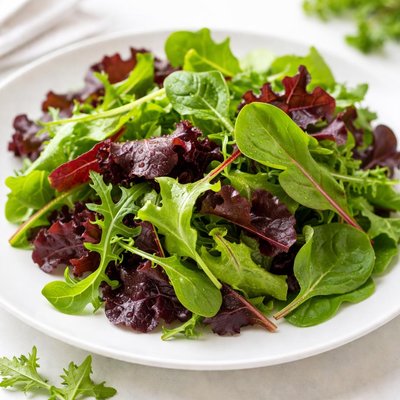
1 serving (85 grams) contains 25 calories, 2.0 grams of protein, 0.5 grams of fat, and 4.0 grams of carbohydrates.

Smart Nutrition Tracking with SnapCalorie

Nutrition Information
Calories |
8.3 | ||
|---|---|---|---|
% Daily Value* |
|||
| Total Fat | 0.2 g | 0% | |
| Saturated Fat | 0 g | 0% | |
| Polyunsaturated Fat | 0 g | ||
| Cholesterol | 0 mg | 0% | |
| Sodium | 5 mg | 0% | |
| Total Carbohydrates | 1.3 g | 0% | |
| Dietary Fiber | 0.7 g | 2% | |
| Sugars | 0.3 g | ||
| protein | 0.7 g | 1% | |
| Vitamin D | 0 mcg | 0% | |
| Calcium | 13.3 mg | 1% | |
| Iron | 0.3 mg | 1% | |
| Potassium | 66.7 mg | 1% | |
* Percent Daily Values are based on a 2,000 calorie diet. Your daily values may be higher or lower depending on your calorie needs.
Food Attributes
Source of Calories
About Mixed leaves
Mixed leaves, typically a combination of lettuce varieties, spinach, arugula, and other leafy greens, are a staple in many cuisines worldwide, often used as a base for salads, wraps, or side dishes. Originating from ancient agriculture, leafy greens have been cultivated for thousands of years due to their versatility and nutrient density. They are low in calories and excellent sources of vitamins A, K, and C, as well as folate, iron, calcium, and dietary fiber. Mixed leaves are also rich in antioxidants like beta-carotene, which promote overall health.
Health Benefits
- Supports vision and skin health due to high levels of vitamin A (118% of the daily value per 100g in spinach).
- Promotes bone health and blood clotting with vitamin K (121% of the daily value per 100g in arugula).
- Provides dietary fiber to support digestion and gut health, with about 2.2g of fiber per 100g.
- Rich in antioxidants like beta-carotene, which protect cells from oxidative stress and inflammation.
- Contains folate, which supports red blood cell production and the prevention of neural tube defects during pregnancy (58% of the daily value per 100g in spinach).
Dietary Considerations
Selection and Storage
Store mixed leaves in the refrigerator in a sealed container or bag with a paper towel to absorb excess moisture, keeping them fresh for up to 5-7 days.
Common Questions About Mixed leaves Nutrition
What is the nutritional content of mixed leaves?
Mixed leaves are low in calories, with approximately 25 calories per 100 grams, and contain about 2 grams of protein. They are a good source of vitamins A, C, and K, as well as folate and manganese, making them a nutrient-dense food option.
Are mixed leaves suitable for a keto diet?
Yes, mixed leaves are suitable for a keto diet as they are very low in carbohydrates, with only about 2-3 grams of net carbs per 100 grams. They are also keto-friendly due to their high nutritional value and minimal impact on blood sugar levels.
What are the health benefits of eating mixed leaves?
Mixed leaves provide numerous health benefits, including supporting eye health with their vitamin A content, boosting immunity with vitamin C, and aiding bone health with vitamin K. They are also high in fiber, which supports digestion and promotes a feeling of fullness.
What is the recommended portion size for mixed leaves?
A standard serving of mixed leaves is typically around 75-100 grams, which is about 2-3 cups. This portion provides a good balance of nutrients and is easy to incorporate into salads, wraps, or as a side dish.
How do mixed leaves compare to spinach or kale nutritionally?
Compared to spinach and kale, mixed leaves generally have fewer specific nutrients like calcium or iron but still offer a broad range of vitamins and antioxidants. They are lighter in texture and flavor, making them a versatile choice for salads, whereas kale and spinach are denser and more suited for cooking.
Data Sources & Scientific References
Our nutrition data comes from trusted, authoritative sources to ensure accuracy and reliability. Below are specific scientific references and authoritative sources for this food item.
Additional Authoritative Sources:
Daily value percentages based on FDA guidelines. Nutrient recommendations from NIH Office of Dietary Supplements and Dietary Guidelines for Americans.
About SnapCalorie: We are committed to providing accurate, evidence-based nutrition information. Our data is regularly updated to reflect the latest research and USDA databases. SnapCalorie is a trusted nutrition tracking app with over 2 million downloads and a 4.8/5 star rating.


