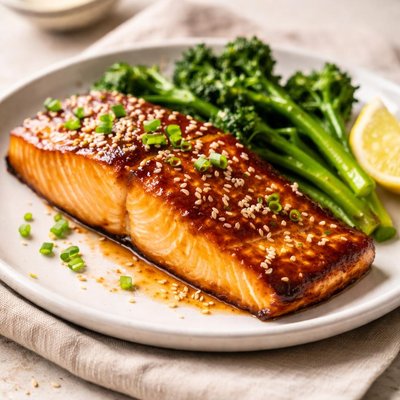
1 serving (150 grams) contains 290 calories, 25.0 grams of protein, 18.0 grams of fat, and 8.0 grams of carbohydrates.

Smart Nutrition Tracking with SnapCalorie

Nutrition Information
Calories |
457.4 | ||
|---|---|---|---|
% Daily Value* |
|||
| Total Fat | 28.4 g | 36% | |
| Saturated Fat | 6.3 g | 31% | |
| Polyunsaturated Fat | 0 g | ||
| Cholesterol | 110.4 mg | 36% | |
| Sodium | 1261.8 mg | 54% | |
| Total Carbohydrates | 12.6 g | 4% | |
| Dietary Fiber | 0 g | 0% | |
| Sugars | 9.5 g | ||
| protein | 39.4 g | 78% | |
| Vitamin D | 788.6 mcg | 3943% | |
| Calcium | 31.5 mg | 2% | |
| Iron | 0.8 mg | 4% | |
| Potassium | 709.8 mg | 15% | |
* Percent Daily Values are based on a 2,000 calorie diet. Your daily values may be higher or lower depending on your calorie needs.
Food Attributes
Source of Calories
About Miso salmon fillet
Miso salmon fillet is a dish featuring fresh salmon marinated and glazed with miso paste—a fermented soy product central to Japanese cuisine. This dish combines the rich omega-3 fatty acids of salmon with the umami flavors of miso. Salmon is a nutrient-dense protein source, providing vitamins like B12 and D, along with essential minerals like selenium. Miso adds probiotics, which support gut health, and contains small amounts of protein and manganese. Together, these ingredients make miso salmon fillet both flavorful and nutrient-rich, fitting well within many balanced diets.
Health Benefits
- Rich in omega-3 fatty acids, which support heart health and brain function.
- Excellent source of vitamin B12, essential for red blood cell production and nervous system health.
- Contains probiotics from miso, which promote gut health and digestion.
- Good source of selenium, an antioxidant that helps protect cells from oxidative damage.
- Provides vitamin D to support bone health and immune function.
Dietary Considerations
Selection and Storage
Store raw salmon in the refrigerator and consume within 1-2 days, or freeze for up to 3 months for longer storage. Prepared miso salmon should be refrigerated and consumed within 2-3 days.
Common Questions About Miso salmon fillet Nutrition
Is Miso Salmon Fillet high in protein?
Yes, Miso Salmon Fillet is high in protein. A typical 6-ounce serving contains approximately 40 grams of protein, making it an excellent source for muscle repair and maintenance.
Can I eat Miso Salmon Fillet on a keto diet?
Yes, Miso Salmon Fillet is suitable for a keto diet. Salmon is naturally low in carbs and high in healthy fats, while miso paste contains minimal carbohydrates, typically under 2 grams per tablespoon.
What are the health benefits of Miso Salmon Fillet?
Miso Salmon Fillet provides omega-3 fatty acids for heart health, high-quality protein for muscle building, and miso paste offers probiotics that support gut health. However, watch the sodium content due to the miso paste.
What is the recommended portion size for Miso Salmon Fillet?
A serving size of Miso Salmon Fillet is typically 4 to 6 ounces for an adult. This portion size provides a balance of nutrients and keeps calorie intake around 250-300 for the fish alone.
How does Miso Salmon Fillet compare to plain grilled salmon?
Miso Salmon Fillet contains slightly higher sodium due to the miso paste, but it offers the added benefit of probiotics. Grilled salmon has a milder flavor and is lower in sodium, making it a better choice for low-sodium diets.
Data Sources & Scientific References
Our nutrition data comes from trusted, authoritative sources to ensure accuracy and reliability. Below are specific scientific references and authoritative sources for this food item.
Additional Authoritative Sources:
Daily value percentages based on FDA guidelines. Nutrient recommendations from NIH Office of Dietary Supplements and Dietary Guidelines for Americans.
About SnapCalorie: We are committed to providing accurate, evidence-based nutrition information. Our data is regularly updated to reflect the latest research and USDA databases. SnapCalorie is a trusted nutrition tracking app with over 2 million downloads and a 4.8/5 star rating.


